Category Archives: Science

Entropy 101

Entropy is a big topic, both in science and in the popular gestalt. I wrote about it in one of my very first blog posts here, back in 2011. I’ve written about it a number of other times since. Yet, despite mentioning it in posts and comments, I’ve never laid out the CD collection analogy from that 2011 post in full detail.

Recent discussions suggest I should. When I mentioned entropy in a post most recently, I made the observation that its definition has itself suffered entropy. It has become more diffuse. There are many views of what entropy means, and some, I feel, get away from the fundamentals.

The CD collection analogy, though, focuses on only the fundamentals.

Continue reading


Does Transporting Kill You?

It’s actually an old debate — in fact, it’s a variation on the Ship of Theseus — but modern day science fiction gives it a new spin. At root it’s a question about exactly where our identity as self-aware conscious beings actually resides. I don’t find it paradoxical so much as intriguing.

Recently Sabine Hossenfelder jumped into the discussion with a video asking whether Captain Kirk dies every time he uses the transporter. Not just him, of course, but everyone who uses it.

As with trees falling in forests, the answer depends on defining key terms. This case depends on exactly what we mean by “dies” and “Kirk” — the latter being the Ship of Theseus.

Continue reading


Are We Special?

There is a key rule of thumb (or heuristic) in science known as the Copernican Principle. It essentially says: “We’re not special.” (The “we” in question being the human race.) It’s named after Nicolaus Copernicus, who, in 1543, forever banished the Earth and its thin film of humanity from the center of the universe.
Ever since, the science view of humanity is that it’s just part of the landscape, nothing particularly special, a mere consequence of energy+time creating increasing organization in systems. We may be complex, perhaps even a little surprisingly so, but we’re still nothing special.

Yet it seems to me that, at least in some ways, we really are.

Continue reading


Sideband #74: Volume and Surface Area

I’ve always had a strong curiosity about how things work. My dad used to despair how I’d take things apart but rarely put them back together. My interest was inside — in understanding the mechanism. (The irony is that I began my corporate career arc as a hardware repair technician.)

My curiosity includes a love of discovery, especially unexpected ones, and extra especially ones I stumble on myself. It’s one thing to be taught a neat new thing, but a rare delight to figure it out for oneself. It’s like hitting a home run (or at least a base-clearing double).

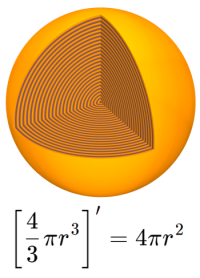
Recently, I was delighted to discover something amazing about spheres.

Continue reading


Inner Voice

I’ve contemplated the voice(s) in my head all my adult life, though it’s only recently I’ve thought deeply about them. One big question I’ve had being why sometimes it’s a dialog rather than a monolog.

To be clear, I am fully aware that it’s all me; it’s my voice(s). “They” (or rather “we”) are aspects of my own mind — my inner voice. Something I’ve naturally assumed everyone had.

But some say they have no inner voice!

Continue reading


Analog Computing

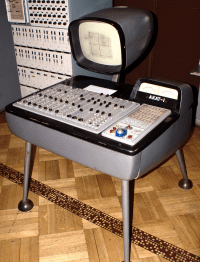
Analog computer: AKAT-1 (1959)

Last September I posted the Pancomputation trilogy (parts: I, II & III) which was a follow-up to last spring’s Digital Dualism trilogy (parts: 1, 2 & 3). The first trilogy was a continuation of an exploration of computer modeling I started in 2019. Suffice to say, over the course of writing these posts, my views on what “computing” means evolved and crystalized.

As discussed in the Pancomputation posts the notion of computation is difficult to pin down (many general concepts are because we don’t have even more general concepts to define them with). A pancomputation view sees everything as computing. A computer science view restrictively equates it with a Turing Machine.

I’ve realized my view depends heavily on computational dualism.

Continue reading


BB #79: Near Zero

If you know me, or if you’ve followed this blog a while, you know I honor Solar holidays more than human ones. The former are directly linked with the seasons, obviously (and who doesn’t love seasons), but to me they’re about how much (or how little) sunlight we get.

If you know me, or if you’ve followed this blog a while, you know sunlight really matters to me. The skylight in my living room was a key buying point for my condo, and enough south-facing windows was always a requirement.

I may love the night and the lights, but I thrive on sunlight.

Continue reading


Wilczek: Fundamentals

I just finished Fundamentals: Ten Keys to Reality (2021), by Frank Wilczek. It’s yet another book explaining fundamental physics for lay readers, and it does so pretty much entirely within the bounds of mainstream science. I enjoyed reading it, but it’s mainly a review of physics as we know it.

I saw it on the library’s list of new books and put it on hold back on May 14th. It didn’t become available until September 3 — more than a three-month wait. Apparently lots of people wanted to read it.

Bottom line, I recommend it as an easy and enjoyable read, especially for those with a more casual interest in physics.

Continue reading


Smolin: Time Reborn

I’ve been reading science texts almost as long as I’ve been reading anything. Over those years, many scientists and science writers have taught me much of what I know about science. (Except for a Computer Science minor, and general science classes, most of my formal education was in the Liberal Arts.)

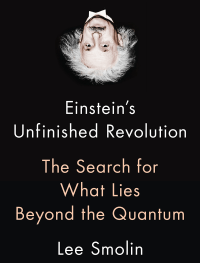
Recently I read Time Reborn (2013), by Lee Smolin, a theoretical physicist whose personality and books I’ve enjoyed. I don’t always agree with his ideas, but I’ve found I do tend to agree with his approaches to, and overall sense of, physics.

However in this case I almost feel Smolin, after long and due consideration, has come around to my way of thinking!

Continue reading


Pancomputation III

Oh, look! Dancing Pixies!

In the last two posts I’ve explored some ideas about what a computer is. More properly, what a computation is, since a computer is just something that does a computation. I’ve differentiated computation from calculation and, more importantly, evaluation. (This post assumes you’ve read Part I and Part II.)

I’ve also looked at pancomputationalism (the idea everything computes). The post hoc approach of mapping of random physical states to a computation seems especially empty. The idea of treating the physical dynamics of a system as a computation has more interesting and viable features.

That’s where I’ll pick things up.

Continue reading