 I’m feeling lazy today and not at all like working on a post. But since I’m shooting for 899 by year’s end, and have
 16 15 to go, I’m returning to an idea I had long ago but never really pursued. The idea, called Wednesday Wow, is writing posts (on Wednesdays, obviously) about things that really wowed me.
The truth is, lots of things do. For all my cynicism and misanthropy, life and people still fascinate and enthrall me. The various mysteries of physics and consciousness are engaging on their own, but life — for all its ups and downs — is one hell of a ride. (And, of course, I’ve been both blessed and lucky.)
Anyway, here are some wow things and a nice Christmas tune…
Continue reading
1 Comment | tags: Alison Krauss, mirrors, reflection, sound barrier, supersonic flight, The Wexford Carol, Yo-Yo Ma | posted in Wednesday Wow
 I wrote about the CBS show, Madam Secretary, back when it premiered. Interestingly, that post is among those people still sometimes read. In fact, it’s one of the older of my posts people still sometimes read. That post also talked about another CBS show, Scorpion, which (to my surprise) lasted four seasons, so I’m not entirely sure what the attraction is.
Madam Secretary, informally retitled Madam President for its sixth and last season, aired its final episode last Sunday, December 8th. And while nothing is perfect, and all runners stumble, in its six-year run, this show gets an unqualified Wow! rating from me.
I’m really going to miss it.
Continue reading
4 Comments | tags: Madam Secretary, Téa Leoni, The Good Place, The West Wing, Tim Daly, Weltschmerz, Željko Ivanek | posted in TV, TV Tuesday
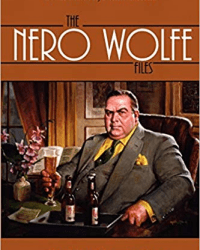 Science fiction has been a deep part of my life since I was a child. I discovered it early and have been reading it ever since I started picking my own reading material. As a consequence, I’ve written a lot of posts on various SF topics, but somehow I’ve never gotten around to writing much about my other favorite genre: detective stories.
As with the SF, I discovered Sherlock Holmes early, along with the Agatha Christie detectives, Miss Marple and Hercule Poirot. I fell in love with the idea of the puzzle-solving detective. (I also had a crush on Nancy Drew, but that was a whole other kind of interest.)
Then my dad, who also loved mysteries, introduced me to Rex Stout…
Continue reading
33 Comments | tags: Archie Goodwin, detective books, murder mysteries, mystery books, Nero Wolfe, Rex Stout | posted in Books, Mystery Monday
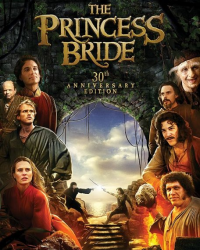 There is an oft-quoted line from the delightful movie, The Princess Bride. The line, by Inigo Montoya, is: “You keep using that word. I do not think it means what you think it means.”
The first time I noticed it was Rachel Maddow, enough years ago that I was still watching her show (so three or four, at least). Maddow is a Rhodes Scholar, so it caught my attention — my first thought was that I must be wrong about the word. I looked it up, and… I’m maybe slightly more right than wrong? Or, honestly, maybe it’s just a wash.
The word I’m talking about is craven.
Continue reading
7 Comments | tags: English, Rachel Maddow, The Princess Bride, words | posted in Basics
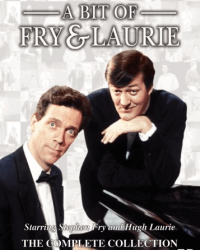 For a Sci-Fi Saturday post, this started as a stretch and then some. While Zero Sum Game (2018), by S.L. Huang, has at least a science fiction flavor, The Gun Seller (1996), by Hugh Laurie (yes, that Hugh Laurie), is more fantastical than science fictional. They do have in common a protagonist beyond capable as well as action hero thriller plots.
I can redeem the post now that I’ve read The Android’s Dream (2006), by John Scalzi (whom I’ve praised here before for Redshirts). Here, too, is an extremely competent protagonist in an action hero thriller. (As an aside, the two written by men feature a love interest. (While I’m at it, guess which of the three does not have a Wiki page.))
The bottom line: I thoroughly enjoyed all three!
Continue reading
13 Comments | tags: Hugh Laurie, John Scalzi, S.L. Huang, science fiction, science fiction books, SF, SF Books | posted in Books, Sci-Fi Saturday
 I’m far from being a literary expert and even further from knowing anything about poetry (but, of course, I know what I like). That said, there are some poems I’ve picked up along the way and cherished. I’ve posted here about three of them: Desiderata, Invictus, and To His Coy Mistress. These poems all have foundational roles in my worldview.
Yet, surprisingly, I haven’t yet written about the most foundational of them all: The Road Not Taken, by the great American poet, Robert Frost. In my youth, a friend once whined at me, “You go out of your way to be different, don’t you!” Yes. Yes, I do. Just like the poem says to.
Except it doesn’t. It doesn’t say that at all.
Continue reading
14 Comments | tags: Robert Frost, The Road Not Taken | posted in Quotes, Writing
 Maybe it’s seasonal — I really hate the darkness of winter — but I find myself sufficiently discouraged by the debate side of blogging to “hit the mute button” for a while. It isn’t the first time I’ve felt like withdrawing from what too often amounts to a tug-of-war. I didn’t blog at all in 2017, in part, because of that.
For months now I’ve been thinking of ending this blog (or taking another break), but I like having the outlet to express myself. I don’t do Twitter or Facebook or Instagram; I like to write about stuff. Whatever stuff strikes my fancy (which apparently breaks a Blogging Rule about focusing on a single topic).
My problem is that I’m tired of debates that go nowhere.
Continue reading
36 Comments | tags: debate, peace and quiet, quiet, quiet time | posted in Life
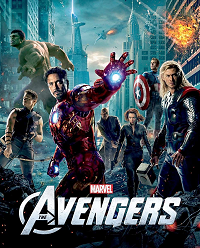 Well I have at long last finally seen Marvel’s The Avengers (2012) and Thor (2011) — two of the early films in the long-running Infinity Saga (the series has 23 films out so far; more are coming). The short version is I thought The Avengers had some good bits, but overall, I found them both fairly underwhelming (but I’m so not the audience for these).
Unfortunately, I was also a little underwhelmed this week by Stargate: Universe, which I tried binge watching because John Scalzi (whose book Redshirts I really liked) was the creative consultant on the show. I quit after three episodes. It wasn’t that it was bad so much as it (as with these comic book movies) just seems like the same old stuff I’ve seen many, many times.
Ah well, you can’t win them all.
Continue reading
13 Comments | tags: Marvel comics, Marvel movies, science fiction, science fiction movies, SF, SF Movies | posted in Movies
 The Thanksgiving holiday we celebrate here in the USA has some unfortunate overtones regarding its colonial origin. Still, the idea of a festival of thanks is an ancient one — thanks for a good harvest or a good hunt. Or, in our case, thanks for helping us not die last winter.
As with Christmas or the Copenhagen interpretation, we tend to take a “shut up and calculate!” approach to the holidays. “Shut up and shop!” in the case of the Winter Solstice, and “Shut up and give thanks!” today.
One thing we can be very thankful about is patterns…
Continue reading
4 Comments | tags: atoms, DNA, electrons, entropy, Mandelbrot, Mandelbrot fractal, photons, quarks, Thanksgiving | posted in Life
 For the last two weeks I’ve written a number of posts contrasting physical systems with numeric systems.
(The latter are, of course, also physical, but see many previous posts for details on significant differences. Essentially, the latter involve largely arbitrary maps between real world magnitude values and internal numeric representations of those values.)
I’ve focused on the nature of causality in those two kinds of systems, but part of the program is about clearly distinguishing the two in response to views that conflate them.
Continue reading
20 Comments | tags: Alan Turing, Cantor's Diagonal, Georg Cantor, Halting Problem, Heisenberg Uncertainty, Incompleteness Theorems, Kurt Gödel, quantum mechanics, Turing Halting Problem, Werner Heisenberg | posted in Brain Bubble, Computers






You must be logged in to post a comment.