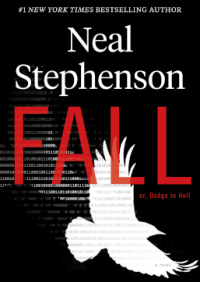
 I’ve been a fan of Neal Stephenson since Snow Crash (1992), his third novel. I’ve read much of his work — the big exception being The Baroque Cycle, descriptions of which haven’t captured my interest yet. I like his writing enough that I’ll probably enjoy them if I ever take the plunge.
Stephenson writes pretty hard SF, which I love, and he explores such interesting ideas that I’m generally quite enthralled by what some see as fictionalized physics books. The thing is, I’d enjoy reading those physics books, so having it come coated in any kind of frosting is a win in my (pardon the pun) book.
I’ve just gotten started on his most recent novel, Fall; or, Dodge in Hell.
Continue reading
16 Comments | tags: Fall; or Dodge in Hell, hard SF, Neal Stephenson, science fiction, science fiction books, SF, SF Books, Snow Crash | posted in Books, Sci-Fi Saturday

Still half a meal!
When I was growing up, we didn’t have much money, but we were always blessed with food on the table, a place to sleep, and a roof over us. I have no complaints — nor even a sense — my life lacked luxury. It never lacked what was needed, and it never lacked love. That’s a pretty golden childhood.
But money was tight, and our ethic was “waste not, want not!” Two of the more grievous sins in our family were waste and inequitable distribution (everyone got a fair share of what there was). I heard a lot about those “starving children in India.”
Which is why it annoys me when characters waste food.
Continue reading
9 Comments | tags: cliches, food, tropes | posted in Brain Bubble, Movies, TV
 Philosopher and cognitive scientist Dave Chalmers, who coined the term hard problem (of consciousness), also coined the term meta hard problem, which asks why we think the hard problem is so hard. Ever since I was introduced to the term, I’ve been trying figure out what to make of it.
While the hard problem addresses a real problem — how phenomenal experience arises from the physics of information processing — the latter is about our opinions regarding that problem. What it tries to get at, I think, is why we’re so inclined to believe there’s some sort of “magic sauce” required for consciousness.
It’s an easy step when consciousness, so far, is quite mysterious.
Continue reading
34 Comments | tags: brain mind problem, consciousness, David Chalmers, human brain, human consciousness, human mind, mind, René Descartes | posted in Philosophy
 I’m feeling lazy today and not at all like working on a post. But since I’m shooting for 899 by year’s end, and have
 16 15 to go, I’m returning to an idea I had long ago but never really pursued. The idea, called Wednesday Wow, is writing posts (on Wednesdays, obviously) about things that really wowed me.
The truth is, lots of things do. For all my cynicism and misanthropy, life and people still fascinate and enthrall me. The various mysteries of physics and consciousness are engaging on their own, but life — for all its ups and downs — is one hell of a ride. (And, of course, I’ve been both blessed and lucky.)
Anyway, here are some wow things and a nice Christmas tune…
Continue reading
1 Comment | tags: Alison Krauss, mirrors, reflection, sound barrier, supersonic flight, The Wexford Carol, Yo-Yo Ma | posted in Wednesday Wow
 I wrote about the CBS show, Madam Secretary, back when it premiered. Interestingly, that post is among those people still sometimes read. In fact, it’s one of the older of my posts people still sometimes read. That post also talked about another CBS show, Scorpion, which (to my surprise) lasted four seasons, so I’m not entirely sure what the attraction is.
Madam Secretary, informally retitled Madam President for its sixth and last season, aired its final episode last Sunday, December 8th. And while nothing is perfect, and all runners stumble, in its six-year run, this show gets an unqualified Wow! rating from me.
I’m really going to miss it.
Continue reading
4 Comments | tags: Madam Secretary, Téa Leoni, The Good Place, The West Wing, Tim Daly, Weltschmerz, Željko Ivanek | posted in TV, TV Tuesday
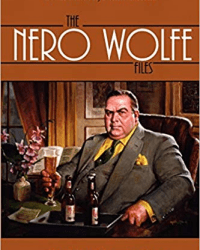 Science fiction has been a deep part of my life since I was a child. I discovered it early and have been reading it ever since I started picking my own reading material. As a consequence, I’ve written a lot of posts on various SF topics, but somehow I’ve never gotten around to writing much about my other favorite genre: detective stories.
As with the SF, I discovered Sherlock Holmes early, along with the Agatha Christie detectives, Miss Marple and Hercule Poirot. I fell in love with the idea of the puzzle-solving detective. (I also had a crush on Nancy Drew, but that was a whole other kind of interest.)
Then my dad, who also loved mysteries, introduced me to Rex Stout…
Continue reading
32 Comments | tags: Archie Goodwin, detective books, murder mysteries, mystery books, Nero Wolfe, Rex Stout | posted in Books, Mystery Monday
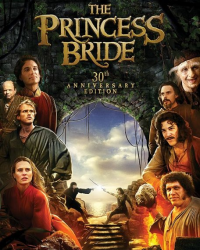 There is an oft-quoted line from the delightful movie, The Princess Bride. The line, by Inigo Montoya, is: “You keep using that word. I do not think it means what you think it means.”
The first time I noticed it was Rachel Maddow, enough years ago that I was still watching her show (so three or four, at least). Maddow is a Rhodes Scholar, so it caught my attention — my first thought was that I must be wrong about the word. I looked it up, and… I’m maybe slightly more right than wrong? Or, honestly, maybe it’s just a wash.
The word I’m talking about is craven.
Continue reading
7 Comments | tags: English, Rachel Maddow, The Princess Bride, words | posted in Basics
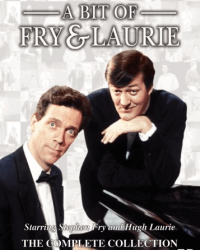 For a Sci-Fi Saturday post, this started as a stretch and then some. While Zero Sum Game (2018), by S.L. Huang, has at least a science fiction flavor, The Gun Seller (1996), by Hugh Laurie (yes, that Hugh Laurie), is more fantastical than science fictional. They do have in common a protagonist beyond capable as well as action hero thriller plots.
I can redeem the post now that I’ve read The Android’s Dream (2006), by John Scalzi (whom I’ve praised here before for Redshirts). Here, too, is an extremely competent protagonist in an action hero thriller. (As an aside, the two written by men feature a love interest. (While I’m at it, guess which of the three does not have a Wiki page.))
The bottom line: I thoroughly enjoyed all three!
Continue reading
13 Comments | tags: Hugh Laurie, John Scalzi, S.L. Huang, science fiction, science fiction books, SF, SF Books | posted in Books, Sci-Fi Saturday
 I’m far from being a literary expert and even further from knowing anything about poetry (but, of course, I know what I like). That said, there are some poems I’ve picked up along the way and cherished. I’ve posted here about three of them: Desiderata, Invictus, and To His Coy Mistress. These poems all have foundational roles in my worldview.
Yet, surprisingly, I haven’t yet written about the most foundational of them all: The Road Not Taken, by the great American poet, Robert Frost. In my youth, a friend once whined at me, “You go out of your way to be different, don’t you!” Yes. Yes, I do. Just like the poem says to.
Except it doesn’t. It doesn’t say that at all.
Continue reading
14 Comments | tags: Robert Frost, The Road Not Taken | posted in Quotes, Writing
 Maybe it’s seasonal — I really hate the darkness of winter — but I find myself sufficiently discouraged by the debate side of blogging to “hit the mute button” for a while. It isn’t the first time I’ve felt like withdrawing from what too often amounts to a tug-of-war. I didn’t blog at all in 2017, in part, because of that.
For months now I’ve been thinking of ending this blog (or taking another break), but I like having the outlet to express myself. I don’t do Twitter or Facebook or Instagram; I like to write about stuff. Whatever stuff strikes my fancy (which apparently breaks a Blogging Rule about focusing on a single topic).
My problem is that I’m tired of debates that go nowhere.
Continue reading
36 Comments | tags: debate, peace and quiet, quiet, quiet time | posted in Life






 Logos con carne