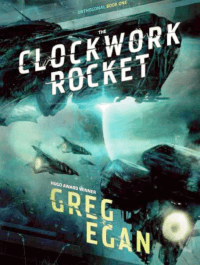
Orthogonal, book #1
Generally I like my SF hard, even diamond hard. I don’t disdain fantasy; some of my favorite stories are fantastic. (As I’ve said often, Terry Pratchett’s Discworld series is my #1, my proverbial desert island companion.) But I definitely lean towards harder SF.
Growing up it was, of course, the Holy Trinity, Asimov, Clarke, Heinlein, but there was also Clement, Niven, and many others who stirred a large measure of science into their fiction. More recently the list of hard SF authors includes Forward, Steele, Stephenson, and a particular favorite of mine, Greg Egan.
I can safely say his Orthogonal series is as hard as science fiction gets.
 Here’s a blast from the past, a re-post (of a re-post) of a post I wrote many years ago on another platform. (Long, long ago on a blog far, far away.) Creative writing isn’t really my thing, but I don’t hate how this turned out. I originally posted it here in
 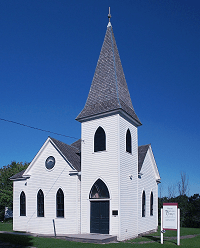 My dad and my dad’s dad were Lutheran ministers, and my dad’s brother taught theology at a Lutheran seminary. Lotta preachers on the paternal side of the tree. (Lotta teachers on the maternal side; mom and sis among them. I grew up with preachers and teachers.)
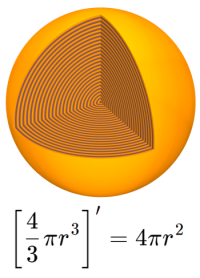
 There is a key rule of thumb (or heuristic) in science known as
  I’ve always had a strong curiosity about how things work. My dad used to despair how I’d take things apart but rarely put them back together. My interest was inside — in understanding the mechanism. (The irony is that I began my corporate career arc as a hardware repair technician.)
 I’ve contemplated the voice(s) in my head all my adult life, though it’s only recently I’ve thought deeply about them. One big question I’ve had being why sometimes it’s a dialog rather than a monolog.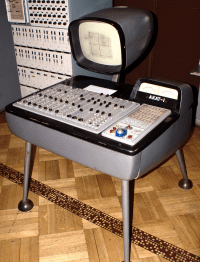






 Logos con carne