 Fans of Doctor Who, at least those without an unreasoning dislike of Jodie Whittaker, may get a kick out of seeing her in the 2011 British alien invasion film Attack the Block. It’s a small rather unregarded film with a box office return of only half its £8 million budget (about $11 million USD at 2021 rates). Since its release it has gotten well-deserved critical praise and won a few international accolades.
I should note that Whittaker is not the lead. At best, she’s a co-star, and perhaps almost more of a major supporting character (she is present for most of the film). The film stars John Boyega, who many will know as Finn from the final Star Wars trilogy.
I highly recommend it for all science fiction movie fans.
Continue reading
8 Comments | tags: Doctor Who, Dredd (movie), Jodie Whittaker, John Boyega, science fiction, science fiction movies, SF, SF Movies | posted in Sci-Fi Saturday
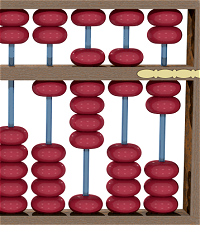
Digital Computer
In the previous post I introduced the “mind stacks” — two essentially parallel hierarchies of organization (or maybe “zoom level” is a more apt term) — and the premise of a causal disconnect in the block labeled Computer. In this post I’ll pick up where I left off and discuss that disconnect in detail.
A key point involves what we mean by digital computation — as opposed to more informal, or even speculative, notions sometimes used to expand the meaning of computation. The question is whether digital computing is significantly different from these.
The goal of these posts is to demonstrate that it is.
Continue reading
7 Comments | tags: algorithm, analog computer, computation, computationalism, computer program, digital computer | posted in Computers
Nurses are awesome!
For most of my life I’ve claimed I’m not someone who gets bored. I have too many interests to ever be bored in the usual sense, and there is always new territory to explore. I love trying new restaurants, new authors, and new TV shows.
The Yin to that Yang are the beloved favorites I visit again and again. There are eateries I frequent and authors I re-read. In part because there are menus to explore (and which change) and words and ideas that take repetition to fully understand and appreciate.
But I tend not to re-watch TV shows except in some special cases.
Continue reading
21 Comments | tags: Boston Legal, Good Omens, The Good Place, The Simpsons, Upload (TV series), William Shatner | posted in TV, TV Tuesday
 Time for another round of notes — bits and pieces too small for a post and which, for whatever reason, don’t seem likely to ever grow into a post (or even a Brain Bubble con carne). Best of all, from the perspective of many readers, not one single shred of math or contentious ideas!
These notes posts generally have an undercurrent of “spring cleaning” — the whole idea is to help reduce my ever-growing pile of scraps of paper with half-baked ideas. Actual spring cleaning is upon us, so I’m even more vested in seeing how much I can clear away. I even have some notes devoted to the very idea itself.
So without further ado…
Continue reading
14 Comments | tags: A Christmas Carol, Archer (TV series), Little Big Town, Little Feat, Paul Beatty, Steve Martin, William Shatner | posted in Friday Notes
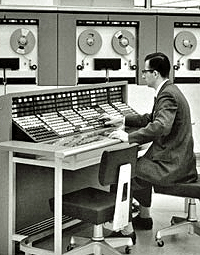 The Age of Fire is a key milestone for a would-be technological civilization. Fire is a dividing line, a technology that gave us far more effectiveness. Fire provides heat, light, cooking, defense, fire-hardened wood and clay, and eventually metallurgy.
The Age of the Electron is another key technological milestone. Electricity provides heat and light without fire’s dangers and difficulties, it drives motors, and enables long-distance communication. It leads to an incredible array of technologies.
The Age of the Algorithm is just as much of a game-changer.
Continue reading
31 Comments | tags: algorithm, computation, computationalism, computer program, digital computer | posted in Computers
 When I was in high school, bras were of great interest to me — mostly in regards to trying to remove them from my girlfriends. That was my errant youth and it slightly tickles my sense of the absurd that they’ve once again become a topic of interest, although in this case it’s a whole other kind of bra.
These days it’s all about Paul Dirac’s useful Bra-Ket notation, which is used throughout quantum mechanics. I’ve used it a bit in this series, and I thought it was high time to dig into the details.
Understanding them is one of the many important steps to climb.
Continue reading
15 Comments | tags: bra-ket notation, inner product, matrix multiplication, outer product, QM101, quantum mechanics | posted in Math, Physics
 Today is the first Earth-Solar event of 2021 — the Vernal Equinox. It happened early in the USA: 5:37 AM on the east coast, 2:37 AM on the west coast. Here in Minnesota, it happened at 4:37 AM. It marks the first official day of Spring — time to switch from winter coats to lighter jackets!
Have you ever thought the Solstices seem more static than the Equinoxes? The Winter Solstice particularly, awaiting the sun’s return, does it seem like the change in sunrise and sunset time seems stalled?
If you have, you’re not wrong. Here’s why…
Continue reading
26 Comments | tags: derivatives, equinox, sine wave, Solstice, spring equinox, Summer Solstice, vernal equinox, Winter Solstice | posted in Life, Math
 Lately, I’ve been writing a number of posts about quantum mechanics, a field where coordinate spaces play a big role. One of my earliest posts on this blog was about applying coordinate space concepts to real life, a thread I picked again up last year.
Long ago I introduced my buddy (I call him “Scott” here), who is also an aficionado of good beer, to the concept of beer space. I’ve mentioned it here once or twice in passing, and I have notes about it that date back to 2011 when I started this blog.
So it seems high time I actually wrote a post about beer space.
Continue reading
10 Comments | tags: beer, parameter space | posted in Basics
 Last night I watched a fun little film, Colossal (2016), written and directed by Nacho Vigalondo. Unfortunately, it was a financial flop with a box office of only $4.5 million against a $15 million budget. That’s unfortunate, because it makes it harder for such creative efforts to get made.
It stars Anne Hathaway and Jason Sudeikis, both of whom, from a playground in New England, turn out to have the power to manifest and control giant monsters that appear in, and terrorize, Seoul, Korea. (It’s not quite as random as it sounds.)
It’s a very inventive story that delighted me, and I recommend it as more than worth seeing for any fan of interesting movies.
Continue reading
14 Comments | tags: Anne Hathaway, fantasy, Jason Sudeikis, monsters, science fiction movies, SF Movies | posted in Movies
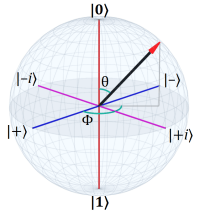
One small hill I had to climb involved the object I’ve been using as the header image in these posts. It’s called the Bloch sphere, and it depicts a two-level quantum system. It’s heavily used in quantum computing because qubits typically are two-level systems.
So is quantum spin, which I wrote about last time. The sphere idea dates back to 1892 when Henri Poincaré defined the Poincaré sphere to describe light polarization (which is the quantum spin of photons).
All in all, it’s a handy device for visualizing these quantum states.
Continue reading
16 Comments | tags: Bloch sphere, QM101, quantum computing, quantum mechanics, quantum spin | posted in Math, Physics




 Logos con carne