Category Archives: Philosophy
 In an earlier post, I wrote that:
The problem for any honest theist is,
“What if it isn’t true?”
The problem for any honest atheist is,
“What if it is true?”
Ultimately both represent ways of looking at the universe. There is no factual conclusion, no proof, about either one; both are matters of faith and belief.
Science can argue all it wants that the Logic and Scientific Method is superior to believing in an ineffable reality but given all we do know and all we don’t know, in the end it is still just a worldview.
Continue reading
14 Comments | tags: atheism, big bang, deism, Heisenberg Uncertainty, infinity, quantum physics, spacetime, spirituality, The Matrix, theism, Yin and Yang | posted in Basics, Philosophy, Religion, Science
 The universe is perverse. I don’t mean that in the peeking into windows sense (although the universe is indeed peeking into all our windows every moment), but in the ironic sense. The universe is deeply, hugely, fundamentally ironic in ways that are incredibly perverse.
It is ironic in that the only constant is that nothing is constant.
It is ironic in that the only absolute truth is that nothing is absolutely true.
It is ironic in that its most basic everyday aspects are its greatest mysteries.
It is ironic in that the toast always lands buttered side down.
Continue reading
14 Comments | tags: death, George Carlin, irony, Spider Robinson | posted in Basics, Philosophy
 Last time I talked about opposing pairs: Yin and Yang, light and dark, north and south. I mentioned that some pairs are true opposites of each other (for example, north and south), whereas other pairs are actually a thing and the lack of that thing (for example, light and dark). Such pairs are only opposites in the sense that an empty cup is the opposite of a full cup.
However, in both cases, the opposites stand for opposing ideas; two poles of polarity, and it is polarization that I address today. Specifically, I want to discuss a way of thinking that helps avoid it.
It’s easy to divide the world into sides. Many sayings begin with, “There’s two kinds of…” It seems easier to break things down into opposing points of view than to consider a variety of views. It seems easier to compare features between two things than twenty. Our court system has two sides and so does our political system (despite many attempts to create a viable third party).
Continue reading
4 Comments | tags: debate, discussion, parameter space, thinking, vectors, worldview | posted in Basics, Philosophy
 In my second post I raised the topic of mind versus brain. There is (or, perhaps more accurately, may be) a duality. I mentioned that there are two basic schools of thought: one holding that mind emerges from brain and the other holding that they are distinct, that mind is – somehow – not physical. For now, the duality of the brain/mind question is open.
But there is definitely a duality in the two schools: the two opposing points of view. In this post I want to focus on the idea of duality and the idea of ideas in opposition. This post is about Yin and Yang.
Continue reading
13 Comments | tags: binary, Dualism, trinary, Yin and Yang | posted in Basics, Philosophy
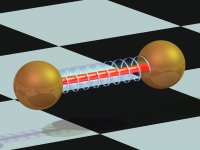 One last very important distinction: there’s a big difference between being ignorant and being stupid.
To be ignorant is to not know something.
We are all ignorant. In fact, given how much there is to know, we’re all far more ignorant than not. Granted, some more than others, and if there is any crime, it is in remaining willfully ignorant in the face of knowledge.
That’s stupid.
Continue reading
2 Comments | tags: stupid | posted in Basics, Philosophy, Sideband
While we’re on the topic of important distinctions, let’s also try to draw a line between the idea of liking something and the idea that something is good.
Very often people conflate the two. For example, that a “good” movie is a movie they liked.
In fact, good and like are different measurements, and I wish more people understood the difference.
Continue reading
4 Comments | posted in Basics, Philosophy, Sideband
A bit of Haiku:
A Thing is rarely
The whole or the only Truth.
Most Things are that way.
It’s useful to break the connection between the idea of fact and the idea of truth. A fact is a datum that stands on its own regardless of opinion, belief or perception.
A truth does reflect the opinion, belief or perception of a person.
Continue reading
4 Comments | tags: haiku | posted in Basics, Philosophy, Sideband
 In my first post I mentioned René Descartes and his seminal statement, “Cogito ergo sum.” I think, therefore I am. Because this statement and the ideas that spring from it lie at the heart of my philosophy and interests, it is a fitting topic for my second post. I also mentioned beginnings; these beginning posts explore such core topics as form my core and inform my mind.
And mind is the topic at hand. “I think, therefore I am,” concerns one of the most central, most personal, most mysterious, most fantastic aspects of our existence. It concerns something each of us shares every waking moment, but which remains–thus far–completely unknown.
That every moment mystery is that we think and experience. Each of us has a voice inside their head; an «I» that is us. It’s the driver of the car that says, “I’m hungry,” or “I’m going to the library.”
Continue reading
14 Comments | tags: Cogito ergo sum, Isaac Asimov, positronic brain, René Descartes, Star Trek, Theory of Consciousness | posted in Basics, Philosophy
“In the beginning was the Word, and the Word was…”
Many of you will recognize that as the first words of John 1:1 in the Christian New Testament Bible. There’s also a cross-reference to the very first words of that Bible (Old Testament in this case), “In the beginning God created the heavens and the earth.”
This is about words and about beginnings.
Others might recognize it as a conflation of the lead-in to a Moody Blues tune, OM, from In Search of the Lost Chord, and the title of a song from another album, In the Beginning, from On the Threshold of a Dream.
(Yes “album.” I’m old!)
Continue reading
23 Comments | tags: brain, brain mind problem, computationalism, computer guy, human brain, human mind, logos, Marriage, Moody Blues, rational mind, René Descartes, Theory of Consciousness, theory of mind | posted in Baseball, Basics, Books, Computers, Life, Movies, Opinion, Philosophy, Politics, Rant, Science, Society, The Interweb, TV







 Logos con carne