Category Archives: Philosophy
 A while back I wrote about Yin & Yang and how some opposites are truly opposing (positive and negative) while others are actually the presence and lack of a thing (light and dark, for example). In that article I cited men & women as being genuine opposing pairs, as you can’t consider either one the absence of the other.
That, understandably, generated some comments. Many would not choose to see women & men as being opposites at all, but as two variations on the theme of human. I think that is absolutely correct. Our two human sexes have far more in common than they do in opposition. (And note that gender is a different concept than sex. Gender is about how your mind works, about who you are; sex is about your genetic code.)
And yet… Anyone who lives in the real world knows that the “Mars & Venus” thing has some substance.
Continue reading
8 Comments | tags: duality, friends, lovers, men, women, Yin and Yang | posted in Basics, Philosophy
 The awkward Supreme Court ruling, known as “Citizens United,” has generated a lot of discussion about corporations being people. Note that this 2010 ruling did not establish corporations as people: that’s been on the books since the early 1800s.
The Citizens United ruling allowed them to spend vast sums of money as “free speech.”
Anyone not terribly alarmed by this and what it implies for our political future isn’t paying attention.
Continue reading
Leave a comment | tags: Citizens United, corporate body, corporate personhood, corporations, Information Technology, IT | posted in Life, Philosophy, Rant
 The tragedy in Aurora, Colorado, naturally re-activated the “discussion” of guns and gun control in the blogsphere. As with reproductive rights and gay rights, it’s not really a discussion so much as two sides throwing comments (or worse) at each other.
At least they aren’t throwing bullets (yet?). I guess that’s something.
Continue reading
5 Comments | tags: aurora colorado, colorado, current-events, gun control, gun debate, guns, Roger Ebert | posted in Life, Philosophy
 I’ve written articles here that touched on art theory, quantum theory, science fiction theory and number theory. There are many more theories: gravitational, electromagnetic, economic, social. Of course, there is also pure, practical and applied theory.
The idea gets around. On the outskirts there are theories about UFOs, ghosts, Noah’s Ark, many more!
And there are the “my theory” theories put forth from soap boxes, fliers and now blogs such as this. Literally such as this, since here’s my theory about theories.
Continue reading
3 Comments | tags: logic, no black swans | posted in Basics, Philosophy
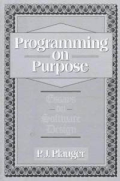 It’s been said that programming is an exercise in managing complexity, and while that’s true, it’s only part of the picture. (Still, it’s a pretty big part!) More to the point, managing complexity applies to much more than software design. A defining characteristic of modern life is its complexity, so learning to manage it might be a Pretty Good Idea!
Thinking about a friend struggling with the complexity of life lead to remembering of one of P.J. Plauger‘s articles about problem modeling from his book, Programming On Purpose. (The book is a collection of his essays from the long-defunct, but most excellent, Computer Language magazine.)
Thinking about Plauger’s ideas again lead to thinking they might be worth sharing. Whether fresh or review, these ideas capture six key basic analytical techniques nicely. If you’ve never really thought about them before, you may find the ideas useful.
Continue reading
Leave a comment | tags: bottom-up, computer programming, easy-to-hard, programming, top-down | posted in Basics, Computers, Philosophy
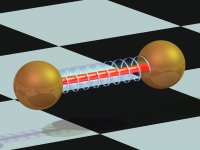 Imagine standing on a very tall hill in middle of a thick forest. Your hill is tall enough to take you above the trees; when you look out over the trees, you can see for miles around you. Ahead you can see another hill sticking above the trees; this is your goal.
You want to reach that hill.
A question arises; you are asked, “How long will it take to reach yon hill? What will you need along the way?”
Continue reading
Leave a comment | tags: computer programming, dragons, experience, programming, project management, software design | posted in Basics, Computers, Philosophy, Quotes, Sideband
 Recently I tried to (at least start to) give you my answer to the question, What Is Art? Here’s a look at an interesting aspect of creative work that differs somewhat from the usual way of things. At least it does when looked at from a certain angle. It has to do with breaking the rules.
The angle I have in mind sees rules and laws as being along a similar yardstick. They are actually different basic ideas, but they share a continuum such that one blends into the other. They are not a Yin/Yang pair; one is not in any sense the opposite of the other.
Rules and laws are similar — but distinct — ideas.
Continue reading
9 Comments | tags: art, breaking the rules, laws, rules, thinking outside the box | posted in Philosophy
 When it comes to a spiritual position, there are at least three major positions you can take. There are three metaphysical questions you can ask yourself. Each question, if you answer “no,” halts the process and defines your position.
The questioning continues so long as your answer is “yes.” As the questioning continues, you approach a more and more specific concept of “God(s).”
Basically, it’s a flow-chart that calculates your metaphysical point of view.
Continue reading
11 Comments | tags: agnostic, atheism, belief, deism, faith, God, metaphysics, prayer, spirituality, theism, three | posted in Basics, Philosophy, Religion
 An old and challenging question is, “What is art?” The question is probably as old as art and artists; the moment someone made a cave painting, someone else probably asked, “But is it art?”
It’s possible the question cannot be answered in any objective way; we may each have a personal definition of art. Here are some of my thoughts on the matter.
First, there are (at least) three distinct questions one might ask regarding art:
- Is it art?
- Is it good art?
- Do I like it?
This essay is strictly about the first question. Critical review (whether a piece of Art is good) and taste (whether you like it) are separate matters.
Continue reading
26 Comments | tags: Andy Warhol, art, artist, cave painting, Jackson Pollock, Roger Ebert, video games | posted in Basics, Philosophy
 My recent post about how the Big Bang and “Let there be Light” seem equally fantastic to me triggered an interesting comment from a reader. A detailed response requires more elbow room than a comment allows, so here’s a follow-up article instead.
One of the points involved that our scientific ideas, no matter how inaccurate they may turn out to be, are at least based on evidence. And to the credit of science, when we recognize errors in our interpretation of the evidence, science changes to accommodate the new interpretation.
This has been, as I mentioned in that post, hugely successful. One of the failures of our spiritual metaphysics is that it clings to frameworks defined thousands of years ago and often stubbornly refuses to accommodate new information.
Continue reading
7 Comments | tags: atheism, big bang, brain mind problem, Gandhi, Kurt Gödel, Lee Smolin, Max Planck, quantum physics, Roger Penrose, Sheldon Glashow, spacetime, spirituality, String theory, theism, Theory of Consciousness, Yin and Yang | posted in Philosophy, Physics, Religion, Science




You must be logged in to post a comment.