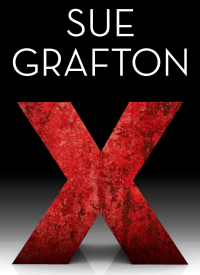
‘X’ is for… ??
I’ve written about secret codes before. The Pigpen cipher was pretty simplistic, almost more a child’s game, but the Playfair cipher was a bit more interesting. That one came from a murder mystery novel by Dorothy L. Sayers. Today I thought I’d show you another simple code from another mystery novel.
1829 2125 0038 2226 1600 2125 0027 1722 4200 1829 1600 4219 2518 1617 1900 4122 3916 3200 3700 4019 0025 2016 0028 1724 2718 2241 4400 2118 0020 2516 2500 1829 1600 1819 2316 1517 2118 1617 0038 2226 1643 0015 2921 3829 0030 2025 1800 2425 2521 2841 2500 4120 4240 1617 2500 1822 0018 2916 0031 1619
Stop! See if you can decode the above before continuing.
Continue reading
8 Comments | tags: Bernie Rhodenbarr, cipher, code, decipher, Kinsey Millhone, Lawrence Block, Sara Paretsky, secret codes, substitution cipher, Sue Grafton, V.I Warshawski | posted in Books, Mystery Monday
 Recently I mentioned that mathematician John Conway died last April. To his eternal disgruntlement, he is most famous for his “game” of Life — something he considered trivial and inferior to his real mathematical work. That fame is largely due to a Martin Gardener column in Scientific American — the most popular column the magazine had published up to then.
I said I wasn’t going to write about Life because it’s such a well-covered topic, but I thought I might whip up an implementation in Conway’s honor. (Went there; did that; videos below.) Getting into it made me realize Life connects back to my virtual reality posts.
So it turns out I am going to write about it (a little).
Continue reading
4 Comments | tags: computation, computer generated images, computer model, computer program, Conway's Life, John Conway, Turing Halting Problem, Turing Machine, virtual reality | posted in Computers
 One of the older notes on my board just reads: “Armageddon (1998) vs Deep Impact (1998)”. On weirdness points, the note could just as easily have read: “Antz (1998) vs A Bug’s Life (1998)”.
The coincidence that both coincidences take place in 1998 (ah, the good old days) does makes it a bit weirder, but weird coincidences aren’t the point of my note or this post. The point is how audiences reacted to the films.
For this Sci-Fi Saturday, I thought I’d ramble about some SF Yin-Yang pairs that have struck me over the years.
Continue reading
9 Comments | tags: Frank Miller, George Lucas, Michael Bay, Mimi Leder, Peter Jackson, Robert Heinlein, science fiction movies, SF, SF Movies | posted in Movies, Sci-Fi Saturday
 Have you ever lain awake at night wondering where the name Triscuit came from and what could it possibly mean? No? Me either, but apparently some people have, at least a little, and now they can finally sleep easily. It seems that, due to some intrepid detective work (by a comedian), the mystery is solved. It wasn’t ghosts after all but the work of humans.
The punchline is that the name stands for “electric biscuit” — because back in the early 1900s, when Nabisco invented the Triscuit, electricity was a Big New Thing. Everyone was into it. So, they presented biscuits baked to perfection using that new-fangled electricity stuff which was clearly superior to any old-fashioned source of heat.
And now, like Pringles and potato-chips in general, they come in lots of flavors and some variations. I don’t know if they’re still electric biscuits, though.
Continue reading
12 Comments | tags: ATC, coronavirus, Friday Fun, laser light, Nabisco, Scientific American, Triscuit | posted in Life
 At the beginning of the week, I mentioned I’m reading Our Mathematical Universe (2014), by Max Tegmark. His stance on inflation, and especially on eternal inflation, got me really thinking about it. Then all that thinking turned into a post.
It happened again last night. That strong sense of, “Yeah, but…” With this book, that’s happening a lot. I find something slightly, but fundamentally, off about Tegmark’s arguments. There seems an over-willingness to accept wild conclusions. This may all say much more about me than about Tegmark, which in this case is perfect irony.
Because what set me off this time was his chapter about human intuition.
Continue reading
24 Comments | tags: human consciousness, human mind, intuition, Max Tegmark | posted in Opinion, Philosophy, Science
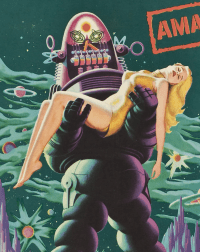 Back when I posted about Delores, the Westworld robot, I mentioned a question that once came up in a science fiction fan forum: What’s the collective noun for robots? A mechanation of robots? A clank of robots? I suggested an Asimov of robots, but maybe the best suggestion was an uprising of robots.
An uprising of robots could refer to the scary Terminator scenario but could also be taken as just meaning the rising up of (non-killer, useful) robots. That latter interpretation being not just factual, but quite operative already.
So, for this Wednesday Wow, an uprising of robots…
Continue reading
13 Comments | tags: Atlas (the robot), Boston Dynamics, robot dog, robotics, robots | posted in Science, Society, Wednesday Wow
 I’ve been noticing lately how much I don’t miss MSNBC. I was in the habit of catching Nicolle Wallace’s show every weekday at 3 PM (Central Time). She was one of the last on-air hosts I could stomach. (Chris Hayes is okay, and Rachel Maddow can be very good when I’m in the mood for that level of earnestness.)
But I’ve long thought Chris Matthews was a brilliant jackass in love with the sound of his own voice. And don’t get me started on Brian Williams, who, no, I do not forgive for besmirching journalism. He should retire and find other work.
But I thought Nicolle Wallace was okay.
Continue reading
12 Comments | tags: cable news, cable TV, CNN, Edward R. Murrow, journalism, Katy Tur, MSNBC, news | posted in TV, TV Tuesday
 Remember when Moanday was a groanday because we went back to work after a nice weekend away? I’ve been free of that since I retired (seven years ago) and now lots of people are free of that.
Unfortunately, many of them are also free of a paycheck, which, as the saying goes, really gives one something to groan about. (My 401K lost an ass-puckering amount of value last quarter, so I’m groaning, too.)
I dunno about you, but I could use some comfort food…
Continue reading
8 Comments | tags: cheese, cheese noodles, coronavirus, Game of Life, John Conway | posted in Life
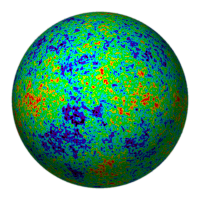
Bang!!
I’m reading Our Mathematical Universe (2014), by Max Tegmark, and I’ll post about the book when I finish. However, he got my attention early with the topic of eternal inflation. That got me thinking about how there are some key unanswered questions regarding the Big Bang and inflation of the non-eternal sort.
Inflation certainly does need some explaining. It may be related to dark energy, as both seem to do the same sort of thing (push space apart). The putative physics of inflation is bad enough; eternal inflation is (in my view) fairy tale physics.
For one thing, eternal? Seriously? Infinite something from nothing?
Continue reading
26 Comments | tags: big bang, eternal inflation, inflation, Max Tegmark, reality, the multiverse, universe | posted in Philosophy, Science
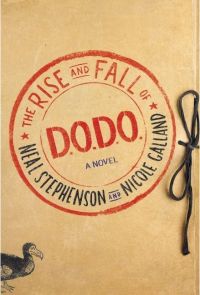 Neal Stephenson, like Greg Egan, is a hard science fiction author who never fails to delight me with something new and tasty. Both Stephenson and Egan seem able to leave footprints in otherwise well-trodden ground. Stephenson, in particular, often makes me LOL.
That’s not an acronym I use very often, but it seems especially appropriate here given this post is about The Rise and Fall of D.O.D.O., by Neal Stephenson and Nicole Galland. The book has so many tongue-in-cheek military acronyms (DODO, DTAP, DEDE, MUON, etc) that it has a glossary at the back.
The story concerns parallel worlds, wave-function collapse, and witches.
Continue reading
7 Comments | tags: hard SF, Neal Stephenson, Nicole Galland, science fiction, science fiction books, SF, SF Books, The Rise and Fall of D.O.D.O., witches | posted in Books, Sci-Fi Saturday







 Logos con carne