About Wyrd Smythe
The canonical fool on the hill watching the sunset and the rotation of the planet and thinking what he imagines are large thoughts.
 For Sci-Fi Saturday I thought I’d mention how much I’ve enjoyed some recent Netflix original productions about robots (the very intelligent kind). As usual, I’m a little late to the party. For most people with Netflix, the post’s title probably immediately evoked either or both shows.
I’m speaking, of course, of Love, Death & Robots, an anthology of animated shorts, and of I Am Mother, a movie about a robot raising a child (humanity’s last best hope). I was delighted by the former immediately, but with the latter it wasn’t until I knew the entire story that my opinion changed from poor to good. Through most of the movie it seemed to be a rather flawed story I wasn’t sure I liked.
But the ending put all the plot holes in much better light!
Continue reading
51 Comments | tags: Annihilation (film), Death & Robots, I Am Mother, Kate McKinnon, love, Mila Kunis, Netflix, science fiction, science fiction movies, science fiction TV, The Spy Who Dumped Me | posted in Sci-Fi Saturday
 I have a growing list of links to articles that catch my eye, things I’d like to post about (for whatever reason). But there’s a tension between posts based on lists of links or draft posts or idea files versus posts based on what I’m currently thinking about.
I seem to feel the latter isn’t enough, that I need a reserve for “lean times” — which never happen. More and more, I post when something strikes me as worth the effort. The “idea pile” seems almost like homework.
Anyway, here are some things that recently caught my eye.
Continue reading
6 Comments | tags: AI, analog recording, Crab Nebula, Mars, Marshall McLuhan, photons, vinyl record | posted in Brain Bubble
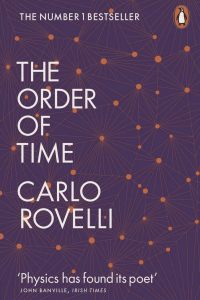 In the last week or so I read an interesting pair of books: Through Two Doors at Once, by author and journalist Anil Ananthaswamy, and The Order of Time, by theoretical physicist Carlo Rovelli. While I did find them interesting, and I’m not sorry I bought them (as Apple ebooks), I can’t say they added anything to my knowledge or understanding.
I was already familiar with the material Ananthaswamy covers and knew of the experiments he discusses — I’ve been following the topic (the two-slit experiment) since at least the 1970s. It was nice seeing it all in one place. I enjoyed the read and recommend it to anyone with an interest.
I had a little trouble with the Rovelli book, perhaps in part because my intuitions of time are different than his, but also because I found it a bit poetic and hand-wavy.
Continue reading
25 Comments | tags: Anil Ananthaswamy, arrow of time, Carlo Rovelli, is time fundamental, light, photons, Planck Length, Planck Time, spacetime, time, two slit experiment | posted in Books, Physics
Robert Mueller appears before Congress tomorrow…

But will it amount to anything in the current political-social climate, is the question. The last few years make that an iffy proposition.
28 Comments | tags: anger, Anyone But Trump, democracy, democratic society, disgust, Donald Trump, evil, GOP, politicians, Racisim, Republican Party, stupid, stupid people, stupid stupid stupid, stupidity, Trump is a loser, Trump is a monster, Trump is a racist | posted in Politics
Posted a while back, but even more relevant now:

We ought to be able to run a moldy orange against him and win by a landslide, but parts of this country are in fully embracing their ugly underbelly. It’s feeling like the 1960s again.
18 Comments | tags: anger, Anyone But Trump, democracy, democratic society, disgust, Donald Trump, evil, GOP, politicians, Racisim, Republican Party, stupid, stupid people, stupid stupid stupid, stupidity, Trump is a loser, Trump is a monster, Trump is a racist | posted in Politics
 This ends an arc of exploration of a Combinatorial-State Automata (CSA), an idea by philosopher and cognitive scientist David Chalmers — who despite all these posts is someone whose thinking I regard very highly on multiple counts. (The only place my view diverges much from his is on computationalism, and even there I see some compatibility.)
In the first post I looked closely at the CSA state vector. In the second post I looked closely at the function that generates new states in that vector. Now I’ll consider the system as a whole, for it is only at this level that we actually seek the causal topology Chalmers requires.
It all turns on how much matching abstractions means matching systems.
Continue reading
3 Comments | tags: brain, brain mind problem, computation, computationalism, computer model, computer program, David Chalmers, finite state machine, human brain, human mind, mind, positronic brain, state diagram, state table, theory of mind | posted in Computers
This is a continuation of an exploration of an idea by philosopher and cognitive scientist David Chalmers — the idea of a Combinatorial-State Automata (CSA). I’m trying to better express ideas I first wrote about in these three posts.
The previous post explored the state vector part of a CSA intended to emulate human cognition. There I described how illegal transitory states seem to violate any isomorphism between mental states in the brain and the binary numbers in RAM locations that represent them. I’ll return to that in the next post.
In this post I want to explore the function that generates the states.
Continue reading
22 Comments | tags: brain, brain mind problem, computation, computationalism, computer model, computer program, David Chalmers, finite state machine, human brain, human mind, mind, positronic brain, state diagram, state table, theory of mind | posted in Computers
Last month I wrote three posts about a proposition by philosopher and cognitive scientist David Chalmers — the idea of a Combinatorial-State Automata (CSA). I had a long debate with a reader about it, and I’ve pondering it ever since. I’m not going to return to the Chalmers paper so much as focus on the CSA idea itself.
I think I’ve found a way to express why I see a problem with the idea. I’m going to have another go at explaining it. The short version turns on how mental states transition from state to state versus how a computational system must handle it (even in the idealized Turing Machine sense — this is not about what is practical but about what is possible).
“Once more unto the breach, dear friends, once more…”
Continue reading
8 Comments | tags: brain, brain mind problem, computation, computationalism, computer model, computer program, David Chalmers, finite state machine, human brain, human mind, mind, positronic brain, state diagram, state table, theory of mind | posted in Computers
 Over the last few days I’ve found myself once again carefully reading a paper by philosopher and cognitive scientist, David Chalmers. As I said last time, I find myself more aligned with Chalmers than not, although those three posts turned on a point of disagreement.
This time, with his paper Facing Up to the Problem of Consciousness (1995), I’m especially aligned with him, because the paper is about the phenomenal aspects of consciousness and doesn’t touch on computationalism at all. My only point of real disagreement is with his dual aspects of information idea, which he admits is “extremely speculative” and “also underdetermined.”
This post is my reactions and responses to his paper.
Continue reading
81 Comments | tags: brain, consciousness, David Chalmers, human brain, human consciousness, human mind, mind, Theory of Consciousness, theory of mind | posted in Philosophy
 Oh, the advantages of finally getting around to starting to clean out the garage (which, in Minnesota, is strictly a summer activity).
I just knew I had a copy of Gödel, Escher, Bach: An Eternal Golden Braid, by Douglas Hofstadter. (Full disclosure, it’s a copy someone lent me decades ago that I never returned because it took me so long to get around to reading it. By then I’d lost touch with the co-worker who’d given it to me.)
Lately, I’ve been wanting to go at it again (and finish it this time), but I couldn’t find the copy I was sure I had. Turned out to be, along with a few other long-missing friends, in a box of books in the garage; one I’d just left out there with some other boxes (and luckily, no weather damage).
So added bonus to finally starting a chore I’ve been putting off for years!
15 Comments | tags: Douglas Hofstadter, GEB | posted in Books, Life




 Logos con carne