Damn, another one down! Patrick Stewart died last Wednesday, so now I need to create a new commemoration meme:
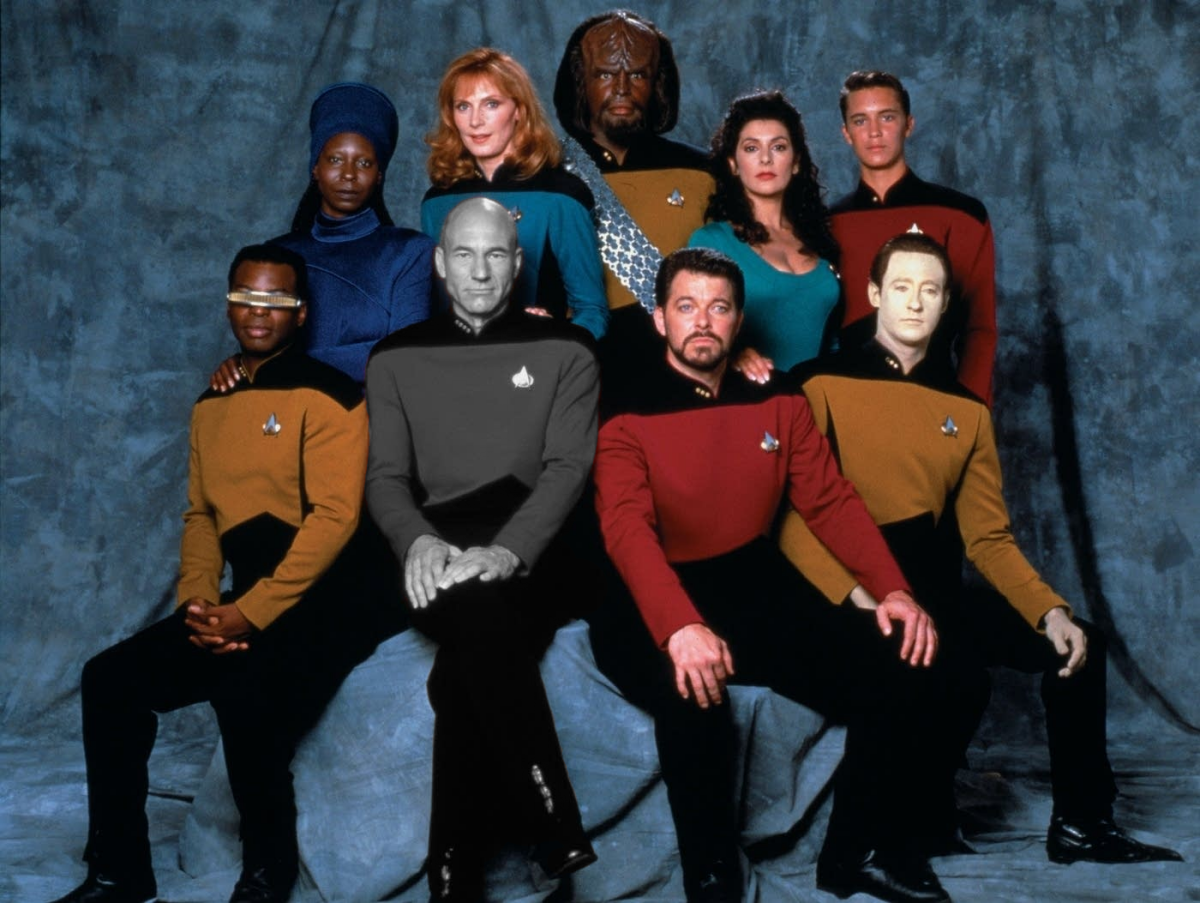
We’re starting from the top this time.
Damn, another one down! Patrick Stewart died last Wednesday, so now I need to create a new commemoration meme:
We’re starting from the top this time.
With the passing of Walter Koenig last Sunday, memes like this have been making the rounds:
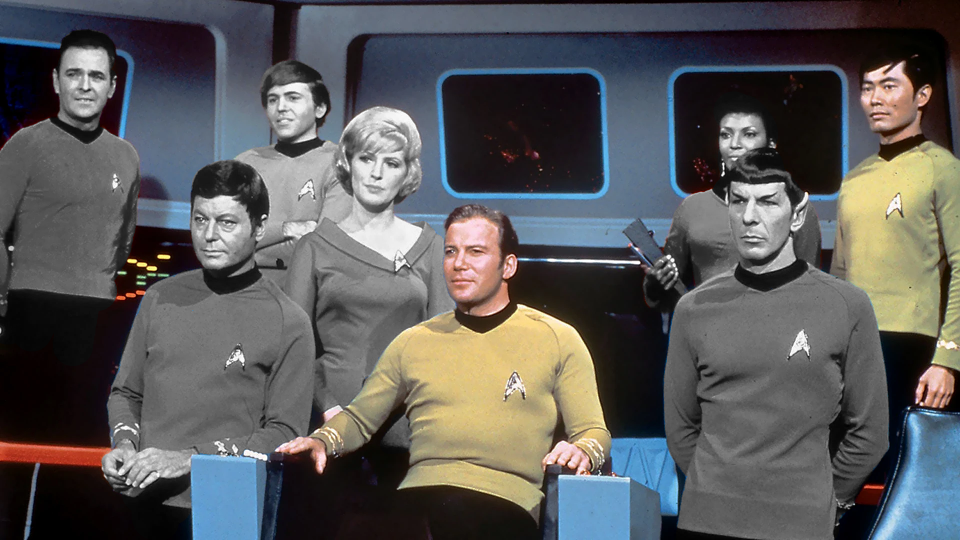
I made the one above from a good quality photo, but I don’t like how Uhura is hidden behind Spock. For that matter, can’t see much of Chekov, either. So, I made another one from a different photo:
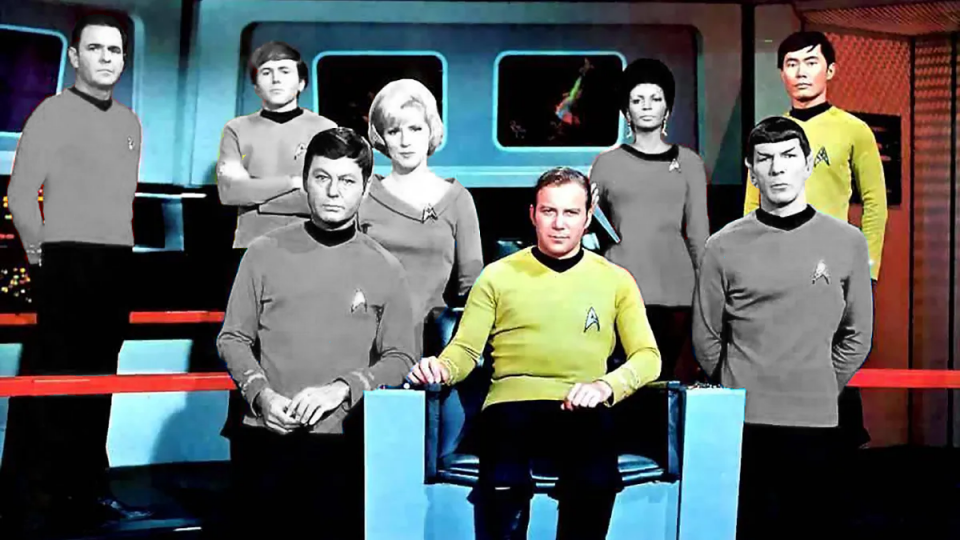
Though this photo isn’t as good as the first one.
 I have a great deal of respect for science fiction author William Gibson and what he contributed to the art but can’t honestly say I love his writing. Gibson and Bruce Sterling are widely viewed as the fathers of cyberpunk (hence the respect), but I find their writing sometimes opaque and challenging (though maybe that’s on me).
In recent years I’ve been revisiting both authors — rereading the few stories I have read and checking out many I never did. It hasn’t moved the needle that much for me, though. Still don’t find them highly engaging.
Which brings us to The Peripheral and its Amazon Prime adaptation.
 Over the last few weeks, I’ve watched (on Netflix) two seasons of Resident Alien, a SyFy television adaptation of the same-named comic series. A third season finished airing on the SyFy channel earlier this month but isn’t yet available on Netflix.
Both the comic and its adaptation are stories about an alien stranded on Earth, but the adaptation is a severe departure from its source text. Worse from my point of view, the television show is an Idiot Clown comedy, and I’ve never cared for those. In its favor, though, it stars the inimitable Alan Tudyk.
The pity is that the comic story is much better — and much smarter — than the adaptation but has been almost entirely discarded.
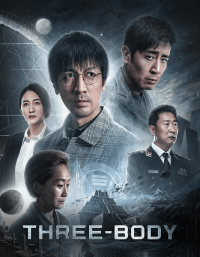 Over the last few weeks, on Amazon Prime, I’ve watched all 30 episodes of the first season of Three-Body, the Chinese television adaptation of the 2006 science fiction novel The Three-Body Problem, by Liu Cixin.
That’s the first book of the Remembrance of Earth’s Past trilogy. The second and third books are The Dark Forest (2008) and Death’s End (2010). I haven’t (yet) read the novel, but the adaptation is said to be reasonably faithful to the text.
I enjoyed the TV adaptation but found certain aspects of it frustrating. I’m curious to see if my frustrations are due to the adaptation or inherent in the novel.
 One of the main posters for the Netflix adaptation of the Neil Gaiman graphic novel The Sandman seems to encapsulate and illustrate an approach by Hollywood that many, myself included, find problematic. This post continues a series of posts pondering the issue of actor swapping in film and TV roles.
I spent two posts (one and two) on The Sandman adaptation because of its examples of actor swapping in key roles. These stand out because they apply to especially well-defined characters. Similar, say, to the characters on Futurama.
I hadn’t intended a third post, but the poster caught my eye. It’s the one in the lede of the two posts (and this one). Its layout out intrigues me.
The last post expressed some key disappointments (and a few things I liked) about the Netflix adaptation of The Sandman (1989-1996), a widely respected, much loved, graphic novel series from writer Neil Gaiman (and numerous artists). Once I started writing that post, 2000 words came easy, but I never got to most of the notes I had.
I have three pages of said notes, so I figured I needed a follow-up post. I’m not bothering with any plot synopsis, so if you aren’t already familiar with the story and the adaptation, neither of these posts — especially this one — will make much sense.
Suffice to say, the show has its fans, but I’m not among them.
This past week I watched the eleven episodes of the first (and possibly only) season of the Netflix adaptation of The Sandman (2022), which is based on the famous Neil Gaiman comic series, The Sandman (1989-1996), considered by many to be one of the greatest graphic novels ever.
I think live-action adaptations of comics and animated shows are very hard to get right. And Netflix seems to have a bad history when it comes to adaptations, even of live shows (they’ve had a number of notable fails along those lines). On the other hand, Gaiman was attached to, and involved in, the production, which seemed hopeful.
But to say I was disappointed by the series is putting it mildly.
 Early last year I wrote about Cowboy Bebop, an award-winning Japanese anime classic from 1998. It’s on my list of favorite things ever. It’s so rich on so many levels that I’ve watched and enjoyed it at least half a dozen times. For me it’s an almost perfect combination of anime, hard SF, music, action, and humor.
Late last year Netflix released a live action version with John Cho, Mustafa Shakir, and Daniella Pineda, as Spike, Jet, and Faye, respectively. I watched three episodes and bailed. It wasn’t just me. Netflix cancelled the series only a few weeks after its release.
Ever since, I’ve wanted to give it another try, see if it really is that bad.
 For Sci-Fi Saturday I have to post about Farscape, a science fiction TV series from 1999-2003 that (on the advice of a friend) I just started watching. I’m only up to episode 18 of season one, but I’m enjoying the series so much I thought I’d post about it. There are four seasons comprising 88 episodes (22 per season), so my opinion could change, but so far, I’m totally loving it.
I also want to mention the third Ben Bova book I’ve read recently. Bottom line, I really enjoyed it. Definitely the best of the three. It restored my faith in Bova.
Lastly, this morning I had, what even for me was, a particularly weird dream experience. Our subconscious minds are quite surprising and just plain bizarre sometimes!






Posts pertaining to programming!


You must be logged in to post a comment.