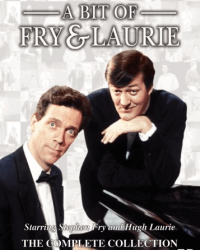
 For a Sci-Fi Saturday post, this started as a stretch and then some. While Zero Sum Game (2018), by S.L. Huang, has at least a science fiction flavor, The Gun Seller (1996), by Hugh Laurie (yes, that Hugh Laurie), is more fantastical than science fictional. They do have in common a protagonist beyond capable as well as action hero thriller plots.
I can redeem the post now that I’ve read The Android’s Dream (2006), by John Scalzi (whom I’ve praised here before for Redshirts). Here, too, is an extremely competent protagonist in an action hero thriller. (As an aside, the two written by men feature a love interest. (While I’m at it, guess which of the three does not have a Wiki page.))
The bottom line: I thoroughly enjoyed all three!
Continue reading
12 Comments | tags: Hugh Laurie, John Scalzi, S.L. Huang, science fiction, science fiction books, SF, SF Books | posted in Books, Sci-Fi Saturday
 I’m far from being a literary expert and even further from knowing anything about poetry (but, of course, I know what I like). That said, there are some poems I’ve picked up along the way and cherished. I’ve posted here about three of them: Desiderata, Invictus, and To His Coy Mistress. These poems all have foundational roles in my worldview.
Yet, surprisingly, I haven’t yet written about the most foundational of them all: The Road Not Taken, by the great American poet, Robert Frost. In my youth, a friend once whined at me, “You go out of your way to be different, don’t you!” Yes. Yes, I do. Just like the poem says to.
Except it doesn’t. It doesn’t say that at all.
Continue reading
14 Comments | tags: Robert Frost, The Road Not Taken | posted in Quotes, Writing
 Maybe it’s seasonal — I really hate the darkness of winter — but I find myself sufficiently discouraged by the debate side of blogging to “hit the mute button” for a while. It isn’t the first time I’ve felt like withdrawing from what too often amounts to a tug-of-war. I didn’t blog at all in 2017, in part, because of that.
For months now I’ve been thinking of ending this blog (or taking another break), but I like having the outlet to express myself. I don’t do Twitter or Facebook or Instagram; I like to write about stuff. Whatever stuff strikes my fancy (which apparently breaks a Blogging Rule about focusing on a single topic).
My problem is that I’m tired of debates that go nowhere.
Continue reading
36 Comments | tags: debate, peace and quiet, quiet, quiet time | posted in Life
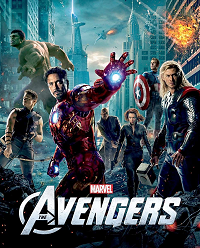 Well I have at long last finally seen Marvel’s The Avengers (2012) and Thor (2011) — two of the early films in the long-running Infinity Saga (the series has 23 films out so far; more are coming). The short version is I thought The Avengers had some good bits, but overall, I found them both fairly underwhelming (but I’m so not the audience for these).
Unfortunately, I was also a little underwhelmed this week by Stargate: Universe, which I tried binge watching because John Scalzi (whose book Redshirts I really liked) was the creative consultant on the show. I quit after three episodes. It wasn’t that it was bad so much as it (as with these comic book movies) just seems like the same old stuff I’ve seen many, many times.
Ah well, you can’t win them all.
Continue reading
13 Comments | tags: Marvel comics, Marvel movies, science fiction, science fiction movies, SF, SF Movies | posted in Movies
 The Thanksgiving holiday we celebrate here in the USA has some unfortunate overtones regarding its colonial origin. Still, the idea of a festival of thanks is an ancient one — thanks for a good harvest or a good hunt. Or, in our case, thanks for helping us not die last winter.
As with Christmas or the Copenhagen interpretation, we tend to take a “shut up and calculate!” approach to the holidays. “Shut up and shop!” in the case of the Winter Solstice, and “Shut up and give thanks!” today.
One thing we can be very thankful about is patterns…
Continue reading
4 Comments | tags: atoms, DNA, electrons, entropy, Mandelbrot, Mandelbrot fractal, photons, quarks, Thanksgiving | posted in Life
 For the last two weeks I’ve written a number of posts contrasting physical systems with numeric systems.
(The latter are, of course, also physical, but see many previous posts for details on significant differences. Essentially, the latter involve largely arbitrary maps between real world magnitude values and internal numeric representations of those values.)
I’ve focused on the nature of causality in those two kinds of systems, but part of the program is about clearly distinguishing the two in response to views that conflate them.
Continue reading
20 Comments | tags: Alan Turing, Cantor's Diagonal, Georg Cantor, Halting Problem, Heisenberg Uncertainty, Incompleteness Theorems, Kurt Gödel, quantum mechanics, Turing Halting Problem, Werner Heisenberg | posted in Brain Bubble, Computers
 I’ve written before about Drake’s Equation and the Fermi Paradox. The former suggests the possibility of lots of alien life. The latter asks okay, so where the heck are they? Given that the universe just started, it’s possible we’re simply the first. Maybe the crowd comes later. (Maybe we create the crowd!)
Recently, one of my favorite YouTube channels, PBS Space Time, began a series of videos about this. The first one (see below) talks about the Rare Earth Hypothesis, a topic that has long fascinated me.
The synchronicity in this is that I’d just had a thought about basic probability and how it applies to our being here…
Continue reading
16 Comments | tags: alien contact, alien races, alien vistors, aliens, ancient alien races, ancient aliens, anthropic principle, Drake Equation, Fermi Paradox, PBS Space Time, Rare Earth Hypothesis | posted in Opinion, Science
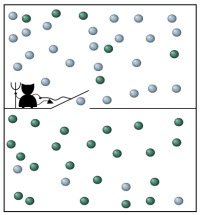 There is something about the articles that Ethan Siegel writes for Forbes that don’t grab me. It might be that I’m not in the target demographic — he often writes about stuff I explored long ago. I keep an eye on him, though, because sometimes he comes up with a taste treat for me.
Such as his article today, No, Thermodynamics Does Not Explain Our Perceived Arrow Of Time. I jumped on it because the title declares something I think many have backwards: the idea that time arises from entropy or change. Quite to the contrary, I think entropy and change are consequences of time (plus physics).
Siegel makes an interesting argument I hadn’t considered before.
Continue reading
62 Comments | tags: arrow of time, entropy, Ethan Siegel, got time, is time fundamental, laws of thermodynamics, thermodynamics, time | posted in Opinion, Physics
 Last time I left off with a virtual ball moving towards a virtual wall after touching on the basics of how we determine if and when the mathematical ball virtually hits the mathematical wall. It amounts to detecting when one geometric shape overlaps another geometric shape.
In the physical world, objects simply can’t overlap due to physics — electromagnetic forces prevent it. An object’s solidity is “baked in” to its basic nature. In contrast, in the virtual world, the very idea of overlap has no meaning… unless we define one.
This time I want to drill down on exactly how we do that.
Continue reading
4 Comments | tags: algorithm, computer generated images, computer model, computer program, virtual reality | posted in Computers
 Last time we saw that, while we can describe a maze abstractly in terms of its network of paths, we can implement a more causal (that is: physical) approach by simulating its walls. In particular, this allows us to preserve its basic physical shape, which can be of value in game or art contexts.
This time I want to talk more about virtual walls as causal objects in a maze (or any) simulation. Walls are a basic physical object (as well as a basic metaphysical concept), so naturally they are equally foundational in the abstract and virtual worlds.
And ironically, “Something there is that doesn’t love a wall.”
Continue reading
16 Comments | tags: computer generated images, computer model, computer program, virtual reality | posted in Computers







 Logos con carne