Category Archives: Books
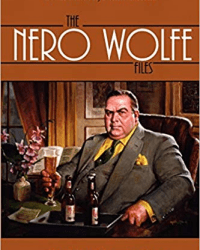 Science fiction has been a deep part of my life since I was a child. I discovered it early and have been reading it ever since I started picking my own reading material. As a consequence, I’ve written a lot of posts on various SF topics, but somehow I’ve never gotten around to writing much about my other favorite genre: detective stories.
As with the SF, I discovered Sherlock Holmes early, along with the Agatha Christie detectives, Miss Marple and Hercule Poirot. I fell in love with the idea of the puzzle-solving detective. (I also had a crush on Nancy Drew, but that was a whole other kind of interest.)
Then my dad, who also loved mysteries, introduced me to Rex Stout…
Continue reading
28 Comments | tags: Archie Goodwin, detective books, murder mysteries, mystery books, Nero Wolfe, Rex Stout | posted in Books, Mystery Monday
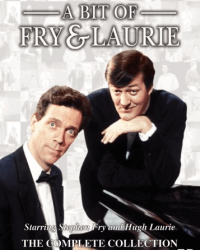 For a Sci-Fi Saturday post, this started as a stretch and then some. While Zero Sum Game (2018), by S.L. Huang, has at least a science fiction flavor, The Gun Seller (1996), by Hugh Laurie (yes, that Hugh Laurie), is more fantastical than science fictional. They do have in common a protagonist beyond capable as well as action hero thriller plots.
I can redeem the post now that I’ve read The Android’s Dream (2006), by John Scalzi (whom I’ve praised here before for Redshirts). Here, too, is an extremely competent protagonist in an action hero thriller. (As an aside, the two written by men feature a love interest. (While I’m at it, guess which of the three does not have a Wiki page.))
The bottom line: I thoroughly enjoyed all three!
Continue reading
12 Comments | tags: Hugh Laurie, John Scalzi, S.L. Huang, science fiction, science fiction books, SF, SF Books | posted in Books, Sci-Fi Saturday
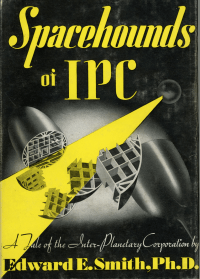 I’ve been reading Spacehounds of IPC (1947), by E.E. “Doc” Smith, and… it hasn’t aged well. For a long time I’ve been thinking it would be fun to read Smith’s Lensmen series again but given that I’m having a hard time finishing Spacehounds, maybe that train left the station some time ago (especially with so much other stuff to read).
It’s a pity because I sure liked those books when I was (much) younger. Smith wrote action-filled space opera that was very imaginative, and which also reeked of technology and science. I’ve never been that much into the space battles, but I’ve always been a sucker for hard SF. Fictionalized tech manuals work okay for me.
But these aren’t the gems mentioned in the post’s title.
Continue reading
11 Comments | tags: Contact (movie), Dark City, E.E. Doc Smith, science fiction, science fiction books, science fiction film, science fiction movies, SF, SF Books, SF Movies | posted in Books, Sci-Fi Saturday

Code master Wheatstone
Among my second-tier interests are murder mysteries, detective stories, and cryptography. The first typically includes the second, but there are many detective stories that don’t involve murder. Two of my favorite detectives, Spenser (by Robert B. Parker) and V.I. Warshawski (by Sara Paretsky), often have cases not involving murder.
The third interest I listed, cryptography, doesn’t usually coincide with the first two, but it did play a role in a recent locked-room murder mystery involving the delightful amateur detective Lord Peter Wimsey (by Dorothy L. Sayers). While I’ve always enjoyed secret codes, I’d never heard of the cipher Sayers used — the Playfair cipher.
It dates back to 1854, and is kind of cool, so I thought I’d share it.
Continue reading
6 Comments | tags: cipher, code, decipher, detective books, Dorothy L. Sayers, Lord Peter Wimsey, mystery books, secret codes, substitution cipher | posted in Basics, Books
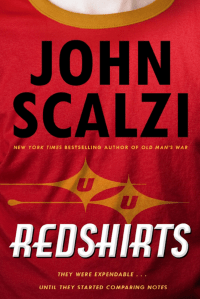 I just finished reading Redshirts, by John Scalzi, and it’s just about the best, most entertaining, brilliant story I’ve read in a good long time. It’s so good that I have to place it with other best-of-kind laugh out loud science fiction delights such as Galaxy Quest and Hitchhiker’s Guide to the Galaxy.
It has a lot in common with Galaxy Quest in being a multi-level utterly ingenious send up and hysterical deconstruction of Star Trek (The Original Series). Scalzi has captured and lampshaded so many of the things fans have discussed over the years. And, as with Galaxy Quest, it’s a pretty good story all on its own.
But it is an absolute must-read for any fan of the original Star Trek.
Continue reading
7 Comments | tags: John Scalzi, science fiction, science fiction books, Star Trek | posted in Books, Sci-Fi Saturday
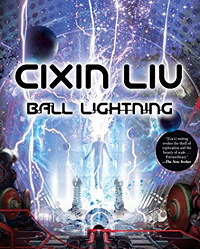 Recently I’ve dedicated myself to catching up on my reading list. Various life distractions have caused me to not read nearly as much as I used to. Actually, it’s more that I haven’t been reading fiction that much lately; I’ve been more focused on news feeds and science (articles and books). I find I miss curling up for hours with a good story, so I’ve determined to return to it.
Here for Sci-Fi Saturday I thought I’d mention a couple I finished this past week: Ball Lightning, by Liu Cixin, and Dark Run, by Mike Brooks. The former is a standalone novel; the latter is the first (of so far three) in a series.
The Brooks books are sheer adventure yarns but telling you about Ball Lightning requires a pretty hefty spoiler.
Continue reading
12 Comments | tags: ball lightning, Dark Matter (TV series), Firefly, Liu Cixin, Mike Brooks, sci fi, science fiction, science fiction books, The Expanse (TV series) | posted in Books, Sci-Fi Saturday
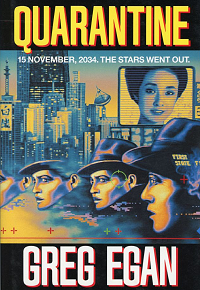 Last week I read Quarantine (Greg Egan, 1992), a science fiction novel that explores one of the more vexing conundrums in basic physics: the measurement problem. Egan’s stories (novels and shorts) often explore some specific aspect of physics (sometimes by positing a counterfactual reality, as in the Orthogonal series).
In Quarantine, Egan posits that the human mind, due to a specific set of neural pathways, is the only thing in reality that collapses the wave-function, the only thing that truly measures anything. All matter, until observed by a mind, exists in quantum superposition.
Unfortunately, it’s difficult to explore how this ties into the plot without spoiling it, so I’ll have to tread lightly.
Continue reading
15 Comments | tags: Greg Egan, quantum mechanics, science fiction, science fiction books | posted in Books, Sci-Fi Saturday
 In the last week or so I read an interesting pair of books: Through Two Doors at Once, by author and journalist Anil Ananthaswamy, and The Order of Time, by theoretical physicist Carlo Rovelli. While I did find them interesting, and I’m not sorry I bought them (as Apple ebooks), I can’t say they added anything to my knowledge or understanding.
I was already familiar with the material Ananthaswamy covers and knew of the experiments he discusses — I’ve been following the topic (the two-slit experiment) since at least the 1970s. It was nice seeing it all in one place. I enjoyed the read and recommend it to anyone with an interest.
I had a little trouble with the Rovelli book, perhaps in part because my intuitions of time are different than his, but also because I found it a bit poetic and hand-wavy.
Continue reading
25 Comments | tags: Anil Ananthaswamy, arrow of time, Carlo Rovelli, is time fundamental, light, photons, Planck Length, Planck Time, spacetime, time, two slit experiment | posted in Books, Physics
 Oh, the advantages of finally getting around to starting to clean out the garage (which, in Minnesota, is strictly a summer activity).
I just knew I had a copy of Gödel, Escher, Bach: An Eternal Golden Braid, by Douglas Hofstadter. (Full disclosure, it’s a copy someone lent me decades ago that I never returned because it took me so long to get around to reading it. By then I’d lost touch with the co-worker who’d given it to me.)
Lately, I’ve been wanting to go at it again (and finish it this time), but I couldn’t find the copy I was sure I had. Turned out to be, along with a few other long-missing friends, in a box of books in the garage; one I’d just left out there with some other boxes (and luckily, no weather damage).
So added bonus to finally starting a chore I’ve been putting off for years!
15 Comments | tags: Douglas Hofstadter, GEB | posted in Books, Life
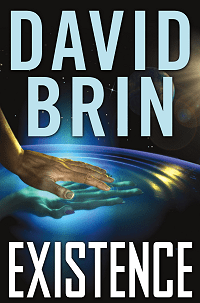 Recently I wrote that I was reading Existence (David Brin, 2012), a novel I found so striking I had to post about it before I was even halfway through. Now I’ve finished it, and I still think it’s one of the more striking books I’ve read recently. (Although a little blush came off the rose in the last acts.)
Central to the story is the Fermi Paradox, with a focus on all the pitfalls an intelligent species faces. The tag line of the book, a quote attributed to Joseph Miller, is, “Those who ignore the mistakes of the future are bound to make them.” Brin’s tale suggests that it’s well neigh impossible for an intelligent species to survive their own intelligence.
I’ll divide this post into three parts: Mild spoilers; Serious spoilers; and Giving-away-the-ending spoilers. I’ll warn you before each part so you can stop reading if you choose.
Continue reading
13 Comments | tags: David Brin, Fermi Paradox, Great Filter, social change | posted in Books, Sci-Fi Saturday






 Logos con carne