Tag Archives: Yin and Yang

Earl Grey. Hot!
I’ve written about the Yin-Yang of analog versus digital, a fundamental metaphor for how reality can be smooth or bumpy. I’ve applied the idea to numbers, where we see two types of infinity — countable (discrete, digital, bumpy) and uncountable (continuous, analog, smooth). There is also how chaos mathematics says that — the moment we round off those smooth numbers into bumpy ones — our ability to use them to calculate certain things is forever lost.
I’ve also written about Star Trek replicators and transporters, as well as the monkey wrench of the hated holodeck. According to canon, all three use the same technology (which raises some contradictions for the holodeck).
Today, for Science Fiction Saturday, I want to tie it all together in another look at transporters and replicators!
Continue reading
12 Comments | tags: analog, Captain Kirk, Captain Picard, chaos theory, digital, Earl Grey, infinity, replicators, Star Trek, transporters, Yin and Yang | posted in Sci-Fi Saturday
 I’ve written several times about the many places we see the idea of a Yin and Yang duality played out in the real world. Even the application of the Yin and Yang concept has a Yin (of true opposites) and a Yang (of thing and not-thing). For example, the opposite of light is not-light, but the opposite of positive is negative.
One of the true opposites is the idea of analog versus digital or, more generally, of continuous versus uneven. Recently I was thinking about the differences between various sports, and I realized there’s a connection to the “smooth or bumpy” distinction I wrote about a while back. Looked at in terms of play, some sports are essentially continuous while others are not.
It turns out that some sports are “analog” while others are “digital.”
Continue reading
7 Comments | tags: Alfred Hitchcock, analog, basketball, continuous, digital, discrete, football, hockey, MacGuffin, Pulp Fiction, Quentin Tarantino, sports, team sports, tennis, Yin and Yang | posted in Baseball
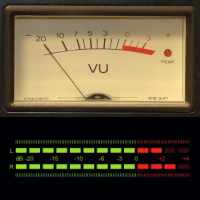 Last time I wrote about analog recording and how it represents a physical chain of proportionate forces directly connecting the listener to the source of the sounds. In contrast, a digital recording is just numbers that encode the sounds in an abstract form. While it’s true that digital recordings can be more accurate, the numeric abstraction effectively disconnects listeners from the original sounds.
In the first month of this blog, I wrote about analog and digital and mentioned they were mutually exclusive Yin and Yang pairs (a topic I wrote about even earlier — it was my seventh post).
Today I want to dig a little deeper into the idea of analog vs. digital!
Continue reading
4 Comments | tags: analog, digital, discrete, infinity, natural numbers, quantum gravity, rational numbers, real numbers, Yin and Yang | posted in Basics, Life, Science
 One of the first blog articles I wrote concerned the idea of Yin and Yang. It’s a topic I’ve touched on several times since (and revisited in particular talking about men and women). I reference the concept so often, because I think the duality of opposing concepts is a fundamental truth about the universe.
It’s not the only truth, of course, but it’s a very useful way of seeing things and understanding them. We see duality everywhere! Sometimes it’s something versus the lack of something (heat/cold, light/dark, full/empty). Sometimes it’s truly opposing pairs (north/south, positive/negative, male/female).
Today I’d like to expand on the concept and tell you about the Johari Window.
Continue reading
Leave a comment | tags: duality, ego, four-square, Harrington, how others see us, how we see ourselves, id, Luft, others, psychology, self, self-awareness, self-help, Sigmund Freud, super-ego, Yin and Yang | posted in Basics
 A while back I wrote about Yin & Yang and how some opposites are truly opposing (positive and negative) while others are actually the presence and lack of a thing (light and dark, for example). In that article I cited men & women as being genuine opposing pairs, as you can’t consider either one the absence of the other.
That, understandably, generated some comments. Many would not choose to see women & men as being opposites at all, but as two variations on the theme of human. I think that is absolutely correct. Our two human sexes have far more in common than they do in opposition. (And note that gender is a different concept than sex. Gender is about how your mind works, about who you are; sex is about your genetic code.)
And yet… Anyone who lives in the real world knows that the “Mars & Venus” thing has some substance.
Continue reading
7 Comments | tags: duality, friends, lovers, men, women, Yin and Yang | posted in Basics, Philosophy
 My recent post about how the Big Bang and “Let there be Light” seem equally fantastic to me triggered an interesting comment from a reader. A detailed response requires more elbow room than a comment allows, so here’s a follow-up article instead.
One of the points involved that our scientific ideas, no matter how inaccurate they may turn out to be, are at least based on evidence. And to the credit of science, when we recognize errors in our interpretation of the evidence, science changes to accommodate the new interpretation.
This has been, as I mentioned in that post, hugely successful. One of the failures of our spiritual metaphysics is that it clings to frameworks defined thousands of years ago and often stubbornly refuses to accommodate new information.
Continue reading
7 Comments | tags: atheism, big bang, brain mind problem, Gandhi, Kurt Gödel, Lee Smolin, Max Planck, quantum physics, Roger Penrose, Sheldon Glashow, spacetime, spirituality, String theory, theism, Theory of Consciousness, Yin and Yang | posted in Philosophy, Physics, Religion, Science
 In an earlier post, I wrote that:
The problem for any honest theist is,
“What if it isn’t true?”
The problem for any honest atheist is,
“What if it is true?”
Ultimately both represent ways of looking at the universe. There is no factual conclusion, no proof, about either one; both are matters of faith and belief.
Science can argue all it wants that the Logic and Scientific Method is superior to believing in an ineffable reality but given all we do know and all we don’t know, in the end it is still just a worldview.
Continue reading
14 Comments | tags: atheism, big bang, deism, Heisenberg Uncertainty, infinity, quantum physics, spacetime, spirituality, The Matrix, theism, Yin and Yang | posted in Basics, Philosophy, Religion, Science
 In earlier Sidebands I have tried, as our English teachers used to say, to “compare and contrast” related pairs of concepts that are sometimes mistakenly conflated. The first pair, Truth and Facts, are similar enough to make distinctions between them debatable. Even the language can twist you up once you start talking about true facts and false facts. The next two pairs, Good vs Like and Ignorant vs Stupid, are well-defined and distinct.
In all three cases, there are similarities and differences (hence “compare and contrast”), but a key difference between those and the current topic, Analog vs Digital, is that none of them are really opposite pairs. There is no Yin and Yang aspect to them; one does not exclude the other. I’ve already mentioned true facts. Something can be both good and liked (or neither). Someone can be both ignorant and stupid (being neither is both good and likeable).
Not so with analog and digital! They are true Yin-Yang pairs; one excludes the other.
Continue reading
4 Comments | tags: analog, digital, Dualism, quantum physics, Yin and Yang | posted in Basics, Sideband
In my second post I raised the topic of mind versus brain. There is (or, perhaps more accurately, may be) a duality. I mentioned that there are two basic schools of thought: one holding that mind emerges from brain and the other holding that they are distinct, that mind is – somehow – not physical. For now, the duality of the brain/mind question is open.
But there is definitely a duality in the two schools: the two opposing points of view. In this post I want to focus on the idea of duality and the idea of ideas in opposition. This post is about Yin and Yang.
Continue reading
13 Comments | tags: binary, Dualism, trinary, Yin and Yang | posted in Basics, Philosophy





 Logos con carne