Tag Archives: SF Books
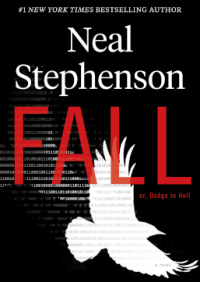 I’ve been a fan of Neal Stephenson since Snow Crash (1992), his third novel. I’ve read much of his work — the big exception being The Baroque Cycle, descriptions of which haven’t captured my interest yet. I like his writing enough that I’ll probably enjoy them if I ever take the plunge.
Stephenson writes pretty hard SF, which I love, and he explores such interesting ideas that I’m generally quite enthralled by what some see as fictionalized physics books. The thing is, I’d enjoy reading those physics books, so having it come coated in any kind of frosting is a win in my (pardon the pun) book.
I’ve just gotten started on his most recent novel, Fall; or, Dodge in Hell.
Continue reading
16 Comments | tags: Fall; or Dodge in Hell, hard SF, Neal Stephenson, science fiction, science fiction books, SF, SF Books, Snow Crash | posted in Books, Sci-Fi Saturday
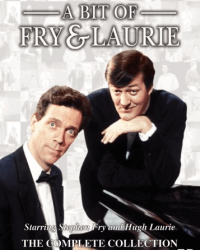 For a Sci-Fi Saturday post, this started as a stretch and then some. While Zero Sum Game (2018), by S.L. Huang, has at least a science fiction flavor, The Gun Seller (1996), by Hugh Laurie (yes, that Hugh Laurie), is more fantastical than science fictional. They do have in common a protagonist beyond capable as well as action hero thriller plots.
I can redeem the post now that I’ve read The Android’s Dream (2006), by John Scalzi (whom I’ve praised here before for Redshirts). Here, too, is an extremely competent protagonist in an action hero thriller. (As an aside, the two written by men feature a love interest. (While I’m at it, guess which of the three does not have a Wiki page.))
The bottom line: I thoroughly enjoyed all three!
Continue reading
12 Comments | tags: Hugh Laurie, John Scalzi, S.L. Huang, science fiction, science fiction books, SF, SF Books | posted in Books, Sci-Fi Saturday
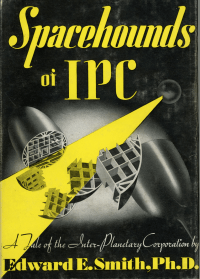 I’ve been reading Spacehounds of IPC (1947), by E.E. “Doc” Smith, and… it hasn’t aged well. For a long time I’ve been thinking it would be fun to read Smith’s Lensmen series again but given that I’m having a hard time finishing Spacehounds, maybe that train left the station some time ago (especially with so much other stuff to read).
It’s a pity because I sure liked those books when I was (much) younger. Smith wrote action-filled space opera that was very imaginative, and which also reeked of technology and science. I’ve never been that much into the space battles, but I’ve always been a sucker for hard SF. Fictionalized tech manuals work okay for me.
But these aren’t the gems mentioned in the post’s title.
Continue reading
11 Comments | tags: Contact (movie), Dark City, E.E. Doc Smith, science fiction, science fiction books, science fiction film, science fiction movies, SF, SF Books, SF Movies | posted in Books, Sci-Fi Saturday

Judy, Judy, Judy!
I’ve been a fan of science fiction since the early 1960s. I was already an avid fan and ready audience for Lost in Space (1966–68; Judy was one of my earliest childhood crushes), It’s About Time (1966–67), and I was glued to the TV set enthralled when Kirk, Spock, and the rest, first boldly went in 1966.
By then I’d already consumed all I could of Asimov, Clarke, Heinlein, along with Verne, Wells, and Burroughs (I didn’t discover Tolkien or Howard until high school a few years later).
Movies like The Day the Earth Stood Still (1951), 20,000 Leagues Under the Sea (1954), and Forbidden Planet (1956), all had me avid for 2001: A Space Odyssey (1968).
It’s been a whole lot of years, and a whole lot of science fiction, is my point.
Continue reading
22 Comments | tags: cyberpunk, Edgar Rice Burroughs, H.G. Wells, Isaac Asimov, Jules Verne, Lost in Space, Neal Stephenson, Robert E. Howard, science fiction, science fiction books, science fiction movies, science fiction TV, SF, SF Books, SF Movies, Snow Crash, William Gibson | posted in Books, Movies, Sci-Fi Saturday, TV
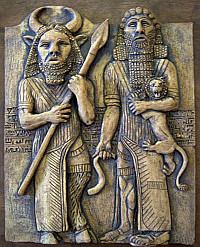 What if, suddenly, you found you could not only read minds but change them? What if the eponymous hero of the ancient Epic of Gilgamesh was real, was two-thirds god, was immortal, and — from sheer boredom — had divided his powers of mind with you just so he could have a really good war between the eastern and western hemispheres?
What if you and your brother, both young students, went along on a wild drunken graduation party that spanned a dozen galaxies and were left behind on some primitive no-account planet as a joke. What if, as extremely long-lived energy beings, it was millions of years before anyone remembered and came back for you? What if — from sheer boredom — you’d illegally tampered with the minds of the primitive indigenous apes?
This Sci-Fi Saturday: two authors, two tales, two books each.
Continue reading
21 Comments | tags: Brenda Clough, Doors of Death and Life, Gilgamesh, How Like a God, paperback books, Parke Godwin, Robert Parker, science fiction, SF Books, Spenser, The Snake Oil Wars, thick books, thin books, Waiting for the Galactic Bus | posted in Sci-Fi Saturday
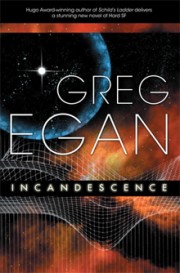 It’s official, I really like science fiction author Greg Egan! He’s among the modern science fiction authors; his first SF work, the short story Artifact, was published in 1983, so he’s been writing SF for about 28 years. Like many science fiction authors with a science or technical education, he writes non-fiction as well.
And here’s the thing: If you like your science fiction hard, you want to know about Greg Egan. He writes SF as hard as any I know. For instance, consider a novel (Incandescence) in which a key plot thread involves alien beings discovering (Einstein’s) General Relativity in a completely different way than Einstein did.
He reminds me of Hal Clement on several levels, particularly so in the novel I just cited, as part of it is told from the aliens’ point of view (a common device in Clement’s work).
Continue reading
4 Comments | tags: Distress (book), Greg Egan, sci fi, science fiction, SF Books | posted in Books, Quotes, Sci-Fi Saturday
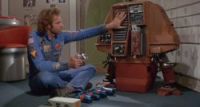
And then there was one.
Last time, I wrote that my definition of science fiction is fiction with science + imagination. And that the science is freely defined to include guesses and completely made up, if not downright illegitimate, physics. In fact, that’s the imagination part of the equation. The fiction part is also freely defined, but basic story telling rules should apply. The science part must also play by certain rules, even when it’s made-up science, even when it’s illegitimate
This article is about how I view the science and fiction in science fiction when it comes to playing by the rules. (Keep in mind that science fiction is art, and in art rules are made to be broken.)
Fantasy lovers take heart; in this case, my definition of science includes magic, the supernatural and the metaphysical. This uses the context of speculative fiction, which includes everything beyond current physics. The fiction canvas is framed by any physics, or metaphysics, the story requires. Warp drive is no more real science than vampires or Norse Gods; all of them are fiction.
Continue reading
20 Comments | tags: Discworld, Fiction, sci fi, science fiction, science fiction books, science fiction movies, science fiction TV, SF, SF Books, SF Movies, storytelling, Terry Pratchett | posted in Books, Movies, TV






 Logos con carne