 I’ve contemplated the voice(s) in my head all my adult life, though it’s only recently I’ve thought deeply about them. One big question I’ve had being why sometimes it’s a dialog rather than a monolog.
To be clear, I am fully aware that it’s all me; it’s my voice(s). “They” (or rather “we”) are aspects of my own mind — my inner voice. Something I’ve naturally assumed everyone had.
But some say they have no inner voice!
Continue reading
40 Comments | tags: human consciousness, human mind, inner voice | posted in Science
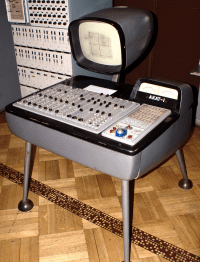
Analog computer: AKAT-1 (1959)
Last September I posted the Pancomputation trilogy (parts: I, II & III) which was a follow-up to last spring’s Digital Dualism trilogy (parts: 1, 2 & 3). The first trilogy was a continuation of an exploration of computer modeling I started in 2019. Suffice to say, over the course of writing these posts, my views on what “computing” means evolved and crystalized.
As discussed in the Pancomputation posts the notion of computation is difficult to pin down (many general concepts are because we don’t have even more general concepts to define them with). A pancomputation view sees everything as computing. A computer science view restrictively equates it with a Turing Machine.
I’ve realized my view depends heavily on computational dualism.
Continue reading
25 Comments | tags: analog, analog computer, computation | posted in Computers, Science
 Last weekend I watched the final episodes of Lucifer, a show I’ve really enjoyed since it began in 2016. It’s based on a DC comic book character created by Neil Gaiman, and I’ve always liked his work, so it’s not surprising I’ve enjoyed this series. On top of that, it blends a bunch of my favorite story genres, plus it gets right one of the most important aspects for such fantastic stories: it doesn’t take itself too seriously.
In honor of the show ending I thought I’d also mention a couple other favorite shows I’ve been re-watching lately, Elementary and Boston Legal. I’ve always ranked the latter as a favorite favorite, but seeing the former again I’m experiencing the love all over again.
Got a couple of Japanese anime stories to mention, as well.
Continue reading
38 Comments | tags: anime, Boston Legal, Elementary (TV series), Japanese anime, Lucifer (TV series), Neil Gaiman | posted in TV, TV Tuesday
 Not long ago I posted All the Christie as a follow-up to an earlier post about Agatha Christie. I’d read her when I was younger but only realized what an extraordinary writer (and person) she was when I revisited her work recently.
In contrast, I knew Octavia E. Butler only by reputation and some short stories I’d read. This past August I finally set out to correct this egregious oversight for a serious science fiction fan. As it turned out, I sat down to a delicious feast by another extraordinary cook. I relished every crumb, from appetizer to dessert. (I even shamelessly licked the plate.)
The dessert was her finest (and most popular) dish, Kindred (1979). Continue reading
26 Comments | tags: Octavia E. Butler, science fiction, science fiction books, SF, SF Books | posted in Books, Sci-Fi Saturday
 I skipped Friday Notes last month and almost skipped it this month. To some extent that’s due to the note pile getting smaller, but the larger share of it is the exhaustion and ennui I’ve been feeling all year. My posts-per-month count has been noticeably down since April.
Over the 110 months of this blog (which doesn’t count 2017, the year I took off), the average is 10 posts per month, but in the previous two years it’s 14, so I do seem off my feed lately. OTOH, only 74 posts in 2018 (my lowest year), and I’m at 96 now, so there’s that.
In any event, here’s another edition of FN.
Continue reading
13 Comments | tags: 2048, Octavia E. Butler, time, time travel, touchscreen | posted in Friday Notes
 If you know me, or if you’ve followed this blog a while, you know I honor Solar holidays more than human ones. The former are directly linked with the seasons, obviously (and who doesn’t love seasons), but to me they’re about how much (or how little) sunlight we get.
If you know me, or if you’ve followed this blog a while, you know sunlight really matters to me. The skylight in my living room was a key buying point for my condo, and enough south-facing windows was always a requirement.
I may love the night and the lights, but I thrive on sunlight.
Continue reading
56 Comments | tags: autumnal equinox, darkness, equinox, fall, Hal Clement, science fiction books, SF Books, sunshine | posted in Brain Bubble, Science
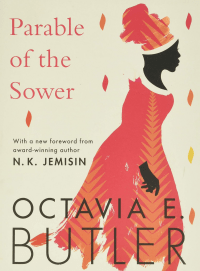 This past August I posted about Octavia E. Butler, a highly regarded science fiction author I finally got around to exploring. Now that I’ve read all her work (but for one novel), I’ve gone from being very impressed to being slightly in awe. Her reputation is very well deserved.
Recently I finished her two-book Parable series, Parable of the Sower (1993) and Parable of the Talents (1998). It’s the story of a woman’s lifelong journey building what she names Earthseed, a modern religion with a concrete goal.
What blew my mind, though, was how eerily prescient her President Jarret was of our POTUS45. Nailed it — including the infamous slogan.
Continue reading
10 Comments | tags: Octavia E. Butler, science fiction, science fiction books, SF, SF Books | posted in Books, Sci-Fi Saturday
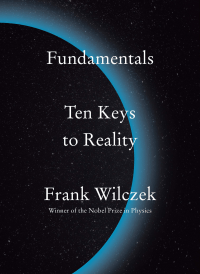 I just finished Fundamentals: Ten Keys to Reality (2021), by Frank Wilczek. It’s yet another book explaining fundamental physics for lay readers, and it does so pretty much entirely within the bounds of mainstream science. I enjoyed reading it, but it’s mainly a review of physics as we know it.
I saw it on the library’s list of new books and put it on hold back on May 14th. It didn’t become available until September 3 — more than a three-month wait. Apparently lots of people wanted to read it.
Bottom line, I recommend it as an easy and enjoyable read, especially for those with a more casual interest in physics.
Continue reading
21 Comments | tags: Frank Wilczek, Heisenberg Uncertainty, Isaac Newton | posted in Books, Physics
I can’t decide which I like best, this one:

With its lovely sunset and notion of into it comma driving off. On the other hand, I also like the implied “many mountains to climb” optimism of this one:

Not to mention the bright sunshine and blue skies. At first glance I thought that was Shiprock dead ahead, but Route 66 runs far south of it (and Shiprock is way more majestic). I also like how old and scuffed up that sign is. I know the feeling. 😉
Stay driving, my friends! Go forth and spread beauty and light.
∞
5 Comments | tags: driving, road signs, road trip, sun sign, The Road to Here | posted in Life
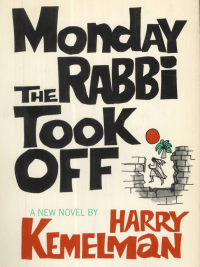 The last few months I’ve been dipping into the Rabbi Small murder mysteries, which are written by author and professor of English Harry Kemelman (1908–1996). The series is in the Amateur Sleuth sub-genre. In this case the amateur who is constantly solving murders is a Jewish rabbi.
The Tony Hillerman books (Leaphorn and Chee) are filled with Navajo background. The Jonathan Gash books (Lovejoy) are filled with antiques background. The Lawrence Block books (Bernie the burglar) are filled with burglary background. In all cases, this background enriches the reading and can be educational (the Hillerman books especially).
Harry Kemelman’s books are enriched by all the Jewish background.
Continue reading
34 Comments | tags: Harry Kemelman, murder mysteries | posted in Books, Mystery Monday




 Logos con carne