Category Archives: Science
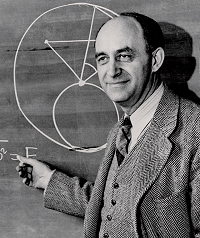
Where are all the aliens?
I’ve mentioned the Fermi Paradox here quite a number of times, but I’ve never made it the main topic of a post. Lately I’m becoming more and more convinced our world is facing a Great Filter, and that we may very well be seeing one answer to Mr. Fermi’s interesting paradox.
Which is a response to the Drake Equation, which I have made the topic of a post.
Essentially, the Drake Equation attempts to estimate the number of intelligent space-faring species in a galaxy and, by most accounts, comes up with a number noticeably larger than one. The Fermi Paradox says: Okay Mr. Drake… if so… where are all the aliens?
Continue reading
5 Comments | tags: Anthony Bourdain, Drake Equation, Fermi Paradox, Great Filter, Kate Spade, post-empiricism, post-fact, post-reality, post-truth, Weltschmerz | posted in Life, Science

Well, that didn’t take long!
Multiple news sources have reported on a two-year microbiology study out of Rutgers University (Is the five-second rule real?). The upshot is: Yes, of course it’s not real.
What strikes me is that anyone actually thought it was real. We (meaning pretty much everyone I ever associated with) always understood it as a bit of obvious irony, a self-serving excuse for eating fallen food. If asked, I would have said one would have to be a real idiot to think it was real.
Well… can’t say I’m surprised.
Continue reading
9 Comments | tags: Anyone But Trump, basket of deplorables, Clinton for President, complete idiots, deplorables, idiots, James Gleick, stupid, stupid people, stupid stupid stupid, stupidity, time travel, Trump is a loser, Trump is a monster | posted in Science, Society
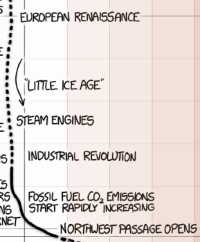 On the one hand, global climate change is likely to make things very — strictly in the curse sense — “interesting” for the human race as this millennium progresses. The effects already are obvious, visual, striking, and — one would think — undeniable.
Randall Munroe, of xkcd, has created another of his brilliant graphics, this one showing the history of climate change. It’s well-worth checking out (do it now). It makes the point in a visually striking, and — one would think — undeniable way.
On the other hand, it’s very — in the usual sense — “interesting” that we’re here at all.
Continue reading
3 Comments | tags: carbon, climate change, Cowboys & Aliens, elements, global warming, gold, Jupiter, mitochondria, moon, Saturn, Saturn's Rings, solar eclipse, Sun, uranium, xkcd | posted in Physics
 If you’re anything like me, you’ve probably spent a fair amount of time wondering what is the deal with tesseracts? Just exactly what the heck is a “four-dimension cube” anyway? No doubt you’ve stared curiously at one of those 2D images (like the one here) that fakes a 3D image of an attempt to render a 4D tesseract.
Recently I spent a bunch of wetware CPU cycles, and made lots of diagrams, trying to wrap my mind around the idea of a tesseract. I think I made some progress. It was an interesting diversion, and at least I think I understand that image now!
FWIW, here’s a post about what I came up with…
Continue reading
9 Comments | tags: 3D space, coordinates, cube, dimensions, geometry, line, point, rectangular coordinates, right angle, square, tesseract | posted in Math
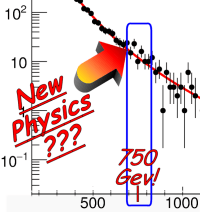 To the dismay of physics geeks everywhere, theoretical particle physics struck out at the plate this year. Three swings, three misses. (Well, maybe one wasn’t really a swing. More a taken ball the umpire called a strike.) It was a crushing disappointment for those of us hoping for a rule-change to the game.
On the other hand, cosmology geeks got three recent home runs, so there was victory (with more coming!) for those who peer at the big and distant. On the other other hand, none of those were game-changers either. (They were just, you know, awesome.)
Since I follow both physics and cosmology, win some, lose some.
Continue reading
8 Comments | tags: ATLAS, CERN, CMS, dark matter, Dawn mission, diphoton bump, experimental physics, gravity wave, higgs boson, IceCube, LIGO, LUX, NASA, neutrinos, New Horizons, new physics, pentaquark, Pluto, Pluto is a planet, sterile neutrinos, supersymmetry, theoretical physics | posted in Physics

In the last quarter of the 19th century — USA-centrically, call it 139 years ago — we began to experience having the sound of strangers’ voices in our lives, even in our homes. Not just voices, but music from concert halls and clubs. And other sounds, too: the clip-clop of horse feet, the slam of a door, a gunshot. Less than 100 years ago, those sounds went electric, and we never looked back.
At the beginning of the 20th century, we started another love affair — this one with moving images on rectangular screens, a dance of light and shadow, windows to imaginary worlds. Or windows to recorded memories or news of distant places. When sound went electric, those moving images took voice and spoke and sang. No one alive in our society today remembers a time when moving images weren’t woven into our lives.
Here, now, into the 21st century, in an age of streaming video and music, from cloud to your pocket device (with its high-resolution display and built-in video camera), I can’t help but be impressed by how far we’ve come.

A long way, indeed.
18 Comments | tags: analog recording, audio recording, digital recording, internet, interweb, iPad, iPod, OnDemand, streaming audio, streaming video, video recording | posted in Books, Computers, Movies, Music, Science, The Interweb, TV
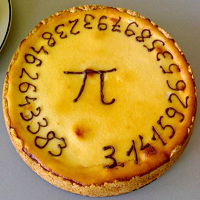 Well, it’s Pi Day once again (although this date becomes more and more inaccurate as the century proceeds). So, once again, I’ll opine that Tau Day is cooler. (see: Happy Tau Day!)
Last year, for extra-special Pi Day, I wrote a post that pretty much says all I have to say about Pi. (see: Here Today; Pi Tomorrow) That post was actually published the day before. I used the actual day to kick off last Spring’s series on Special Relativity.
What remains to be said? Not much, really, but I’ve never let that stop me before, so why start now?
Continue reading
14 Comments | tags: irrational numbers, normal number, pi, pi day, tau, tau day, transcendental numbers | posted in Math
 Credit where credit is due, both the major ideas in this post come from Fareed Zakaria on his CNN Sunday program, GPS. If you follow TV news at all, you know Sunday mornings have such long-running standards as Meet the Press (on NBC since 1947!) and Face the Nation (on CBS since 1954). (Or was it Meet the Nation and Face the Press?)
Zakaria is one of the good ones: very intelligent, highly educated, calm and measured. He’s well worth listening to. (I’ve realized one attraction to TV news is the chance to — at least sometimes — hear educated, intelligent talk. It’s a nice respite from most TV entertainment.)
Two things on Zakaria’s last episode really rang a bell with me.
Continue reading
23 Comments | tags: AI, computer code, digital computer, DNA, electrons, Face the Nation, Fareed Zarkaria, fire, genetic code, genetics, internet, interweb, language, mechanical physics, Meet the Press, printing press, quantum physics, robotics | posted in Science, The Interweb, TV
 It took almost exactly 100 years. In 1905, über-geek hero Albert Einstein presented four papers of major significance to the world. One of those was about Special Relativity. It took Einstein ten more years to figure out the General theory of Relativity. He presented that work in November of 1915.
One of the predictions of General Relativity is that gravity warps space, creating gravity waves (which move at the speed of light). And while many other predictions of GR have been tested and confirmed (to very high precision), we’ve never quite managed to detect gravity waves.
Until September 14th of 2015!
Continue reading
10 Comments | tags: Albert Einstein, black hole, General Relativity, gravity, gravity wave, LIGO, Special Relativity, Theory of Relativity | posted in Physics
I seem to be doing a lot of reblogging lately (a lot for me, anyway). But I’m on kind of a math kick right now, and this ties in nicely with all that.
 4 gravitons
You’ve probably seen it somewhere on your facebook feed, likely shared by a particularly wide-eyed friend: pi found hidden in the hydrogen atom!



From the headlines, this sounds like some sort of kabbalistic nonsense, like finding the golden ratio in random pictures.
Read the actual articles, and the story is a bit more reasonable. The last two I linked above seem to be decent takes on it, they’re just saddled with ridiculous headlines. As usual, I blame the editors. This time, they’ve obscured an interesting point about the link between physics and mathematics.
So what does “pi found hidden in the hydrogen atom” actually mean?
It doesn’t mean that there’s some deep importance to the number pi in nature, beyond its relevance in mathematics in general. The reason that pi is showing up here isn’t especially deep.
It isn’t trivial either, though. I’ve seen a few people…
View original post 546 more words
2 Comments | tags: math theory, mathematics, pi, quantum physics | posted in Math






 Logos con carne