Category Archives: Science

Quantum Corral
There’s an old saying (attributed to Stanislavski) that, “There are no small roles, only small actors.” (One might argue that writers do sometimes create small roles, but that’s another blog post and not really what Stranislavski was getting at. He meant actors must take any role seriously, no matter its size.)
What I have today approaches the smallest possible actor in the smallest possible role. Despite this being seven years old, I think it still holds the title of “World’s Smallest Movie” — at least until we can make one starring nucleons or quarks. (I especially like the electron banding; that’s quantum mechanics in action.)
For a Wednesday Wow, a movie starring a single atom.
Continue reading
2 Comments | tags: animation, atoms, IBM, making movies, stop-motion animation | posted in Movies, Science, Wednesday Wow
 At the beginning of the week, I mentioned I’m reading Our Mathematical Universe (2014), by Max Tegmark. His stance on inflation, and especially on eternal inflation, got me really thinking about it. Then all that thinking turned into a post.
It happened again last night. That strong sense of, “Yeah, but…” With this book, that’s happening a lot. I find something slightly, but fundamentally, off about Tegmark’s arguments. There seems an over-willingness to accept wild conclusions. This may all say much more about me than about Tegmark, which in this case is perfect irony.
Because what set me off this time was his chapter about human intuition.
Continue reading
24 Comments | tags: human consciousness, human mind, intuition, Max Tegmark | posted in Opinion, Philosophy, Science
 Back when I posted about Delores, the Westworld robot, I mentioned a question that once came up in a science fiction fan forum: What’s the collective noun for robots? A mechanation of robots? A clank of robots? I suggested an Asimov of robots, but maybe the best suggestion was an uprising of robots.
An uprising of robots could refer to the scary Terminator scenario but could also be taken as just meaning the rising up of (non-killer, useful) robots. That latter interpretation being not just factual, but quite operative already.
So, for this Wednesday Wow, an uprising of robots…
Continue reading
13 Comments | tags: Atlas (the robot), Boston Dynamics, robot dog, robotics, robots | posted in Science, Society, Wednesday Wow
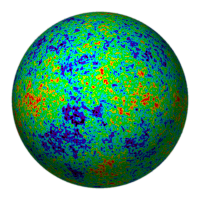
Bang!!
I’m reading Our Mathematical Universe (2014), by Max Tegmark, and I’ll post about the book when I finish. However, he got my attention early with the topic of eternal inflation. That got me thinking about how there are some key unanswered questions regarding the Big Bang and inflation of the non-eternal sort.
Inflation certainly does need some explaining. It may be related to dark energy, as both seem to do the same sort of thing (push space apart). The putative physics of inflation is bad enough; eternal inflation is (in my view) fairy tale physics.
For one thing, eternal? Seriously? Infinite something from nothing?
Continue reading
26 Comments | tags: big bang, eternal inflation, inflation, Max Tegmark, reality, the multiverse, universe | posted in Philosophy, Science
 Recently I read Dog is Love, Why and How Your Dog Loves You (2019), by Clive D.L. Wynne, an animal behavior scientist who specializes in dogs. Despite the loaded word “love” in the title, this is a science book about a search for hard evidence.
Dr. Wynne is a psychology professor at Arizona State University and director of their Canine Science Collaboratory. He’s written several other books about animal cognition: The Mental Lives of Animals (2001), Do Animals Think (2004), Evolution, Behavior and Cognition (2013).
The book is the story of Wynne’s search for exactly what it is that makes dogs special and how they got that way.
Continue reading
27 Comments | tags: Clive Wynne, dogs, love, wolves | posted in Books, Science
 I was surprised to discover I’ve never posted about the Many Worlds Interpretation (MWI) of quantum physics — I would have sworn I had. I’ve mentioned it a few times, and I know I’ve discussed it in comment sections, but it seems I never tackled the subject explicitly for the record.
It’s been on my mind lately because others have talked about it. Sean Carroll’s book promoting it generated a wave of discussion. The final push for me was Jim Baggott’s Farewell to Reality, which consigns MWI to the “fairy tale physics” heap.
Since I quite agree, this seems a good follow-up to yesterday’s post.
Continue reading
13 Comments | tags: Copenhagen Interpretation, Many Worlds Interpretation, measurement problem, MWI, Schrödinger Equation, Schrödinger's Cat | posted in Philosophy, Physics
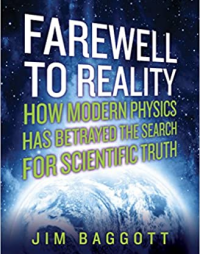 My voracious reading habit has deep roots in libraries. The love of reading comes from my parents, but libraries provided a vast smörgåsbord to browse and consume. Each week I’d check out as many books as I could carry. I discovered science fiction in a library (the Lucky Starr series, with Isaac Asimov writing as Paul French, is the first I remember).
Modern adult life, I got out of the habit of libraries (and into book stores and now online books). But now the Cloud Library has reinvigorated my love of all those free books, especially the ones I missed along the way.
For instance, Farewell to Reality: How Modern Physics Has Betrayed the Search for Scientific Truth (2014), by Jim Baggott.
Continue reading
13 Comments | tags: Farewell to Reality, Jim Baggott, library, Many Worlds Interpretation, MWI, theoretical physics | posted in Books, Philosophy, Physics
 In recent posts I’ve presented the complex numbers and the complex plane. Those were just stepping stones to this post, which involves a basic fact about the Mandelbrot set. It’s something that I stumbled over recently (after tiptoeing around it many times, because math).
This is one of those places where something that seems complicated turns out to have a fairly simple (and kinda cool) way to see it when approached the right way. In this case, it’s the way multiplication rotates points on the complex plane. This allows us to actually visualize certain equations.
With that, we’re ready to move on to the “heart” of the matter…
Continue reading
22 Comments | tags: cartioid, complex numbers, fun with numbers, Mandelbrot, Mandelbrot fractal, real numbers | posted in Math
 In the first post I explained why the mathematical “imaginary” number i is “real” (in more than one sense of the word). That weird number is just a stepping stone to the complex numbers, which are themselves stepping stones to the complex plane.
Which, in turn, is a big stepping stone to a fun fact about the Mandelbrot I want to write about. (But we all have to get there, first.) I think it’s a worthwhile journey — understanding the complex plane opens the door to more than just the Mandelbrot. (For instance, Euler’s beautiful “sonnet” also lives on the complex plane.)
As it turns out, the complex numbers cause this plane to “fly” a little bit differently than the regular X-Y plane does.
Continue reading
9 Comments | tags: complex numbers, complex plane, imaginary unit, numbers, real numbers | posted in Math
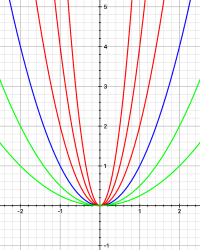
Graph of ax2 for diff a values.
(green < 1; blue = 1; red > 1)
This is a little detour before the main event. The first post of this series, which explained why the imaginary unit, i, is important to math, was long enough; I didn’t want to make it longer. However, there is a simple visual way of illustrating exactly why it seems, at least initially, that the original premise isn’t right.
There is also a visual way to illustrate the solution, but it requires four dimensions to display. Three dimensions can get us there if we use some creative color shading, but we’re still stuck displaying it on a two-dimensional screen, so it’ll take a little imagination on our part.
And while the solution might not be super obvious, the problem sure is.
Continue reading
12 Comments | tags: complex numbers, fun with numbers, imaginary unit, numbers, parabola, real numbers, x-squared | posted in Math



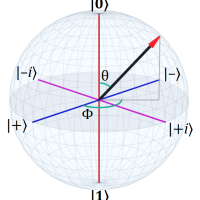



 Logos con carne