Just for fun, here are a bunch of meme images I’ve made recently. Most of them were for the Notes section of Substack (its version of tweets). They’re all just my version of interesting memes I’ve seen or good lines that I thought deserved a nice image. Enjoy…
Tag Archives: Heisenberg Uncertainty
Wilczek: Fundamentals
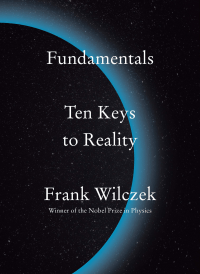 I just finished Fundamentals: Ten Keys to Reality (2021), by Frank Wilczek. It’s yet another book explaining fundamental physics for lay readers, and it does so pretty much entirely within the bounds of mainstream science. I enjoyed reading it, but it’s mainly a review of physics as we know it.
I saw it on the library’s list of new books and put it on hold back on May 14th. It didn’t become available until September 3 — more than a three-month wait. Apparently lots of people wanted to read it.
Bottom line, I recommend it as an easy and enjoyable read, especially for those with a more casual interest in physics.
Fourier Geometry
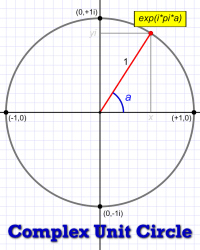 Last time I opened with basic exponentiation and raised it to the idea of complex exponents (which may, or may not, have been surprising to you). I also began exploring the ubiquitous exp function, which enables the complex math needed to deal with such exponents.
The exp(x) function, which is the same as ex, appears widely throughout physics. The complex version, exp(ix), is especially common in wave-based physics (such as optics, sound, and quantum mechanics). It’s instrumental in the Fourier transform.
Which in turn is as instrumental to mathematicians and physicists as a hammer is to carpenters and pianos.
BB #64: Systems Bubble
 For the last two weeks I’ve written a number of posts contrasting physical systems with numeric systems.
(The latter are, of course, also physical, but see many previous posts for details on significant differences. Essentially, the latter involve largely arbitrary maps between real world magnitude values and internal numeric representations of those values.)
I’ve focused on the nature of causality in those two kinds of systems, but part of the program is about clearly distinguishing the two in response to views that conflate them.
Quantum Thoughts

Too Weird for Words!
I started with the idea of physical determinism and what it implies about free will and the future. Then I touched on chaos theory, which is sometimes raised as a possible way around determinism (short answer: nope). In the first article I drew a distinction between “classical” mechanics and quantum mechanics because only at the quantum level is there any sign of randomness in reality.
It turns out that the quantum world is decidedly weird, and while we have math and models that seem to describe it extremely well, it can honestly be said that no one actually understands it. This time I’ll tell you about some of that weirdness and how it may (or may not) apply to the world as we know it.
The key question here is whether our brains make use of quantum effects.
Big Bang? Let there be Light?
 In an earlier post, I wrote that:
The problem for any honest theist is,
“What if it isn’t true?”
The problem for any honest atheist is,
“What if it is true?”
Ultimately both represent ways of looking at the universe. There is no factual conclusion, no proof, about either one; both are matters of faith and belief.
Science can argue all it wants that the Logic and Scientific Method is superior to believing in an ineffable reality but given all we do know and all we don’t know, in the end it is still just a worldview.
Popular Posts




Jump into the Stream
Caveat Lector

My Programming Blog

Posts pertaining to programming!
-

Click for supplement page to the diagrams in Tina's book.

 Logos con carne