 In the nearly nine years of this blog I’ve written many posts about human consciousness in the context of computers. Human consciousness was a key topic from the beginning. So was the idea of conscious computers.
In the years since, there have been myriad posts and comment debates. It’s provided a nice opportunity to explore and test ideas (mine and others), and my views have evolved over time. One idea I’ve found increasing skepticism for is computationalism, but it depends on which of two flavors of it we mean.
I find one flavor fascinating but can see the other as only metaphor.
Continue reading
10 Comments | tags: algorithm, analog computer, brain, brain mind problem, computationalism, digital computer, human brain, human mind | posted in Computers, Philosophy

Little Big Town: (l to r) Karen Fairchild, Phillip Sweet, Jimi Westbrook, & Kimberly Schlapman.
The last few weeks have been astonishing: Minnesota in the news for all the wrong reasons (but change may be coming); the COVID-19 thing ongoing; our strange politics ever stranger; we’re all going a little nuts. On the other hand, summer is here, so at least the weather has been cool and lovely (though there have been some hot and steamy evenings).
This past week or so, I’ve been mostly basking in my tree trying to figure it all out. Luckily, I’ve had some good music helping me along, and today I thought I’d share (once again) my love for the band Little Big Town.
It was eight years ago that I wrote about how I stumbled over them; they have been favorites of mine ever since.
Continue reading
12 Comments | tags: country music, Fleetwood Mac, Little Big Town, rock and roll, The Highwomen | posted in Music
 Back in 2015, to celebrate Albert Einstein’s birthday, I wrote a month-long series of posts about Special Relativity. I still regard it as one of my better efforts here. The series oriented on explaining to novices why faster-than-light travel (FTL) is not possible (short answer: it breaks reality).
So, no warp drive. No wormholes or ansibles, either, because any FTL communication opens a path to the past. When I wrote the series, I speculated an ansible might work within an inertial frame. A smarter person set me straight; nope, it breaks reality. (See: Sorry, No FTL Radio)
Then Dr Sabine Hossenfelder seemed to suggest it was possible.
Continue reading
12 Comments | tags: Albert Einstein, ansible, causality violation, faster than light, FTL, FTL radio, light speed, Sabine Hossenfelder, simultaneity, spacetime, Special Relativity, speed of light | posted in Physics
I don’t normally reblog, but I’m still trying to find my voice on this, and I thought this post very well expressed many of the things I’m feeling. I’ll get out of the way and let you read it.

I started this blog as a place to discuss science, and have refrained from discussing overtly political matters. This is no longer possible. Today is June 10, 2020 – the date set to strike for black lives. I want to contribute in a tiny way by writing here. If that seems inappropriate to you or […]
via Black Lives Matter — Triton Station
Black Lives Matter.
Leave a comment | tags: #BLM, Black Lives Matter | posted in Basics, Life
 Last time I started talking about entropy and a puzzle it presents in cosmology. To understand the puzzle we have to understand entropy, which is a crucial part of our view of physics. In fact, we consider entropy to be a (statistical) law about the behavior of reality. That law says: Entropy always increases.
There are some nuances to this, though. For example we can decrease entropy in a system by expending energy. But expending that energy increases the entropy in some other system. Overall, entropy does always increase.
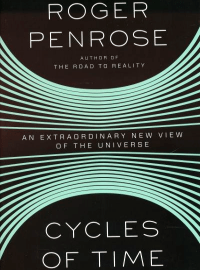
This time we’ll see how Roger Penrose, in his 2010 book Cycles of Time, addresses the puzzle entropy creates in cosmology.
Continue reading
27 Comments | tags: black hole, cosmology, entropy, galaxy, Immanuel Kant, laws of thermodynamics, Roger Penrose, thermodynamics, universe | posted in Physics
I’ve been chiseling away at Cycles of Time (2010), by Roger Penrose. I say “chiseling away,” because Penrose’s books are dense and not for the fainthearted. It took me three years to fully absorb his The Emperor’s New Mind (1986). Penrose isn’t afraid to throw tensors or Weyl curvatures at readers.
This is a library book, so I’m a little time constrained. I won’t get into Penrose’s main thesis, something he calls conformal cyclic cosmology (CCC). As the name suggests, it’s a theory about a repeating universe.
What caught my attention was his exploration of entropy and the perception our universe must have started with extremely low entropy.
Continue reading
12 Comments | tags: arrow of time, big bang, cosmology, entropy, laws of thermodynamics, Roger Penrose, thermodynamics, time, universe | posted in Physics
 It’s always the quiet ones. As I’ve said before, sometimes the most interesting movies are the ones that slip by mostly unnoticed. In some cases, they’re movies many people didn’t realize were much better than they thought. (I’ve long thought Johnny Mnemonic and Johnny Dangerous both fell into that category.)
Last night I watched American Ultra (2015), directed by Nima Nourizadeh and written by Max Landis. I thoroughly enjoyed it, although it won’t be everyone’s cup of tea. It’s either an action-thriller with comedy, or a comedy with action thrills. Those can be hard to pull off well.
I think if you like Quentin Tarantino’s films, you’ll like American Ultra.
Continue reading
17 Comments | tags: Connie Britton, Jesse Eisenberg, Kristen Stewart, Max Landis, Nima Nourizadeh, Topher Grace | posted in Movies
 This is part five of a series celebrating the passing of BOOL, the “ship in a bottle” computer language I’ve been tinkering with for three decades. It’s a design dream, and I’ve decided to wake up.
Last time I talked about how BOOL handles data and why that was such an issue. This time I’ll ramble on about some of the other snarls that ultimately made things more complicated than I wanted. Simplicity and elegance were key design goals. I intended the run-time environment, especially, to be utterly straightforward.
Unfortunately, the behavioral design goals — the way BOOL should act at run-time — ended up in direct conflict with that.
Continue reading
26 Comments | tags: BOOL, computer language, computer program, programming, programming languages | posted in Computers, Life
This is part four of a series commemorating BOOL, a computer language I started designing somewhere around 1990. After 30 years of sporadic progress, I finally gave up. There were so many contradictions and (for lack of a better word) “epicycles” in the design goals that it just wasn’t viable.
So, I’m mourning the passing of an idea that’s shared my headspace for three decades. Previously I’ve introduced BOOL and provided a tour of its basic aspects. Now I have to start talking about why it failed.
It has a lot to do with data, but that wasn’t the only issue.
Continue reading
1 Comment | tags: BOOL, computer language, computer program, programming, programming languages | posted in Computers, Life
This is part three of a series mourning the death of a computer language I birthed around 1990. Now it’s turning 30, and I’ve decided it’s too old for this sort of thing. I’ve retired and now I’m retiring it (in the “sleeps with fishes” permanent retirement sense). These posts are part of a retirement party. BOOL might not be here to celebrate, but I’ll raise glasses in its honor.
First I introduced BOOL, a deliberate grotesquery, an exercise in “and now for something completely different!” Then I illustrated basic procedural programming in BOOL. This time I’ll get into the object-oriented side.
This aspect of BOOL is one of several that changed repeatedly over the years.
Continue reading
7 Comments | tags: BOOL, computer language, computer program, programming, programming languages | posted in Computers, Life







 Logos con carne