Tag Archives: science fiction books
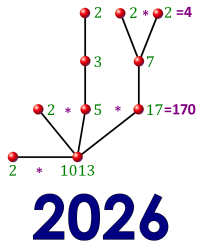 Something old and something new collided last week in a way that I found very engaging. The old was a science fiction series I read long ago, the Heechee saga by Frederik Pohl (1919-2013). What’s relevant here is that the alien Heechee used a number system based on prime numbers.
The new was this recent Substack post by Richard Green, a math writer and teacher. It, too, features a system based on primes, and I realized it solves a problem that has long bothered me about the putative Heechee number system.
Let me explain…
Continue reading
Leave a comment | tags: Frederik Pohl, Heechee, prime numbers, science fiction books | posted in Math
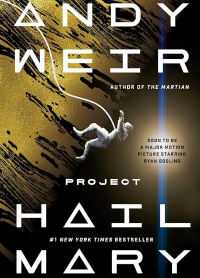 This past week I read and very much enjoyed Project Hail Mary (2021), by phenom Andy Weir. This is his third novel, his third time with an award-winning bestseller, and the third time Hollywood has acquired the rights for a film adaptation.
All three of his books are what I call “diamond-hard” science fiction — projections of future technology with a bare minimum of gimmes (such as warp drive). Bonus points if there are none.
This story has a somewhat magical material that plays a key role, not to mention an exotic alien lifeform that’s the raison d’etre for the whole story.
Continue reading
11 Comments | tags: alien contact, aliens, Andy Weir, Mars, science fiction, science fiction books | posted in Books, Sci-Fi Saturday
 There is a modern triumvirate of British far-future space adventure SF writers: Neal Asher, Iain M. Banks, and Alastair Reynolds. I listed them alphabetically, but that also happens to be my order of preference for their work. Make no mistake, I like all three, but I have found myself disengaged by a few of Reynolds’s books.
We started on a positive note [see this post], but I quickly ran into some issues with his writing [see this post and this post]. I was very disappointed by a couple of his books. That so far hasn’t happened with Banks or Asher.
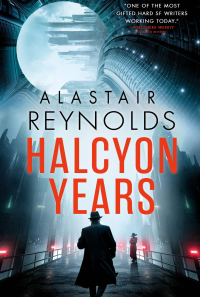
Recently, though, I read Reynolds’s Halcyon Years (2025).
Continue reading
9 Comments | tags: Alastair Reynolds, detective books, science fiction, science fiction books | posted in Books, Sci-Fi Saturday
 My reaction to Scottish writer Iain (M.) Banks (1954-2013) is decidedly mixed. On multiple points. His middle initial (for Menzies) being one of the lesser ones. The 14 novels by Iain M. Banks are science fiction — most taking place in the Culture, his far-future backdrop. The 14 novels by Iain Banks, however, are mainstream, not science fiction.
Banks became notable after his first novel, The Wasp Factory (1984; mainstream). His first science fiction book, Consider Phlebas, came out in 1987. That was also the first book in his Culture series.
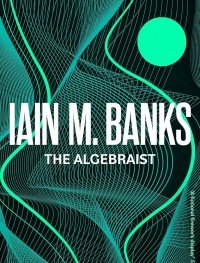
I recently read The Algebraist (2004), one of his few non-Culture science fiction novels. It reminded me of both what attracts and annoys me about his writing.
Continue reading
4 Comments | tags: Iain M. Banks, science fiction books | posted in Books, Sci-Fi Saturday
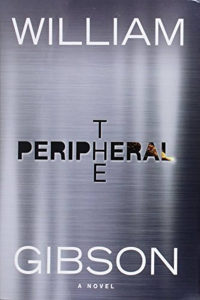 I have a great deal of respect for science fiction author William Gibson and what he contributed to the art but can’t honestly say I love his writing. Gibson and Bruce Sterling are widely viewed as the fathers of cyberpunk (hence the respect), but I find their writing sometimes opaque and challenging (though maybe that’s on me).
In recent years I’ve been revisiting both authors — rereading the few stories I have read and checking out many I never did. It hasn’t moved the needle that much for me, though. Still don’t find them highly engaging.
Which brings us to The Peripheral and its Amazon Prime adaptation.
Continue reading
7 Comments | tags: adaptations, Amazon Prime, science fiction books, science fiction TV, William Gibson | posted in TV Tuesday
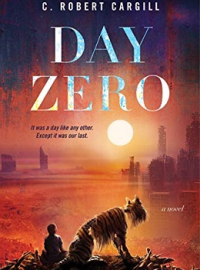 Recently, fellow WordPress blogger Anonymole mentioned in a comment here that he enjoyed Day Zero, a 2021 science fiction novel by C. Robert Cargill. I checked out the Wikipedia article about it, and thought it sounded interesting. Turned out my library had it, so I checked it out (in both senses of the word).
And I agree! It’s very good, and I’d recommend it for any science fiction fan, especially fans of hard SF. It’s the story of a robot uprising that kills most of the humans but as told from the first-person point of view of one of the robots.
It’s the story of his desperate attempt to save the child he was bought to nourish and protect as the world crumbles around them.
Continue reading
5 Comments | tags: artificial intelligence, killer robots, robots, science fiction, science fiction books, SF Books, technology | posted in Books, Sci-Fi Saturday
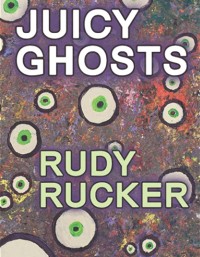 For today’s Sci-Fi Saturday, we have Juicy Ghosts (2021), the latest novel from mathematician turned science fiction writer Rudy Rucker. The library blurb describes it as “a fast-paced adventure novel, with startling science, engaging dialog — and a happy ending. […] It’s also a redemptive political tale, reacting to the chaos of a contested US presidential election.”
It’s very clear from the text — and explicit in his Afterward — that the novel was inspired by recent American politics. The story features a cruel tyrannical President who, backed by Big Money, steals a third term.
And is taken out by technological wizards. As the blurb said, a happy ending.
Continue reading
4 Comments | tags: Rudy Rucker, science fiction, science fiction books, SF, SF Books | posted in Books, Sci-Fi Saturday
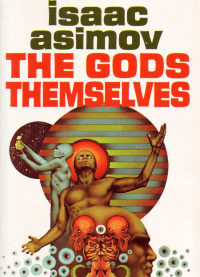 The Sci-Fi Saturday posts lately have reported on books by Robert J. Sawyer, my new favorite science fiction author, or on books by Ben Bova, one of the notable stars in the SF firmament. A couple of posts recommended interesting movies (this one and that one).
This month I’ve been exploring other things. For instance, other parts of YouTube than I usually frequent (see yesterday’s post). Relevant here, other science fiction authors. (And maybe a TV show if there’s space.)
Today’s post reports on books by: Isaac Asimov, William Gibson, Neil Gaiman, and James S. A. Corey.
Continue reading
7 Comments | tags: Isaac Asimov, Neil Gaiman, Sandman, science fiction books, SF Books, William Gibson | posted in Books, Sci-Fi Saturday
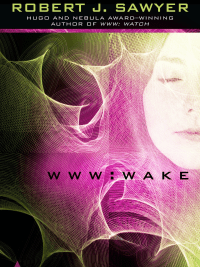 What if, as more than one science fiction story has imagined, the sheer size and complexity of the World Wide Web made it become self-aware. And what if, contrary to most of those stories, it was wonderful in every sense of the word. What if it meant world peace, freedom, and humanity at long last growing up.
That’s the vision Robert J. Sawyer presents in his WWW trilogy, which consists of Wake (2009), Watch (2010), and Wonder (2011). It’s the tale of a young woman blind from birth who gains sight, a bonobo-chimpanzee hybrid who makes a choice, and an emergent machine-based superintelligence who wants to serve man.
And not, it (or rather he) adds, in the cookbook sense.
Continue reading
17 Comments | tags: AI, hard SF, Robert J. Sawyer, science fiction, science fiction books, SF, SF Books | posted in Books, Sci-Fi Saturday
 While I may not have been posting much lately, I have not been idle. One good descriptor for me — one that has been valid for nearly my entire life — is voracious reader. One thing I’m not, however, is a broadly eclectic reader. I tend to stay in the realms of science and science fiction, with the latter leaning well towards hard science fiction.
There is a third reading axis I love, the murder mystery, detective, crime, thriller axis (so: Christie, Grisham, Leonard, Child, et many al). And lately I’ve discovered some interest in historical accounts of quantum mechanics and the people behind it.
But Sci-Fi Saturday is all about the science fiction!
Continue reading
6 Comments | tags: Ben Bova, Robert J. Sawyer, science fiction, science fiction books, SF, SF Books | posted in Books, Sci-Fi Saturday







 Logos con carne