Category Archives: Philosophy
 The tragedy in Aurora, Colorado, naturally re-activated the “discussion” of guns and gun control in the blogsphere. As with reproductive rights and gay rights, it’s not really a discussion so much as two sides throwing comments (or worse) at each other.
At least they aren’t throwing bullets (yet?). I guess that’s something.
Continue reading
5 Comments | tags: aurora colorado, colorado, current-events, gun control, gun debate, guns, Roger Ebert | posted in Life, Philosophy
 I’ve written articles here that touched on art theory, quantum theory, science fiction theory and number theory. There are many more theories: gravitational, electromagnetic, economic, social. Of course, there is also pure, practical and applied theory.
The idea gets around. On the outskirts there are theories about UFOs, ghosts, Noah’s Ark, many more!
And there are the “my theory” theories put forth from soap boxes, fliers and now blogs such as this. Literally such as this, since here’s my theory about theories.
Continue reading
3 Comments | tags: logic, no black swans | posted in Basics, Philosophy
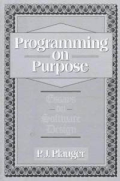 It’s been said that programming is an exercise in managing complexity, and while that’s true, it’s only part of the picture. (Still, it’s a pretty big part!) More to the point, managing complexity applies to much more than software design. A defining characteristic of modern life is its complexity, so learning to manage it might be a Pretty Good Idea!
Thinking about a friend struggling with the complexity of life lead to remembering of one of P.J. Plauger‘s articles about problem modeling from his book, Programming On Purpose. (The book is a collection of his essays from the long-defunct, but most excellent, Computer Language magazine.)
Thinking about Plauger’s ideas again lead to thinking they might be worth sharing. Whether fresh or review, these ideas capture six key basic analytical techniques nicely. If you’ve never really thought about them before, you may find the ideas useful.
Continue reading
Leave a comment | tags: bottom-up, computer programming, easy-to-hard, programming, top-down | posted in Basics, Computers, Philosophy
 Imagine standing on a very tall hill in middle of a thick forest. Your hill is tall enough to take you above the trees; when you look out over the trees, you can see for miles around you. Ahead you can see another hill sticking above the trees; this is your goal.
You want to reach that hill.
A question arises; you are asked, “How long will it take to reach yon hill? What will you need along the way?”
Continue reading
Leave a comment | tags: computer programming, dragons, experience, programming, project management, software design | posted in Basics, Computers, Philosophy, Quotes, Sideband
 Recently I tried to (at least start to) give you my answer to the question, What Is Art? Here’s a look at an interesting aspect of creative work that differs somewhat from the usual way of things. At least it does when looked at from a certain angle. It has to do with breaking the rules.
The angle I have in mind sees rules and laws as being along a similar yardstick. They are actually different basic ideas, but they share a continuum such that one blends into the other. They are not a Yin/Yang pair; one is not in any sense the opposite of the other.
Rules and laws are similar — but distinct — ideas.
Continue reading
9 Comments | tags: art, breaking the rules, laws, rules, thinking outside the box | posted in Philosophy
 When it comes to a spiritual position, there are at least three major positions you can take. There are three metaphysical questions you can ask yourself. Each question, if you answer “no,” halts the process and defines your position.
The questioning continues so long as your answer is “yes.” As the questioning continues, you approach a more and more specific concept of “God(s).”
Basically, it’s a flow-chart that calculates your metaphysical point of view.
Continue reading
11 Comments | tags: agnostic, atheism, belief, deism, faith, God, metaphysics, prayer, spirituality, theism, three | posted in Basics, Philosophy, Religion
 An old and challenging question is, “What is art?” The question is probably as old as art and artists; the moment someone made a cave painting, someone else probably asked, “But is it art?”
It’s possible the question cannot be answered in any objective way; we may each have a personal definition of art. Here are some of my thoughts on the matter.
First, there are (at least) three distinct questions one might ask regarding art:
- Is it art?
- Is it good art?
- Do I like it?
This essay is strictly about the first question. Critical review (whether a piece of Art is good) and taste (whether you like it) are separate matters.
Continue reading
26 Comments | tags: Andy Warhol, art, artist, cave painting, Jackson Pollock, Roger Ebert, video games | posted in Basics, Philosophy
 My recent post about how the Big Bang and “Let there be Light” seem equally fantastic to me triggered an interesting comment from a reader. A detailed response requires more elbow room than a comment allows, so here’s a follow-up article instead.
One of the points involved that our scientific ideas, no matter how inaccurate they may turn out to be, are at least based on evidence. And to the credit of science, when we recognize errors in our interpretation of the evidence, science changes to accommodate the new interpretation.
This has been, as I mentioned in that post, hugely successful. One of the failures of our spiritual metaphysics is that it clings to frameworks defined thousands of years ago and often stubbornly refuses to accommodate new information.
Continue reading
7 Comments | tags: atheism, big bang, brain mind problem, Gandhi, Kurt Gödel, Lee Smolin, Max Planck, quantum physics, Roger Penrose, Sheldon Glashow, spacetime, spirituality, String theory, theism, Theory of Consciousness, Yin and Yang | posted in Philosophy, Physics, Religion, Science
 I want aliens to come to earth.
It’s going to be a very long time (if ever) that we go traipsing around the galaxy visiting others. If we do, of course we’ll be the aliens (which has made for some good SF stories and a recent cute film). Our tech is a long way from a galactic bus, so that’s one thing. Another thing is that we have no idea where to go. So far SETI hasn’t SEEN; for all we know we’re alone in the local universe.
You may have heard of the Drake Equation, which starts with the huge number of stars and calculates that even if a fraction of a fraction of a fraction (and so on, several times) of them have the conditions necessary, there are still many possible worlds with intelligent life.
Continue reading
8 Comments | tags: alien contact, aliens, Contact (book), Contact (movie), first contact, Planet 51, The Day the Earth Stood Still | posted in Books, Movies, Philosophy
 One of the things that strikes me about the idea of God is how universal that idea is. To the best of my knowledge, every society in every age has had some sort of spiritual core belief.
I used to state this as the assertion that every society believed in some sort of god or gods, but it was pointed out to me that Buddhists don’t actually have a god. They do have some metaphysical entities, and more importantly, Buddhism is certainly a belief in a metaphysical reality that transcends this one.
So the question is: if humans universally find themselves finding God(s), what does this mean?
Continue reading
10 Comments | tags: atheism, belief, creation, evolution, faith, God, psychology, spirituality, theism | posted in Basics, Philosophy, Religion, Science






 Logos con carne