Monthly Archives: December 2020

I’ve known about Aldus Huxley’s soma as long as I’ve been a serious reader of science fiction, but it wasn’t until I finally read his 1932 novel, Brave New World, that I had a full picture of it. There is a direct avatar in the modern drug Xanax (and perhaps more so in marijuana), but it’s the metaphorical versions of soma that caught my eye these past decades.
The point of soma is that it is an external coping mechanism — a tool for promoting one’s own happiness with and in life. It can be the sledgehammer of a drug (or the gunshot of a lobotomy, to be extreme), but I see many metaphorical versions of it in our culture now.
When I look around, I see a seriously soma-soaked society.
Continue reading
17 Comments | tags: Brave New World, fantasy BS, FBS, Planet X, Psi Phi, reality, soma | posted in Rant, Society

In Through the Looking-Glass, Humpty Dumpty famously declares that words mean what he wants them to mean. I’ve known people to declare the same thing — that, for whatever reason, they can use their own meanings for words. (To be clear, Lewis Carroll was mocking the idea.)
While ideas matter more than the words used to express them, it’s a lot more challenging to communicate and discuss those ideas without a shared vocabulary. A common language that is rich and detailed makes the expression of ideas all the more precise and accurate.
This is why con artists prefer convoluted language: it’s a mask.
Continue reading
49 Comments | tags: Albert Einstein, facts, fantasy BS, FBS, Humpty Dumpty, language, Lewis Carroll, post-reality, reality, word play, words | posted in Rant, Society

Since I retired, I’ve been learning and exploring the mathematics and details of quantum mechanics. There is a point with quantum theory where language and intuition fail, and only the math expresses our understanding. The irony of quantum theory is that no one understands what the math means (but it works really well).
Recently I’ve felt comfortable enough with the math to start exploring a more challenging aspect of the mechanics: quantum computing. As with quantum anything, part of the challenge involves “impossible” ideas.
Like the square root of NOT.
Continue reading
21 Comments | tags: Artur Ekert, Philip Ball, quantum computing | posted in Computers, Physics
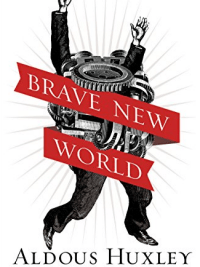 In every literary genre (in every type of art, really), there are classics that stand out and often participate in forming the language, or at least some of the territory, of the genre. That is part of what makes these works classics. (Lord of the Rings is an ultimate classic — all Medieval fantasy since is in reference to it.)
I suspect all serious readers have a classic or two they’ve never gotten around to. Last week I finally got around to reading the classic science fiction novel, Brave New World (1932), by Aldous Huxley.
For a novel written 88 years ago, it’s surprisingly prescient and relevant.
Continue reading
30 Comments | tags: Aldous Huxley, Brave New World, Idiocracy, Nineteen Eighty-Four, science fiction, science fiction books, SF, SF Books, soma, The Time Machine | posted in Books, Sci-Fi Saturday

It’s been a few minutes since the last Wednesday Wow post, and I’ve got two recent videos that definitely made me go “Wow!”
I have a third that is cute and interesting as well as a fourth that’s kind of math-y but lighthearted and certainly relevant (and which will introduce you to Benford’s Law if you haven’t heard of it).
The first video involves a tragic disaster that occurred on the first of this month down in Puerto Rico when the Arecibo radio astronomy telescope collapsed.
Continue reading
4 Comments | tags: AI, Arecibo Observatory, Arecibo Telescope, asteroid, Benford's Law, Matt Parker, space exploration | posted in Wednesday Wow
With COVID-19 putting a damper on social activity, “the gang” doesn’t get together very often, but we still gather occasionally (and carefully). One of the times recently I got into how, even though we’re all sitting essentially motionless in a living room, we’re moving through time at the speed of light. I explained why that was, and they found it pretty cool.
Then I ran into someone online who just couldn’t wrap his head around it — just couldn’t accept it (despite explaining in detail and even providing links to some videos). Physics is sometimes challenging to our daily perceptions of reality!
In this case, though, it’s just a matter of some rather simple geometry.
Continue reading
17 Comments | tags: frame of reference, light speed, Lorentz equation, spacetime, Special Relativity, velocity | posted in Physics

Converging…
Back in October I published two posts involving the ubiquitous exponential function. [see: Circular Math and Fourier Geometry] The posts were primarily about Fourier transforms, but the exponential function is a key aspect of how they work.
We write it as ex or as exp(x) — those are equivalent forms. The latter has a formal definition that allows for the complex numbers necessary in physics. That definition is of a series that converges on an answer of increasing accuracy.
As a sidebar, I thought I’d illustrate that convergence. There’s an interesting non-linear aspect to it.
Continue reading
9 Comments | tags: exponential function, transcendental numbers | posted in Math, Sideband
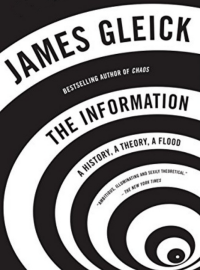 I just finished The Information: A History, a Theory, a Flood (2011), by historian author James Gleick. This past summer I read his book, Time Travel (2016), which was about time travel in fiction and in our hearts. [see Passing Time (My bad; it should have been titled Gleick: Time Travel, but I can never resist a pun.)]
If you read my post about the time travel book, you know I didn’t care for it, although I place the blame on my expectations, not the book. I do find Gleick, as I said then, “ambling, rambling, and meandering,” but I’m sure many greatly enjoy his excursions. I ended that review mentioning I’d like to read another book of his (a trend takes two data points).
The Information is that book, and I did like it more than Time Travel.
Continue reading
75 Comments | tags: Claude Shannon, information theory, James Gleick, talking drums, telegraph, telephones, visual semaphore | posted in Books








 Logos con carne