Category Archives: Science
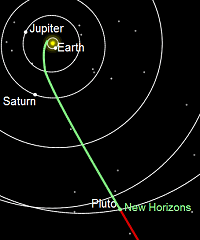
Hot off the press! Check out Pluto’s first close up:
Those mountains are up to 11,000 feet high! And the surface looks to be roughly 100 million years old — extremely young compared to the four-and-a-half billion-year age of the solar system (and not a crater in sight!).
Continue reading
17 Comments | tags: Charon, Clyde Tombaugh, Emily Lakdawalla, Mordor, NASA, New Horizons, Planetary Society, Pluto, Pluto is a planet, Pluto is amazing!, space, space exploration | posted in Science
 Oh, my! I mentioned last time that the Minnesota Twins, after a surprisingly good month of May, cooled down big time in June. Fans held their breath wondering how far the team would fall from the height reached in May. Now, with June behind us and July well under way, we can start breathing normally again.
The Twins lost ground in June but remained above the .500 mark (by five games!) by month’s end. But July seems to have brought an end to the ice-cold bats. The Twins are 8-4 in July as we begin the All-Star break.
But more importantly: It’s Pluto Day!
Continue reading
4 Comments | tags: Brian Dozier, Ceres, Charon, Clyde Tombaugh, Dawn mission, Glen Perkins, Minnesota Twins, MLB All-Star Game, NASA, New Horizons, Pluto, Pluto is a planet, Pluto is amazing!, space, space exploration, Twins 2015, Venetia Burney, Vesta, Win Twins | posted in Baseball, Science

This blog is nearly four years old (I started on July 4th, 2011). This post makes it exactly 500 posts here on Logos Con Carne. To commemorate it, I’m giving myself the 500 Odometer Award (which I built myself from various electrons I had laying around).
As part of the party, this post consists of miscellaneous odds and ends that have intrigued me lately. I’ll leave it to you to decide which are the odds and which are the ends.
Continue reading
22 Comments | tags: All of Me, Comic Sans, George Winston, Jon Schmidt, light, light speed, Linus and Lucy, Minnesota Twins, Monty Python, NASA, SDO, skydiving, The Piano Guys, Tom Scott | posted in From My Collection, Life, Music, Science, The Interweb, Writing
 We’re finally sliding into home plate in this series (it’s baseball season, so I get to use baseball metaphors now). After spending a lot of time looking into how Special Relativity works, we’re able to at last explore how it applies to the idea of faster-the-light travel.
Last time we saw that FTL radio seems hopeless — at least at communicating between frames of reference in motion with regard to each other. It’s possible there might be a loophole for FTL communication between matched frames. (If nothing else, it may be fertile background for some science fiction.)
Today we examine the idea of FTL motion — of “warp drive!”
Continue reading
2 Comments | tags: ansible, Cougar Town, faster than light, FTL, light, light speed, light year, science fiction, Special Relativity, speed of light, warp drive | posted in Physics
 Over the last five weeks I’ve tried to explain and explore Einstein’s Theory of Special Relativity. We’ve seen that motion, velocity, simultaneity, length, and even time, are all relative to your frame of reference and that motion changes the perceptions of those things for observers outside your frame.
All along I’ve teased the idea that the things I’m showing you demonstrate how the dream of faster-than-light (FTL) travel is (almost certainly) impossible. Despite a lot of science fiction, there probably isn’t any warp drive in our futures.
Now it’s (finally) time to find out just exactly why that is.
Continue reading
7 Comments | tags: ansible, causality, causality violation, Ender's Game, faster than light, frame of reference, FTL, light, light speed, light year, Orson Scott Card, science fiction, simultaneity, Special Relativity, speed of light, Ursula Le Guin | posted in Physics
 This week I’ve focused on the relativity of time under motion, and we’ve seen that moving very fast allows “time travel” into the future. Very handy if you don’t mind the one-way trip. What’s more, a spaceship capable of such a flight is physically possible, so it’s a “time machine” we know works!
On Monday I described how fast-moving, but short-lived, muons created high in the atmosphere live long enough to reach the ground due to time dilation. That’s just one place we see Special Relativity actually working exactly as Einstein described. For another, fast-moving particles at CERN have decay times showing they, too, have slow clocks.
As we’ll see today, light’s behavior requires time appear to run slower!
Continue reading
10 Comments | tags: Albert Einstein, clock, clock escapement, faster than light, FTL, grandfather clock, light, light clock, light speed, Pythagoras, space-time, Special Relativity, speed of light, tick of the clock, time, time dilation | posted in Physics
 Last time we saw that Em non-paradoxically time-travels over three years into Al’s future by flying 12 light years at half the speed of light for just over two decades. Her journey completed, Em has aged only 20.8 years while Al has aged 24.
That may not seem like much of a gain, but Em was only moving really fast — not really, really fast. If she travels at 99% of light-speed, her round trip shortens to 1.7 years while Al doesn’t wait much longer than it takes light to make the six light-year round trip: 12.12 years! And at 99.9% c, Em’s whole trip takes her only half a year!
Today we break down dime tilation. I mean, time dilation!
Continue reading
6 Comments | tags: Albert Einstein, Emmy Noether, gamma factor, length contraction, light speed, light year, space-time, Special Relativity, speed of light, time, time dilation, Twins Paradox | posted in Physics
 So far this week we have Em taking a round-trip to planet Noether at half the speed of light. Upon her return she discovers that, while she’s aged 23.8 years, Al (who stayed home on Earth babysitting Theories) has aged 27. It took her well over twenty years to do it, but Em effectively traveled 3.2 years into the future.
Last time we saw that — so long as Em is in constant motion — there is symmetry between Al and Em with regard to who is moving and who isn’t. Both can claim the other is (or they are). Both views are valid. Until Em stops. Or starts, for that matter.
Today we look at Em’s “time shadow” — it’s a key to the puzzle!
Continue reading
Leave a comment | tags: Albert Einstein, Emmy Noether, length contraction, light, light speed, light year, space-time, Special Relativity, time, time dilation, time-space diagram, Twins Paradox | posted in Physics
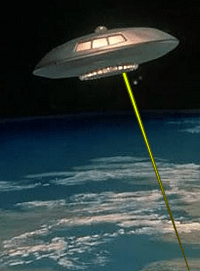 This is an eXtra post in the Special Relativity series. It explores a sub-topic in detail that may not be of interest to most readers — either the detail or the sub-topic itself. The purpose of the post is to pre-answer, or serve as a reference for, obvious questions that the technically astute might ask (often questions I once asked).
This article is about the acceleration and deceleration that seems required in the Twins Paradox illustration. Some even refuse to accept the illustration as valid under the belief that changing speed significantly alters the picture.
Here I try to show how we can completely ignore it.
Continue reading
2 Comments | tags: Albert Einstein, Emmy Noether, Special Relativity, time dilation, Twins Paradox | posted in Physics











 Logos con carne