Category Archives: Books

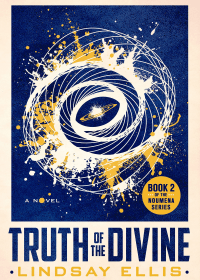
Ellis: The Truth of the Divine

Last year I read and very much enjoyed Axiom’s End (2020), a debut novel by film critic and YouTuber Lindsay Ellis. It’s the first book of her Noumena series, which is about powerful aliens showing up on an unsuspecting Earth. It made the New York Times Best Seller list and generated a fair amount of favorable attention.

Earlier this year I preordered the second book, The Truth of the Divine (2021), and it finally dropped last month. I had high hopes and much anticipation about where Ellis would take her story. Sadly, I found myself sorely disappointed by this second installment. This isn’t a positive review.

For balance I’ll mention two books I did enjoy, Neuromancer (1984), by William Gibson, and a new comedy by David Brin.

Continue reading


Butler: Kindred

Not long ago I posted All the Christie as a follow-up to an earlier post about Agatha Christie. I’d read her when I was younger but only realized what an extraordinary writer (and person) she was when I revisited her work recently.

In contrast, I knew Octavia E. Butler only by reputation and some short stories I’d read. This past August I finally set out to correct this egregious oversight for a serious science fiction fan. As it turned out, I sat down to a delicious feast by another extraordinary cook. I relished every crumb, from appetizer to dessert. (I even shamelessly licked the plate.)

The dessert was her finest (and most popular) dish, Kindred (1979). Continue reading


Butler: Parable Series

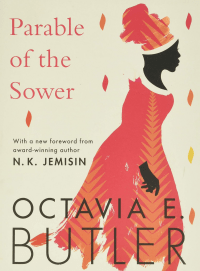
This past August I posted about Octavia E. Butler, a highly regarded science fiction author I finally got around to exploring. Now that I’ve read all her work (but for one novel), I’ve gone from being very impressed to being slightly in awe. Her reputation is very well deserved.

Recently I finished her two-book Parable series, Parable of the Sower (1993) and Parable of the Talents (1998). It’s the story of a woman’s lifelong journey building what she names Earthseed, a modern religion with a concrete goal.

What blew my mind, though, was how eerily prescient her President Jarret was of our POTUS45. Nailed it — including the infamous slogan.

Continue reading


Wilczek: Fundamentals

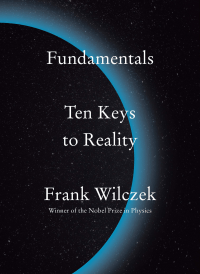
I just finished Fundamentals: Ten Keys to Reality (2021), by Frank Wilczek. It’s yet another book explaining fundamental physics for lay readers, and it does so pretty much entirely within the bounds of mainstream science. I enjoyed reading it, but it’s mainly a review of physics as we know it.

I saw it on the library’s list of new books and put it on hold back on May 14th. It didn’t become available until September 3 — more than a three-month wait. Apparently lots of people wanted to read it.

Bottom line, I recommend it as an easy and enjoyable read, especially for those with a more casual interest in physics.

Continue reading


Monday the Blogger Posted

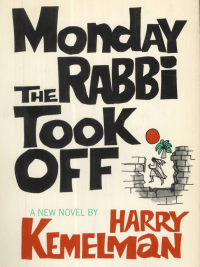
The last few months I’ve been dipping into the Rabbi Small murder mysteries, which are written by author and professor of English Harry Kemelman (1908–1996). The series is in the Amateur Sleuth sub-genre. In this case the amateur who is constantly solving murders is a Jewish rabbi.
The Tony Hillerman books (Leaphorn and Chee) are filled with Navajo background. The Jonathan Gash books (Lovejoy) are filled with antiques background. The Lawrence Block books (Bernie the burglar) are filled with burglary background. In all cases, this background enriches the reading and can be educational (the Hillerman books especially).

Harry Kemelman’s books are enriched by all the Jewish background.

Continue reading


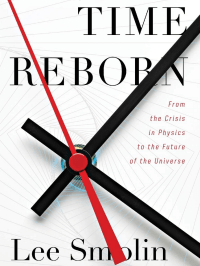
Smolin: Time Reborn

I’ve been reading science texts almost as long as I’ve been reading anything. Over those years, many scientists and science writers have taught me much of what I know about science. (Except for a Computer Science minor, and general science classes, most of my formal education was in the Liberal Arts.)

Recently I read Time Reborn (2013), by Lee Smolin, a theoretical physicist whose personality and books I’ve enjoyed. I don’t always agree with his ideas, but I’ve found I do tend to agree with his approaches to, and overall sense of, physics.

However in this case I almost feel Smolin, after long and due consideration, has come around to my way of thinking!

Continue reading


BB #78: Relational Theories

I read Three Roads to Quantum Gravity (2001), by Lee Smolin, a theoretical physicist whose thoughtful style I’ve always appreciated. I don’t always agree with his ideas, though. This book is about Loop Quantum Gravity, in which Smolin has invested considerable effort, and that idea I’m utterly neutral on. It does seem to make more sense than string theory.

One notion I have a lot of trouble swallowing (like a cup of coffee with eight lumps of sugar) is the relational view. (As a philosophy, relationism. Al stayed home.) It’s a fundamental aspect of LQG.

But I (and apparently Kant agrees) think Leibniz was wrong.

Continue reading


BB #77: Smooth Spacetime

I read Three Roads to Quantum Gravity (2001), by Lee Smolin, a theoretical physicist whose thinking I’ve appreciated since I read his 2006 book, The Trouble with Physics: The Rise of String Theory, the Fall of a Science, and What Comes Next.

Three Roads, as the title suggests, is about the efforts to reconcile quantum mechanics and General Relativity, our two best physical theories. String theory is one road, Loop Quantum Gravity (Smolin’s preferred approach) is another. The third road is complete theory reconstruction (such as discussed by Philip Ball in his book Beyond Weird).

None of that is the subject of this post.

Continue reading


BB #76: The Holographic Theory

I finished reading Three Roads to Quantum Gravity (2001), by Lee Smolin, a theoretical physicist whose general sensibility I’ve always appreciated. I don’t always agree with his ideas, but I like the thoughtful way he expresses them. Smolin brings some philosophical thinking to his physics.

While he added a lengthy Postscript to the 2017 edition, the book is outdated both by time and by Smolin. In 2006 he published The Trouble with Physics: The Rise of String Theory, the Fall of a Science, and What Comes Next, which explored issues in the practice of theoretical physics. But in 2001 he still thought string theory was (at least part of) The Answer.

Almost none of which is the subject of this post.

Continue reading


Octavia E. Butler

Retirement, along with online access to the library, has opened the door to exploring authors I’ve meant to read for ages. For example, I’d always meant to read one of my dad’s favorite books, The Name of the Rose (1980) by Umberto Eco, but it wasn’t until last year that I finally did (and it was really good; I can see why he loved it).

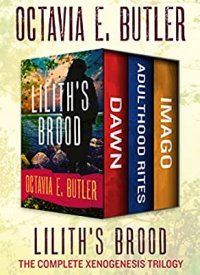
As a fan of literary science fiction for over six decades, I’ve long felt pressure to explore the works of Octavia Butler (1947–2006). Over the years, in collections, I’ve read some of her short stories (and found them tasty). It was only in the last month or so that I finally got into her novels.

And, my, oh my! She is every bit as good as everyone says she is.

Continue reading