Monthly Archives: February 2024

BB #90: The Growth Paradigm

My final post in 2023 was about growth curves. It focused on the difference between geometric growth versus exponential growth — which turns out to be not much — and compared them to polynomial growth (see that post for the math-y details; this post isn’t a math post, so relax and read on).

A key characteristic of all these growth curves is that they grow without limit. If we treat the horizontal axis as time, then the longer the growth continues along the curve, the greater whatever growing grows.

The problem is that nothing in the real world can grow infinitely without limit. At some point, something has to give.
Continue reading


BB #89: The Irrational Square

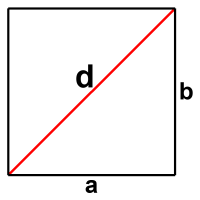
Consider the lowly square, a four-sided shape with sides of equal length meeting at right angles. The embodiment of what we’re referring to when we refer to square miles, square kilometers, square inches, or square whatevers. The two-dimensional version of any one-dimensional length.

A trivially easy shape to draw, all you need is a straight edge and a compass — the latter for ensuring your corners are right angles (see Plato’s Divided Line for more on using a straight edge and compass). The only simpler shape is the circle.

Yet the simple square threw early mathematicians into a serious tizzy!

Continue reading


Winter Finally Showed Up!

February 15, and winter finally decided show up:

And it’s awfully pretty, I gotta give it that!

Continue reading


BB #88: Boltsmann Brains

An article in a recent issue of New Scientist caught my attention on two counts: firstly, in what it said about my old friend wavefunction collapse and the measurement problem; and secondly, in mentioning Boltzmann Brains. Both set off my “Yeah, but!” reaction.

I’ll touch (as briefly as possible) on the first point, but this little Bubble is mainly about the second one.

Boltzmann Brains bug me.

Continue reading


BB #87: Two = Zero!

You may have, at some point, seen one of those bits where a series of seemingly simple math operations somehow end up proving that 1=0 or something equally clearly wrong. Most of them accomplish their joke by sneaking in a hidden division by zero. From that point on, all bets are off (see Divide by Zero).

Recently, on a YouTube channel I follow, I saw a clever example that uses a much sneakier trick. It’s harder to spot because the operation it uses is legit in two of the three possible cases.

The gag, of course, uses the third one.

Continue reading