Monthly Archives: June 2020

Black Lives Matter — Triton Station

I don’t normally reblog, but I’m still trying to find my voice on this, and I thought this post very well expressed many of the things I’m feeling. I’ll get out of the way and let you read it.

I started this blog as a place to discuss science, and have refrained from discussing overtly political matters. This is no longer possible. Today is June 10, 2020 – the date set to strike for black lives. I want to contribute in a tiny way by writing here. If that seems inappropriate to you or […]

via Black Lives Matter — Triton Station

Black Lives Matter.


Entropy and Cosmology

Last time I started talking about entropy and a puzzle it presents in cosmology. To understand the puzzle we have to understand entropy, which is a crucial part of our view of physics. In fact, we consider entropy to be a (statistical) law about the behavior of reality. That law says: Entropy always increases.

There are some nuances to this, though. For example we can decrease entropy in a system by expending energy. But expending that energy increases the entropy in some other system. Overall, entropy does always increase.

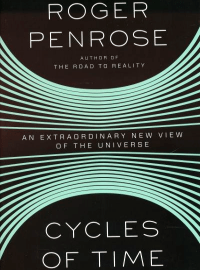
This time we’ll see how Roger Penrose, in his 2010 book Cycles of Time, addresses the puzzle entropy creates in cosmology.

Continue reading


The Puzzle of Entropy

I’ve been chiseling away at Cycles of Time (2010), by Roger Penrose. I say “chiseling away,” because Penrose’s books are dense and not for the fainthearted. It took me three years to fully absorb his The Emperor’s New Mind (1986). Penrose isn’t afraid to throw tensors or Weyl curvatures at readers.

This is a library book, so I’m a little time constrained. I won’t get into Penrose’s main thesis, something he calls conformal cyclic cosmology (CCC). As the name suggests, it’s a theory about a repeating universe.

What caught my attention was his exploration of entropy and the perception our universe must have started with extremely low entropy.

Continue reading


American Ultra

It’s always the quiet ones. As I’ve said before, sometimes the most interesting movies are the ones that slip by mostly unnoticed. In some cases, they’re movies many people didn’t realize were much better than they thought. (I’ve long thought Johnny Mnemonic and Johnny Dangerous both fell into that category.)

Last night I watched American Ultra (2015), directed by Nima Nourizadeh and written by Max Landis. I thoroughly enjoyed it, although it won’t be everyone’s cup of tea. It’s either an action-thriller with comedy, or a comedy with action thrills. Those can be hard to pull off well.

I think if you like Quentin Tarantino’s films, you’ll like American Ultra.

Continue reading


BOOL or Bust

This is part five of a series celebrating the passing of BOOL, the “ship in a bottle” computer language I’ve been tinkering with for three decades. It’s a design dream, and I’ve decided to wake up.

Last time I talked about how BOOL handles data and why that was such an issue. This time I’ll ramble on about some of the other snarls that ultimately made things more complicated than I wanted. Simplicity and elegance were key design goals. I intended the run-time environment, especially, to be utterly straightforward.

Unfortunately, the behavioral design goals — the way BOOL should act at run-time — ended up in direct conflict with that.

Continue reading


BOOL Pains

This is part four of a series commemorating BOOL, a computer language I started designing somewhere around 1990. After 30 years of sporadic progress, I finally gave up. There were so many contradictions and (for lack of a better word) “epicycles” in the design goals that it just wasn’t viable.

So, I’m mourning the passing of an idea that’s shared my headspace for three decades. Previously I’ve introduced BOOL and provided a tour of its basic aspects. Now I have to start talking about why it failed.

It has a lot to do with data, but that wasn’t the only issue.

Continue reading


BOOL with Class

This is part three of a series mourning the death of a computer language I birthed around 1990. Now it’s turning 30, and I’ve decided it’s too old for this sort of thing. I’ve retired and now I’m retiring it (in the “sleeps with fishes” permanent retirement sense). These posts are part of a retirement party. BOOL might not be here to celebrate, but I’ll raise glasses in its honor.

First I introduced BOOL, a deliberate grotesquery, an exercise in “and now for something completely different!” Then I illustrated basic procedural programming in BOOL. This time I’ll get into the object-oriented side.

This aspect of BOOL is one of several that changed repeatedly over the years.

Continue reading


BOOL World

This is part two of a series commemorating a computer language I started designing somewhere around 1990. After 30 years of tinkering, I’ve finally accepted that it’s just not meant to be, and I’m letting it go. These posts are part of that letting go process.

Last time I introduced BOOL, said a bit about what motivated it, and started laying out what made it a language only a parent could love. Later I’ll explain why things didn’t work out, but for now I’d like to tell you about what BOOL was supposed to be:

A glorious deliberate useless Frankenstein’s Monster (insert mad laughter).

Continue reading


Bye-Bye BOOL

Somewhere around 1990 I started designing a programming language I named BOOL (Beginner’s Object-Oriented Language). It was always a personal “ship in a bottle” project — something more for aesthetic expression than utility. Like that guy constantly working on an old car in his garage, I’ve dabbled with it ever since.

I’ve decided to, at long last, take BOOL off life support and let it die (another dead dream). But enough of dreams. I’m tired of the weight of dreams; time to shed a pointless burden. I’ve carried it for 30 years, and I think it’s time to chalk this one up to experience.

So this is a eulogy and a memorial.

Continue reading


This Is Where We Are

So it’s June 2020 in America and the level of surrealism, against all sane odds, has risen to new heights. The surrealism of Pumpkin King World these last four years turned out to be just the foothills. Then came the COVID-19 mountains and toilet paper and face-masks and social distancing, and it got more surreal. The air was getting thin, and it was hard to catch one’s breath.

Now a Minneapolis cop has murdered George Floyd, a 46-year-old black man. Justified rage has erupted, and the city is in rebellion. Protests have spread nationwide. The local counties have imposed curfews for the weekend. (Friday night, unsure how real it was, I left a friend’s house later than I should have and was technically in violation of the 8:00 PM curfew before I got home. The bright daylight of summer, the streets all but empty, it was eerie.)

The surreal mountains grew to a surreal Olympus, and there is no air left at all.

I had a series of posts set up to publish this week. Then I thought to push them off to write about this insanity. But I found myself stuck, unable to find the words. (What does an old white guy have to say that’s relevant?) So I’m letting the series publish while I watch and think. (As you’ll see, it’s a series you can easily ignore while you do your own watching and thinking.)

Stay safe and thoughtful, my friends.

Black Lives Matter!