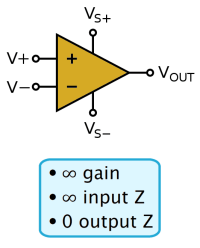
 The last Sideband post (over eight months ago) was about Op Amps, mostly because I think they’re very cool but also easy to understand in the context of the Three Rules of Op Amps. [See this post and maybe the one before it.]
I posted about them in part because I also wanted to post about an electronics project I designed (but never built) back in the late 1980s. I thought it was a cool solution that leveraged existing infrastructure and used off-the-shelf parts.
Be advised this post is seriously on the electronics geek side and is mainly a memory with meaning only to me. I used to love designing stuff!
 As a diversion for the weekend: Have you ever wondered why computers run so hot? No? Okay, I’ll tell you. It’s actually kind of a hoot. (We’ll get back to the more serious topic of algorithms and AI, and wrap up that series, next week.)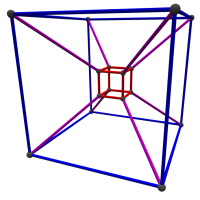




 Logos con carne