Friday Notes (Apr 28, 2023)

Last month I put out two editions of Friday Notes, and this month I almost missed posting any (today being my last chance). To some extent, that’s just normal ebb and flow, but it’s also that I’ve been distracted by Real Life™ (such as it is).

I’ve been doing a lot of (in many cases rather interesting) reading lately — words going in rather than out — and I think any writer will tell you that’s the easier direction. Sometimes the much easier direction.

But I do have some notes (and pictures)…

Continue reading


TV Tuesday 4/25/23

I don’t know how it is with hobbies and interests for others, but mine — the ones that persist, anyway— are typically cyclic. I’ll be into something, reading, blogging, programming, trying to learn quantum mechanics, whatever, and then I’ll burn out or get temporarily tired of it and take a break.

Watching TV is definitely an interest that waxes and wanes. Through most of March, it was more or less on the wane. In April, though, it waxed, and one result of that is another TV Tuesday post.

Perhaps not surprisingly (given my tastes), the main entry today is a Japanese anime series, but there are a number of side dishes, including some movies that snuck in because I watched them on TV.

Continue reading


BB #85: More Fraction Fun

I don’t know why I’m so fascinated that the rational numbers are countable even though they’re a dense subset of the uncountable real numbers. A rational number can be arbitrarily close to any real number, making you think they’d be infinite like the reals, but in fact, nearly all numbers are irrational (and an uncountable subset of the reals).

So, the rational numbers — good old p/q fractions — though still infinite are countably infinite (see this post for details).

More to the point here, a common way of enumerating the rational numbers, when graphed results in some pretty curves and illustrates some fun facts about the rational numbers.

Continue reading


Sapiens: The Book

The previous two posts (this one and this one) each discussed an aspect of Sapiens: A Brief History of Humankind (2011), by Yuval Noah Harari. While those aspects grabbed my attention and got me thinking, I took very little from the rest of the book.

In fact, reading the latter two-thirds got to be something of a chore. It had many examples from comparatively modern history (given the full breadth of our existence) but they didn’t seem to amount to a unified whole. The author seems not to connect dots his own text presents.

Final score: two bits I liked and took away (and posted about) but the rest of the book I left behind. I give it a Meh! rating and a thumbs down.

Continue reading


Sapiens: Revolutionaries

The previous post focused on a single, to me key, aspect of Sapiens: A Brief History of Humankind (2011), by Yuval Noah Harari. This post focuses on the other aspect of the book I found compelling. The last one was about the power fiction gave homo sapiens. This one is about the Agricultural Revolution (the AR).

And other important Revolutions that followed, but the AR wrought a profound change on the human race. It was our first step towards societies and civilization. It ushered in the first cities and led to kingdoms and empires.

It also led to materialism, greed, health issues, theft, and war.

Continue reading


Sapiens: Storytellers

While not usually my cup of tea, Amazon Prime offered Sapiens: A Brief History of Humankind (2011), by Yuval Noah Harari, and I thought I’d give it a try. I’d never heard of the author, and don’t usually read anthropology or sociology books, but the blurb made it sound interesting (don’t they always).

I did enjoy the first third. The author discusses two aspects of our ancient past that really grabbed my attention. Unfortunately, he went on to lose it. In a big way. For me, the latter two thirds of the book added little and missed what seemed some key connections.

So, three posts (at least): one each for the two attention grabbers; one more for the book overall. This first one is about our special ability as storytellers.

Continue reading


It Takes a Thief

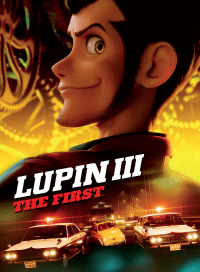
I’ve been a fan of Japanese anime since the 1980s, but in the last decade or so I’ve come to appreciate it even more (because what’s been coming out of Hollywood lately so often has little redeeming value). As fans of the genre know, anime can be as creative and engaging as any form of storytelling you care to name.

Lately, I’ve begun exploring the Japanese media franchise, Lupin the Third (aka Lupin III or Lupin the 3rd). It began back in 1967 and comprises multiple manga, at least six anime TV series, over a dozen films, and other related media.

It taps into our love of master thieves. The fictional monkey-faced Lupin III is acknowledged worldwide as the greatest (and most fun) thief in the world.

Continue reading


The Best Laid Plans

It’s hard to believe I haven’t yet posted about the Robert Burns (1759-1796) poem, “To a Mouse, on Turning Her Up in Her Nest With the Plough, November, 1785”. Written, obviously, in 1785. It’s one of my favorites, and as with some of my other favorites, due in part to one line, the immortal words: “The best-laid schemes of mice and men; Go oft awry.”

And don’t they indeed. God (or fate or chance or whathaveyou) laughs at our puny plans.

It’s a short poem, and I don’t have all that much to say about it, so I’ll also tell you about an interesting bug in the new WordPress Jetpack app that lets you game your own stats.

Continue reading


Friday Notes (Mar 24, 2023)

I don’t usually write two Friday Notes posts in one month, but I was dog-sitting my funny little “nephew” Bentley for a week, and every time I don’t post for a while it’s hard to get back into blogging mode. In fact, it’s harder each time. I increasingly find social media less and less interesting or rewarding.

Some of that is on me, but more of it is disappointment and disgust with social media and technology companies in general. A bit more on that below.

Mostly, though, I wanted to — at long last — post the last two notes that have been lingering on my Apple Notes app for years (in one case, since 2018).

Continue reading


Ngaio Marsh

Back in February I posted about how I was starting to explore murder mystery author P.D. James (1920-2014). As it turned out, I decided she wasn’t really my cup of tea. I’ll say a bit more about that later in this Mystery Monday post, but the main topic today is Ngaio Marsh (1895-1982), a murder mystery author from New Zealand who definitely is my cup of tea.

She’s a close contemporary of Agatha Christie (1890-1976), born just five years later and dying just six years after Christie did. She lived 86 years compared to Christie’s 85.

More relevant to me, she’s a close contemporary in terms of her writing. I’ve read 15 of her novels so far and have thoroughly enjoyed each one.

Continue reading