 During the two years that I was active on Substack I never managed to quite find my “voice” there. I never fixed on exactly what I wanted my Substack blog to be beyond being just a version of this one. That ended up feeling like a dilution.
With a view towards re-concentrating my efforts, I decided to reprise (with minor edits) some of my Substack posts here. I started this last month with The Noise is Deafening, and I’ve got two more somewhat related posts for this week.
The first one is an elucidation of my basic metaphysical stance:
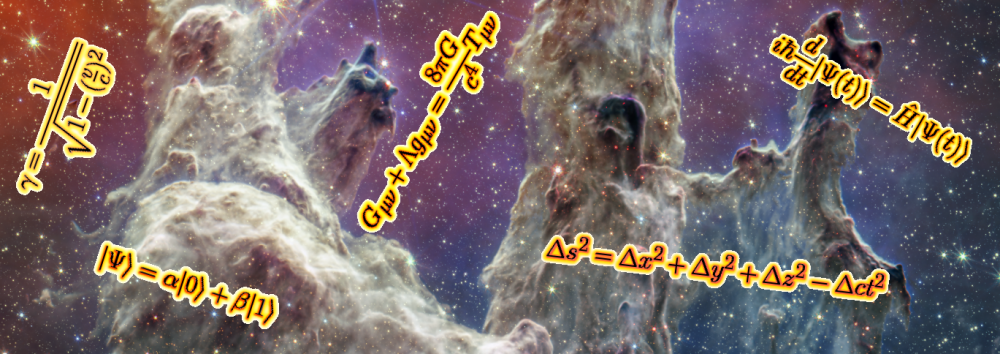
For some years now, I’ve had a growing concern about a detachment from physical reality in modern thinking. Not merely in culture, but in the very substance of our thinking. Even some branches of science seem lately to have wandered down imaginary rabbit holes.
[We never want to be close-minded and dismiss a new idea without consideration, but our minds shouldn’t be so open our brains fall out.]
This post’s topic is more abstract — and yet more concrete. Today is about my best guess at a ground truth metaphysics of physical reality.
Physicalism and Realism
Metaphysics is philosophy, and I most decidedly am not a philosopher. I’m just a guy who thinks about stuff. (Nor am I a writer — just a guy who writes about stuff.) As such, my terminology and ideas may not align with established norms.
But I’ve never been big on established norms.
[Psychiatrist Rami Kaminski, writing in New Scientist, coined the term otrovert to describe “those who don’t feel the obligation to merge their identities with others.” An idea I immediately identified with. He thinks we’re all born otroverts, and cultural conditioning instills in us the tendency to affiliate. I’m not sure about that. Humans are pretty social.]
With terminology in mind:
How I define the key terms here:
Physicalism is the view that reality is entirely — and only — physical. The definition is simple; the difficult part is defining “physical”. Things made of matter are obviously physical, but what about forces acting on them? Is gravity physical? Is a dream or idea physical? How about information? Is the number 42 physical?
[My short answer to all the above: basically, yes. This post is a longer answer.]
Materialism is similar to physicalism — some consider them identical. Those who do differentiate tend see the latter as embracing emergent phenomena. I’m mostly agnostic on this but lean towards seeing them as different. One way I’ve put it is that under materialism, reduction always succeeds — we can fully predict emergent behavior from ground physics. Under physicalism, we cannot always predict emergent behavior.
(Philosophical) Realism is the general view that objects other than us are independent from our thoughts about them. Realism is similar to physicalism but emphasizes our apprehension of and relation to reality.
Traditionally, realism was contrasted with (philosophical) idealism (which asserts an identity between mind and reality). These days it more typically is opposed with anti-realism (which treats external reality as hypothetical and contingent rather than objective). Both realism and anti-realism come in a variety of flavors.
Physicalism and realism are similar in positing an external independent reality that does not supervene on our perceptions and thoughts about it. Because of this similarity, physicalism is also opposed with idealism.
Below I’ll tell a story about my idealist phase back in high school and why I ultimately rejected that form of idealism in favor of physicalism and realism.
📌 Why Physicalism?
Answering this takes us down the rabbit hole of what is physical, so let me put a pin in it for now. It’s easier to answer the other question:
Why Realism?
For me it starts with Descartes’ idea of cogito ergo sum — I think, therefore I exist. This seems clear and unassailable to me. I exist. I can bank that.
[I originally wrote Decartes’s and it looked so bad to me that I ended down a small rabbit hole to discover that the possessives rule about proper names ending with ‘s’ (Chris’s or Doris’s) doesn’t apply to classical or ancient names (Socrates’ or Jesus’).]
Based on what I experience over time, I apparently exist within a reality that appears to me as concrete, persistent, and lawful (i.e. it operates according to consistent rules).
Within this reality are apparent others who claim sovereignty and parity (self-hood and equality). Their testimony — from contemporaries and from the body of human writing throughout history — indicates, firstly, that they seem independent from me, yet secondly, that they report an experienced reality similar to mine.
It therefore seems reasonable to accept on their appearances these perceived sovereign other minds and the reality we seem to share. This is a leap of faith on my part but not taking it leaves me stranded in solipsism.
I banked my existence. Accepting the testimony of others lets me (contingently) bank an objective reality inhabited by a variety of minds and inanimate objects. If nothing else, this seems more interesting than being a Boltzmann brain.
My bottom line here: the appearance of reality I’m presented with reveals a persistent and lawful physical reality independent of my (or any) mind.
Or such is my best guess.
Now I can circle back to:
Why Physicalism?
Physicalism essentially says there’s no magic — everything ultimately supervenes on the physical world. Let’s take it back to the questions I posed above:
“Things made of matter are obviously physical, but what about forces that act on them? Is gravity physical? Is a dream or an idea physical? How about information? Is the number 42 physical?”
The Standard Model of particle physics first divides into “matter” (fermions) and “forces” (bosons). Yet both are “particles”. The three forces (electromagnetic, weak, strong) are in reality just as “physical” as the matter they act on. At root, it is the quantum fields underlying both fermions and bosons that comprises the physical substance of reality.
[“Particles”: More correctly, fermions and bosons are disturbances in their respective quantum fields. There is no such thing as a “particle” — there are only the disturbances and their mysteriously point-like interactions.]
But what about gravity? In General Relativity, what we feel as gravity comes from the warping of spacetime due to mass (or energy; same thing; E=mc²). That warping causes a gradient — a physical “down” in spacetime — that everything (including light!) falls down.
[I don’t believe gravity is a “force” like the three above. Specifically, I don’t believe there is such a thing as a graviton field with “particle” excitations.]
Mass comes from how fermions interact with the Higgs field, and gravity comes from mass, so gravity is physical.
Dreams and ideas are embodied in our brains or in our writing or speech, so they’re clearly physical in that sense. Ideas and information do seem a bit slipperier, though. Information seems abstract, disembodied, but it is always and, I would argue necessarily, reified in some object. To the extent information has any utility, it must ride a physical vehicle.
That said, the human capabilities of abstraction and imagination add a notable wrinkle to things (hence, no doubt, the attraction of idealism). Our apparent access to a “Platonic Realm” of ideal objects is a deep rabbit hole I won’t get into here.
[But see this Substack post for a first pass at it.]
The bottom line is that under physicalism everything supervenes on the physical world.
But the question was Why?
Firstly, because of what I’ve said about a “persistent and lawful physical reality”. Not just the one accessible to our daily experience, but a far vaster one that extends from subatomic particles to distant galaxies. Our instruments expanded the scope of our perceptions enormously. One of our newer instruments, the computer, allows us to process data in unprecedented ways. All of this presents a lawful reality that seems independent of our perceptions or thoughts.
Secondly, because new discoveries fit into the logical fabric we’ve established over time. Even when they initially seem not to, we have so far found they eventually do. The picture of physical reality we have (always contingent on new discoveries) is both consistent and logical. So logical that fairly simple math often describes it.
[E.G. Any thrown object, from a pebble to a ballistic missile, follows a parabolic arc, for which the math is essentially just: x²]
Thirdly, the apparent persistence, lawfulness, and consistency of reality allow us to make accurate predictions about it. The periodic table is one example. When defined from the experimental data that existed then, the table had empty “slots” for elements not yet discovered. Over time those slots filled in with new elements having the predicted properties.
[One of my favorite science authors, Jim Baggott, wrote a Substack post detailing another example. See: At the Centre of the Shadow]
Fourthly, I learn from others during my lifetime and often encounter much smarter people (more evidence of sovereign others). In general, I need only consider the accumulated body of human knowledge to see that it is far beyond anything my mind can embrace. All that can only be “out there somewhere”.
Fifthly, because such an ancient, vast, and detailed universe — one that holds together from quarks to quasars — is glorious and I think far beyond the ken of any single or collective mind. The universe, as they say, is mind boggling.
Considering Idealism
When I was in high school (some 50+ years ago), I went through an idealist phase. I wondered if we construct reality as we go. That reality persists because enough minds believe it does. New discoveries — things no one ever thought of — become real when someone thinks of them. And become persistent as more and more minds believe the same thing. Maybe in the past, ghosts, wind spirits, or dragons existed because we believed they did.
 There’s a well-known story in chemistry circles. German chemist August Kekulé (1829–1896) came up with the circular hexagonal chemical structure of benzene from a dream of a snake eating its own tail. This solved an important mystery for chemists at the time.
Back in high school, I interpreted this as the possibility that benzene’s structure was defined by Kekulé’s idea. Prior to that, it was ambiguous and might have been something else had another chemist had an equally viable idea.
Did benzene always have a six-carbon circular structure, or did Kekulé’s (reasonable) idea “collapse” possible realities into the one we have?
Because that’s what seems to happen at the quantum level (see: QM 101: Quantum Spin). Some aspects of quantum reality are — in a very real sense — undefined until we measure them. There even is a view that a conscious mind is required to make a meaningful measurement, that reality indeed depends on our minds.
Wheeler’s Twenty Questions
Physicist John Wheeler invented a version of the Twenty Questions game to illustrate this. In the normal game, the hosts pick an object, and the player asks up to twenty yes/no questions trying to guess that object. In Wheeler’s version, the hosts do not pick an object. The hosts randomly answer “yes” or “no” to each question the player asks. The caveat is that all answers given must allow for an actual object. For instance, if “is it an animal” got a yes answer, all answers thereafter must agree. If “does it have four legs” got a yes, then insects, birds, and humans would be excluded from then on.
The point of the game is that the object is created from nothing due to the questions asked. They shape the answer as if carving something from a block of wood. Bizarrely, reality seems to work this way at the smallest level.
Yet above the quantum level, reality seems to insist on its concreteness and persistence. Any metaphysics we invent must account for that.
I ultimately decided Kekulé was channeling intuition to discover an always-existing physical reality. I believe we discover the world rather than invent it. Benzene always had that chemical structure — a structure that defines what benzene is.
[We do invent our internal reality, but my informal definition of sanity is how well someone’s internal model of reality matches the external one.]
Some Closing Thoughts
Kant’s Noumena and Phenomena
Immanuel Kant delivered what was for the time a revolutionary idea — that the only reality we can ever know is the model of reality we build in our minds based on information from our senses. He divides our experienced reality into the external physical world — things in themselves; noumena — and what appears to us through our senses and mind as phenomena.
In accepting noumena, Kant embraces realism — a physical world independent of our thoughts about it. His transcendental idealism, as I understand it, is about how the only reality we know is the one inside our head, the reality of our perceptions, ideas, and understanding.
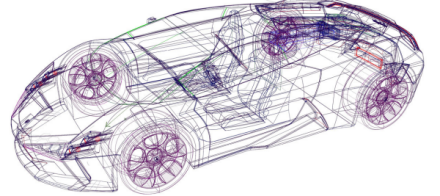
The way I think of it, our apprehension of reality is akin to the wireframe representation of a solid object. It’s a model missing most of the information, but it is an essentially accurate wireframe.
One that allows us to successfully navigate physical reality.
One that allows us to predict what we’ll find under the next rock.
“Mind Independent”
The term “mind independence” — as defined by philosophers — is said to be incoherent because trust philosophers to over-think an idea. As they define it, by definition it’s unknowable and hence pointless to take seriously.
To me, the term “mind independence” — defined reasonably — just means “separate” not “inaccessible”.
‘Physicalists believe objectivity is only mathematical’
In a discussion about idealism, I encountered the claim there is ‘nothing over and above’ our scientific mathematical understanding of reality.
I think this reflects a misunderstanding and misrepresentation of physics as well as a physicalist point of view. The assertion objects are ‘mathematical and nothing more’ is simply incorrect. Math describes objects, but objects are made of matter. In physicalism, objects never reduce to only math. They have properties (e.g. color or mass) that depend on the matter they’re made from.
‘Physical persistence and laws are only an idea’
I’ve also encountered the argument that the many aspects of the physical world — causality, mass, color, temperature, etc. — are only ideas in our head. They’re things we make up — stories — to explain the world.
But ideas can be true or false, probable or improbable, fantasy, fiction, or fact. Some ideas survive the test of time and many hands. Science can be seen as a process winnowing out the provably false. What remains we accept as contingently correct.
Physical persistence is one of the first lessons infants learn about physical reality. Things remain in place even when you can’t see them! As they grow to adults, they find it never falsified. In fact, physical persistence comes from physical law: the conservation of momentum and energy — two basic laws that have survived the test of all time and all hands
In Summary
Idealism seems Ptolemaic to me in putting us in the center of things. And it seems contrary to our experience of persistent and lawful reality. It’s possible I misunderstand idealism, though. I’ve never heard a convincing account that explains the appearance of realism (as I tried to do in high school by ascribing it to the preponderance of believing minds).
I also worry that idealism may reflect the same detachment from physical reality that’s become the scourge of modern thought. In this context, idealism’s seeming narcissism alarms me. Modern thought patterns seem self-centered to me, and idealism seems another step along that path.
And besides. A real physical world to explore and discover isn’t just more rational to me, it seems a lot more interesting and fun.
§ §
Stay physical, my friends! Go forth and spread beauty and light.
∇





 Logos con carne
And what do you think?