 A late edition Mystery Monday post because I’ve been distracted by various and sundry. I’ve meant this for more than one previous Monday. Not gonna miss another.
Having pretty thoroughly explored the British Queens of Crime as well as (the American) Ellery Queen, I’ve turned to new pastures: the Butch Karp / Marlene Ciampi stories by Robert K. Tanenbaum and the Matthew Scudder stories by Lawrence Block. And French author Maurice Lablanc!
Plus, I’m disgruntled by Dark Winds, an AMC TV series that (too loosely, IMO) adapts two novels from the Navajo Tribal Police series by Tony Hillerman.
Back in May I wrote about filling my four-of-a-kind hand with the last of the British Queens of Crime, Margery Allingham. After reading five of her novels, it’s safe to say she doesn’t grab me. I still haven’t read her first book, Blackkerchief Dick (1923) and may not. That one is a historical fiction: not my cup of tea.
I like the other three Crime Queens quite a lot, though, especially Dame Agatha. Three for four is good odds. And Christie is tops. (No slam against Allingham. I just don’t connect with it.)
[Note to self (another distraction): make a graphic of the Four British Queens of Crime as cards (for queens, obviously). Thinking it surely had already been done, I did a quick search and got nothing, so pin this distraction for later. Have to think about how to assign the suits…]
By July, I’d also eaten my way through an American Queen, Ellery. Turned out I’d read a bunch of them somewhere in my past, but it was fun to read them all (or as many as the library has) in the order published (more or less).
Back in May, I started chewing on Dick Francis novels, but I think that’s another post. (I read some Francis long ago, but again it’s fun to read them one after the other. Gets one more into the author’s style and approach.)
§
 One new dish on the table as of this July is a legal thriller series by Robert K. Tanenbaum. I’ve only read the first five of the twenty-nine novels about fictional New York City prosecuting attorneys Butch Karp and Marlene Ciampi, and I can’t say I’m hooked. The first one, especially, made me question reading more, but they grew on me a little.
The series starts in 1987 with No Lesser Plea and ends in 2017 with Without Fear or Favor. Tanenbaum’s cousin Michael Gruber ghostwrote the first fifteen novels (up to Resolved in 2003).
They’re a bit dark for my taste and as much about the lives of the main characters as the cases. The stories are heavy on legal procedure, but without as much courtroom time as I like. (I admit it, I’m a total sucker for the Parry Mason model with lots of good courtroom action.) They’re also fairly cynical despite having “happy” (if sometimes unsatisfying) endings.
Better to say they have “good” endings rather than happy ones. Justice on some level is accomplished, albeit sometimes after the last page. I would characterize them as grim, gritty, cynical, joyless period pieces (circa NYC in the 1970s). In many regards, more crime stories than traditional legal stories.
Robert Tanenbaum is an experienced trial attorney, former mayor of Beverly Hills, and a college basketball player. Except for being mayor, his protagonist, “Butch” Karp, is very much like him. Including leadership roles in the New York County District Attorney’s office. During which time Tanenbaum never lost a felony case (and neither has his character).
Can’t doubt the source or the authenticity, but I’m lukewarm on these. I think my queues will need to be blocked or empty before I read many more. I notice the author’s Wikipedia article is pretty skimpy, and none of the books in his bibliography have links to pages. Interesting, authentic, gritty, but not terribly well-known, perhaps?
§
 The Matthew Scudder stories by Lawrence Block are also grim and gritty (and grimy). They’re as cynical as the Butch Karp stories, but these are private eye stories where it’s all expected. If anything, it risks being a bit cliche, the damaged knight scraping and scrapping out a living because principles.
I’ve long been a fan of Block’s series about Bernie the Burglar, and I’ve read some short story collections of his, but I’ve never explored his other series works (of which there are several).
Scudder is a former cop who is seen as a hero for gunning down two holdup men who shot the bartender in a joint where Matt happened to be off-duty drinking. The way Matt sees it, he’s no hero because one of his shots missed, ricocheted into a young girl’s eye, and killed her. Matt quits his job, his marriage, and life in general.
He gets by as an unlicensed private eye. As he puts it, sometimes he does favors for friends, and sometimes they give him money.
Scudder is an interesting enough character. Definitely of a type, but with enough variations on the theme to be interesting. More importantly for me, despite the grim context, Block somehow injects more of an element of joy into the story than Tanenbaum does.
[I’ve realized that joy, at least for me, is an important axis in storytelling. Without some element of joy, what’s the point of the story? Joyless stories are just as unpalatable as preachy ones. In fact, preachy and joyless go together like pain and misery.]
I’ve read five of these so far and will read as many as the library has. They appear to confirm my liking for Lawrence Block’s writing, so I’ll be checking out his other series characters.
§
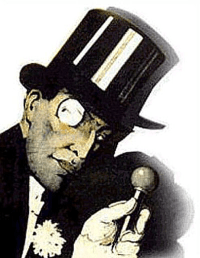
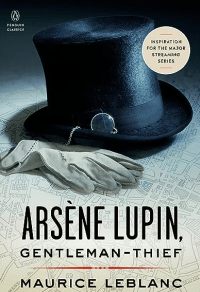 Funny how a new branch on your life tree sometimes blossoms into a notable part of the tree. Long ago I loved stories about thieves. Among them was an old movie with David Niven playing the E.W. Hornung fictional master thief A.J. Raffles. Somewhere along the line I heard about a French version, the also fictional master thief Arsène Lupin by Maurice Leblanc.
Turns out the two are contemporaries: Leblanc, 1864–1941; Hornung, 1866–1921. Both wrote stories about a dapper gentleman thief, one French, one British. Raffles first appeared in 1898 and Lupin in 1905.
Knowing about Raffles through the movie and having a vague idea there was a British author behind it, and having an even vaguer idea there was a French counterpart, was where it stood for most of my reading history. But retirement is a reader’s paradise, and I’ve had the time to explore authors that have been on my want-to-read list for decades. (Even, at long last, Moby Dick!)
The branch started to grow when, not too long ago, I realized the giant super-mega-ebook of British mystery authors I bought some time ago (and largely set aside) has, among other gems, a bunch of the Raffles stories. So, I read those.
Then I got into the Japanese manga/anime franchise Lupin the Third. The main character there, a Japanese master thief, is the grandson of Arsène Lupin. [See It Takes a Thief] There was also a Japanese live-action show, Daughter of Lupin, that more indirectly referenced the LeBlanc works. [See TV Tuesday 5/16/23]
Lastly, there was a French live-action show, Lupin, with a contemporary character, a thief who based his life on Arsène Lupin. As such, the show is filled with overt references to Maurice LeBlanc’s books. [See TV Tuesday 6/20/23]
Which is a lot of Lupin without ever having read any of the source text. So, high time, right? Fortunately, my library has a good selection of them, so I’ve been able to check them out (literally and figuratively). They’re a lot of fun. Somehow more like the Sherlock Holmes stories than the Raffles stories. I think that they’re fairly modern translations makes them particularly readable. They flow nicely.
All three, Holmes, Raffles, and Lupin have an element of whimsy to them (a source of the all-important joy component). Raffles and Lupin never meet (as far as I know), but Arsène does meet — and defeat —”Herlock Sholmes” (the famous British detective). As LeBlanc first wrote the stories, it actually was Sherlock Holmes, but Doyle screamed copyright infringement, so LeBlanc had to (thinly) disguise the name. (Doyle continued to see this as a mockery of his character.)
Hornung’s work largely predates LeBlanc’s, but the latter was far more prolific. Three short story collections and one novel comprise the Raffles stories by Hornung, whereas two dozen books and five plays comprise the Lupin stories. Not to mention the Japanese media franchise inspired by it or the recent French TV series that channels it.
I’m just getting started on these and intend to read several more. Maybe not all of them, but quite a few.
§
Lastly, as summer bedtime reading, I was revisited the Tony Hillerman Navajo Tribal Police stories. Read them in the order published. Love them. Very possibly my favorite mystery series (despite some very close seconds). [See Joe, Jim and Bernie]
The books have been adapted into (TV-ish) movies that aren’t too bad. The three I’ve seen were reasonably faithful to the books. They seemed earnest attempts. They were only briefly available, so viewing was a bit rushed.
 Recently AMC adapted the third book, Listening Woman (1978), into the first season of Dark Winds, starring Zahn McClarnon as Joe Leaphorn, Kiowa Gordon as Jim Chee, and Jessica Matten as Bernadette Manuelito (who still doesn’t have her own Wikipedia page). A second season adapts Hillerman’s fourth novel, People of Darkness (1980).
At the moment, Amazon Prime Video has the first episodes of the two seasons available. Hoping for the best, I watched them.
Actually, I couldn’t get through the second one (first episode of second season).
I did not like.
A good chunk of it goes back to what I said above about joyless storytelling. Hillerman’s novels exude the joy of the sky and land, the joy of being Navajo, the joy of the world and the creatures within it. The Navajo way of life is fundamentally about being in balance.
This TV series, admittedly based only on seeing all of S1E1 and not quite half of S2E1, is joyless and grim. Everyone is kind of dour, and that’s especially a transgression for Bernie, who is all about a positive outlook. Modern storytelling at its best (hope the extreme sarcasm came through there).
And, like it or not, anything that presumes to follow in the footsteps of another work gets judged against that other work. Generally, on three major axes:
- Stuff the adaptation removes.
- Stuff the adaptation changes.
- Stuff the adaptation adds.
The first axis, when adapting text for performance, is not just forgivable but typically necessary. Scripts are surprisingly short compared to novels. Short stories can easily become feature length films. Most film adaptations of novels remove a lot, often entire characters or story threads. The thing we might judge here is what is removed — compared to what is retained — and why.
The second axis is where things start to get interesting. The nature of the adapting media can beg, or even force, changes from the text. Sometimes the camera can eliminate many pages of text (and sometimes a single paragraph eats up minutes of film). My main judgement here involves fidelity to the spirit of the source.
The third axis, in my book, needs a lot of justification and result. Given the necessity of removing from the text, adding new material requires a compelling explanation and spectacular result. I’m a very hard sell on additions.
I won’t complain that, while the three principal actors have First American ancestry, none of them are Navajo. Good on them for using so many First American actors and using the locales.
I do complain about the massive character changes they made to Joe, Jim, and Bernie. They made them unrecognizable to me. And kind of unwatchable if I’m hoping for my old friends. And I complain big time that they seem to have made the supernatural aspects of Navajo worldview a real thing, but huge caveat here that I’ve only seen a small part of the series.
Joe Leaphorn (Zahn McClarnon) now has a tragic backstory involving a dead son. His wife Emma is now a nurse. (In the books, Emma, until she dies of brain cancer, was a very traditional Navajo housewife.) This Joe is troubled and dark. And he applies warpaint before entering a crime scene. Readers of the book will recognize this as Bizarro Joe — a weird negative of most of lieutenant’s solid thoughtful qualities.
Jim Chee (Kiowa Gordon), likewise, is completely changed. He has some sort of backstory with the (activist?) “Buffalo Society” and seems to be working undercover for the FBI. Again, those familiar with the books can’t help but see this as a perverse negative image of the Jim Chee we know.
Bernadette Manuelito (Jessica Matten), from what I’ve seen, might as well be a man. She’s a dull, dour cop with a strong dash of superstition. Here she’s Jim’s boss (rather than the other way around as in the books).
Tony’s daughter Anne Hillerman, who continued the book series with Bernie as the main character, is an Executive Producer on the series. So is Robert Redford and George R.R. Martin. (But they give out EP titles as party favors on movies. Hard to say how much power it involves.)
I will mention that the Wikipedia article mentions that “[t]he Navajo Times criticized the series for lacking authenticity in its representation of Navajo people and language.” Supposedly, they used a cultural advisor on the second season, but no word on how well it landed with people who know Navajo.
[I can only imagine that it must be a tough call: no representation versus crappy representation. Half a moldy loaf versus no loaf at all.]
As I said, I couldn’t get through the second episode Amazon offered. And certainly not the first time I’ve been disappointed by an AMC adaptation. Ah, well, so it goes.
Stay with the original text, my friends! Go forth and spread beauty and light.
∇








 Logos con carne
September 4th, 2023 at 7:24 pm
I don’t usually publish this late in the day, but the thing about a series based on Mondays is that missing one means waiting for a week, and (as mentioned) that’s already happened more than once.
It’ll be interesting to see the uptake rate on an evening publish.
September 4th, 2023 at 7:27 pm
My disgruntlement aside, Dark Winds seems to have critical and audience approval. Once again I’m the grumpy guy in the balcony.
September 6th, 2023 at 4:25 pm
I love the playing card idea, clever! Thanks for these detailed reviews. I am looking for new books to read. I’ve never read a Tony Hillerman buck, even though I’ve heard of him and his series for years. I think I’ll pick up book number one in that line. I’m more of a mystery lover than a thriller fan. Where would you place his books on that continuum? More figuring out the mystery? Or more the action, danger, and death of a thriller?
September 7th, 2023 at 9:11 am
The Hillerman books are primarily police procedurals, so it’s more a matter of following clues and interviewing people, but there is an element of “who done it” in most of the books. Discovering that is more a matter of pursuing the case than of straight deduction even though there is figuring out things along the way. The stories often have an exciting final scene, typically between one of the Navajo cops and the main Bad Guy (or Gal). I wouldn’t call them action stories, though. Most of all, the books are explorations of the Navajo way of life, and I’ve always thought that was their greatest value.
I’d recommend them without qualification, but reading tastes are still pretty personal. But I’d think anyone with a taste for mystery writing would enjoy them a lot.
September 7th, 2023 at 9:42 am
Thank you! These books sound perfect to me. I’m interested in interesting characters and puzzling plot twists and a mystery that’s difficult to figure out but in retrospect seems pretty obvious. I don’t like cheats in the plot, you know like a twist at the end that you never saw coming because it makes absolutely no sense whatsoever. What I don’t like is nonstop action that has no logical reason behind it or serial killers along with graphic descriptions of violence, that kind of thing, and there’s not really a mystery, it’s more like the main character is in constant danger from somebody hell-bent on killing them. Why on earth would I unwind with a stressful reading experience like that? Lol
September 7th, 2023 at 12:16 pm
I’m with you on that! It’s one reason I love the cozy British murder mysteries, Holmes, Poirot, and so forth. I’m a big fan of Agatha Christie and Ngaio Marsh. Both of them wrote “fair” mysteries; the plot always has the required clues. I find it does take a lot of imagination sometimes putting the clues together. As you say, in retrospect it seems obvious, but making that jump of intuition often escapes me. I rarely figure it out (surprises me when I get it right).
The Hillerman books (both Tony and daughter Anne’s continuation of the series) are definitely character-based. Very much about the lives of the main three characters. It’s not absolutely necessary, but I think it’s best to read these in the order published so you experience the characters’ lives evolving.
Are you familiar with Sue Grafton and her Kinsey Millhone books? (“A” is for Alibi, “B” is for Burgler, “C” is for Corpse, etc.) Private eye mysteries. Not always murder, these are like the V.I. Warshawski novels by Sara Paretsky (also good, but darker and grittier). Sometimes the crime in these is some sort of theft. (I think all the Hillerman novels have a murder in them, though.) Anyway, the Grafton novels have a pattern with a final showdown between Kinsey and the villain — as do most of the Hillerman books — but otherwise the story is about an (often plodding) investigation. The Grafton books (and for that matter, the Paretsky books as well) are very much about the life of their main character.
September 7th, 2023 at 2:58 pm
I remember watching a V.I. Warshawski TV show many years ago. It was good. So I’ll look for that series. And I’ll give the Sue Grafton books another try. Back in the 1980s they didn’t grab me (I didn’t like the main character), but this time around might be a different experience. Thanks again! These suggestions will keep me going for a while!😀
September 7th, 2023 at 6:50 pm
Great! You’re quite welcome; I’m always happy to talk books. I’d say then, go for the Hillerman first, then the Paretsky, and leave the Grafton for last. Those alphabet books of hers are firmly stuck in the 1980s despite how many decades she wrote them. Definite (and I assume deliberate) 1980s feel.
December 19th, 2023 at 4:07 pm
[…] But Dark Winds, the 2022 AMC television adaptation based on those books was, I thought, awful. When I heard there was an adaptation, I was eager and hopeful (I should know better, but ever the optimist). While Amazon Prime only offered the first episode of seasons one and two, it was (more than) enough to show me where the show was going. Not in any direction I wanted to go! [See this post for details.] […]
January 15th, 2024 at 3:42 pm
[…] out the year, several others [see this post], but special mention to the Matthew Scudder series by Lawrence Block. Liked those a lot. I’d […]
March 12th, 2024 at 5:03 pm
[…] the last Monday Mystery post, I wrote about reading another popular Block series, the Matthew Scudder books (one of which, A […]