 In another place, someone wrote: “It is memories that make us who we are, that haunt us, that enrich and warm us, that remind us of how to be better.” The place and the someone can be anonymous here because the sentiment is a common one.
In this Brain Bubble, I’d like to push back on that, at least a little. I want to suggest as counterbalance the one memorable line from an unmemorable film trilogy:
“Let the past die. Kill it if you have to.”
We carry the past with us in different ways. Probably the most present in our minds — and the main topic of this post — are our personal autobiographical memories. These are the specific events we recall from our past, be it from our long-ago childhood or from just yesterday.
Another way we carry the past is in the general body of knowledge we acquire during our life. At any given moment, we’re the sum of all we’ve learned, all we’ve experienced. We tend not to recall the individual events — each day of school, for instance — the taught us to know; we just know. (Or think we know. Beware the Dunning-Kruger effect.)
A favorite quote applies here:
I cannot remember the books I’ve read any more than the meals I have eaten; even so, they have made me.
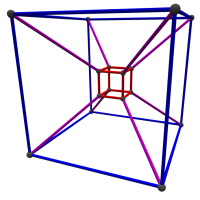
Extend that to all we’ve ever learned or experienced — that which has shaped us into what we are at each point along that path. I like the image of a 4D “worm” that starts with a tiny tail at birth and extends with a person-shaped cross-section through time to the inevitable end. Depending on one’s travels, that worm’s body may extend across the world.
[Mine looped through Europe for a few weeks back in 1971… or maybe 1970, I can’t recall. Which is part of my point here. I recall an incredible time but almost none of the details. Just a few bits and pieces that have by now become faded memories of memories.]
Yet another way we carry the past is in the form of traditions given to us by our culture. This is a subset of our general body of knowledge but important to point out because tradition can be less based on physical fact than most of our other general knowledge. Put it this way (very generally): knowledge is learned in school or books; tradition is learned from parents or church (those two often amount to the same thing).
§
I may have a unique perspective here because all my life I’ve had an atrocious autobiographical memory. I enjoy rereading murder mysteries because I never remember whodunit. For whatever reason, I tend not to record plots (or events in my life) so much as what I took from them — how they shaped me.
It’s why I like that Emerson quote so much. It describes my whole path through life. Event memories fade quickly, but I remember what I learned.
Not only am I okay with that, upon reflection I think it’s a good way to be. My suggestion here is that event memories — even good ones — are a kind of burden. At the least, a weight to carry. So is general knowledge, of course, but it is so diffuse that it doesn’t feel heavy. Compare the difference between feeling full from all the meals you’ve ever eaten versus feeling full from having just eaten.
More importantly, our event memories are illusions. Worst of all is that for most of us our most key event memories — both good and bad — are the most illusionary of all.
Every time we remember an event, we rehearse it. We relive and rebuild it. Over time, revisited memories become memories of memories. And memories of memories of memories. And so on, each generation losing accuracy (as analog copies must do because noise and entropy). Our most cherished memories are the least real ones we have.
Trauma or great joy can write an event memory fairly indelibly, but we still reshape that memory each time we revisit it. As I understand it, one of the nasty aspects of PTSD is the indelibility of horrific memories. The reshaping is exactly what PSTD therapy seeks to accomplish.
I think it’s my perception of how harmful PTSD seems, from war memories to abuse memories, that pushes me to thinking our event memories are often more trouble than they’re worth. Along with all the more quotidian painful memories I see people struggling with — bad memories of parents or school. Are the joyful ones worth it, especially in light of their increasingly illusionary nature.
Does happiness in the present require reliving specific memories? To me, that seems a sad state of affairs. Akin to the high school athlete who faded into obscurity after that and constantly relives that Big Game.
Even those nagging memories where someone said or did something we just can’t seem to forget are a burden. Wouldn’t we be better off if we could erase those? Remember the ghost of Jacob Marley in A Christmas Carol? Condemned to forever drag those chains and boxes. In his case, his burden was from misdeeds and omissions, but aren’t all event memories somewhat analogous to those dragged boxes? Perhaps, at least in some cases, less onerous to drag with us, yet notable weights all the same.
This is why I think Kylo Ren may have a point. Let the past die.
§
Would it be egregious of me to mention that the many decades-long conflict in the Middle East (and in many other places) owes in part to being unable to let go of the past and move forward? That inherited body of religious tradition brings with it an ancient conflict. How much damage has been done through our brief history because of ancient tradition and belief?
[Yes, brief. Our 250,000 years or so is a tiny fraction (0.007%) of the 13.8 billion years of the universe and only a slightly larger fraction (0.005%) of the 4.6 billion years of our Solar System. Our 10,000 years or so of human history is an even tinier fraction.]
Ideas are one thing, but beliefs are another matter, especially the long-held ones. We can eventually come to accept a favored idea as bad and let it go, but that’s very much harder with our beliefs. Often, we prefer to reshape our understanding than touch our beliefs. Beliefs can be dangerous.
§ §
All in all, I do wonder if our memory closets and attic aren’t worth a spring cleaning once in a while. Pity we don’t (yet?) have the technology to selectively erase memories (Spotless Mind style).
But I think: Let the past be the past. Remember Marley’s Ghost and don’t carry so many chains and boxed memories (good or bad). Lighten your load.
[Or do. Far be it from me to tell you how to live your life!]
All I can say is that having an event memory that leaks like a sieve turns out, on balance, as far as I can tell, to be more blessing than curse. Being able to so much enjoy rereading and rewatching books and shows I love is certainly an upside. (Oddly, I remember them as I watch them.)
I think what matters is who we are right now — that summed total of our past that shaped us combined with what we’re experiencing in the now.
Not to mention where we’re going. That may be the most important thought of all. Compared to that, what does it matter where we’ve been?
Stay memorable, my friends! Go forth and spread beauty and light.
∇






 Logos con carne
August 14th, 2025 at 11:43 am
[…] previous post, Our Memories, suggested that — in large part because they become faded self-imaginings— we might want to […]