 I was surprised to discover I’ve never posted about the Many Worlds Interpretation (MWI) of quantum physics — I would have sworn I had. I’ve mentioned it a few times, and I know I’ve discussed it in comment sections, but it seems I never tackled the subject explicitly for the record.
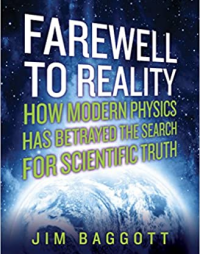
It’s been on my mind lately because others have talked about it. Sean Carroll’s book promoting it generated a wave of discussion. The final push for me was Jim Baggott’s Farewell to Reality, which consigns MWI to the “fairy tale physics” heap.
Since I quite agree, this seems a good follow-up to yesterday’s post.
 My voracious reading habit has deep roots in libraries. The love of reading comes from my parents, but libraries provided a vast smörgåsbord to browse and consume. Each week I’d check out as many books as I could carry. I discovered science fiction in a library (the







 Logos con carne