Category Archives: Movies
 It has been a while — three weeks exactly — since the last post here. I haven’t been idle, though; quite the opposite. I reached three-score-and-ten last fall and have taken it as a mile-marker indicating it’s time to get some stuff done.
I hibernated through the winter, but now that spring has arrived, I’m out of my sleepy cave and roaming around organizing things, getting rid of other things, keeping appointments, and (gulp) spending money.
But this Friday Notes edition has a tiny significance that demands my attention.
Continue reading
20 Comments | tags: email spam, encryption, Eric Clapton, omnivore, quantum computing, squirrels, weather | posted in Friday Notes, Movies, Music
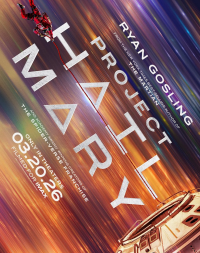 I wrote about Project Hail Mary (the 2021 book by Andy Weir) back in February [see this post]. Last month I wrote a few paragraphs about the movie (written by Drew Goddard and directed by Phil Lord and Christopher Miller).
Project Hail Mary (the 2026 movie) was released to theaters on March 20th. I wanted to be sure to see it on the big screen, so I went to go see it on the 22nd. And loved it.
I need to see it again before I can write about it, but for Sci-Fi Saturday I thought I’d post some links to videos that dig into the actual science behind the book and its adaptation.
Continue reading
2 Comments | tags: Andy Weir, Project Hail Mary, science fiction movies | posted in Movies, Sci-Fi Saturday
 The last edition of TV Tuesday ended with the line: “There’s more to report, but I’ve hit my word ceiling and will abruptly stop.” That was three weeks ago, so now there’s even more to report. (Baseball starts soon, and that will have a big impact on how many shows and movies I can watch.)
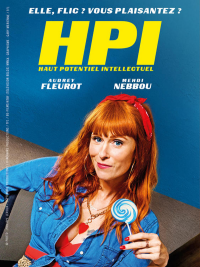
That last post focused on movies I’d seen. This time much of the focus in on a related pair of TV shows I finished watching. One is a French TV series about a female “Sherlock Holmes” who works as a police consultant. The other is its American adaptation.
I like the French original better. (No surprise there, right?)
Continue reading
9 Comments | tags: adaptations, Audrey Fleurot, Bill Murray, Christopher Nolan, Christopher Priest, Jim Jarmusch, Kaitlin Olson, Sean Connery, Ted Danson | posted in Movies, TV Tuesday
 I think it must be the case that, once baseball season is over, what hours I do devote to watching TV fill with other things, and I catch up on shows or movies I neglected during the six-month summer season (162 games for your own team plus any other games you watch).
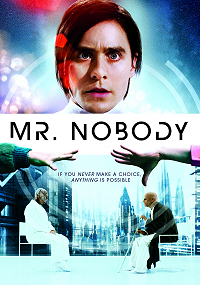
As such, I have a lot to report since the last TV Tuesday back in early December — two months’ worth of viewing. Even better, no ranting or venting (well, maybe just a little), and I even have some movies and shows to recommend. Some highly.
Starting with a very good vampire movie.
Continue reading
5 Comments | tags: Ben Affleck, Japanese anime, Knives Out, Matt Damon, Rian Johnson, Sherlock Holmes, Steven Spielberg, vampires, William Gibson | posted in Movies, TV Tuesday
 I’m starting to feel a bit repetitious with the several TV Tuesday posts lately, not to mention the monthly Friday Notes. It’s starting to feel a little obligatory. They both serve a useful purpose for me, which is why I write them, but sometimes I chaff under the regularity.
Perhaps what feels especially repetitious is ranting about so many modern TV shows and films. That gets as old for me as I’m sure it does for readers. But venting also serves a purpose according to some studies.
Consider that a forewarning, for this one too has a bit of ranting…
Continue reading
6 Comments | tags: adaptations, Antimatter Blues, Claudia Black, Cowboys & Aliens, Deus (2022), Edward Ashton, Keanu Reeves, Mikey7, Replicas (2018), Rick and Morty, Sisu (2002), Solar Opposites, Star Trek, Upload (TV series) | posted in Movies, TV Tuesday
 This is a continuation of last week’s post. The list of shows I have is too long for one post, so this picks up where it left off (even so, that one ran long, and so may this one). As mentioned last time, I hadn’t written a TV Tuesday post in a while, so there’s a bit of a backlog.
Watching baseball takes up a lot of the TV viewing time during the summer, and I can only watch a few hours of TV in any given day (and not too many days in a row). Many of the shows in my watch lists are old shows that I nibble on for the memories.
The nostalgia is strong but often so is the cringe factor.
Continue reading
5 Comments | tags: Bewitched, Elizabeth Montgomery, Futurama, Keanu Reeves, Rick and Morty, Solar Opposites, time travel, Upload (TV series) | posted in Movies, TV Tuesday
 It’s funny, sometimes, the twists and turns of life. When I first heard of The Three Body Problem (2006), a science fiction novel by Liu Cixin, it didn’t grab my attention because I’m a little weary of “alien invasion” stories. But I’d read and enjoyed Ball Lightning (2004), so I watched Three Body, the Chinese adaptation of the first novel.
I posted last year about how much I liked it. So much so that I recently watched and posted about it again. And re-read the first novel (I read the trilogy last year). I even watched the first season of the Netflix adaptation.
To my eyes, it demonstrated everything that’s gone wrong with modern writing for TV and movies. The contrast between the Chinese adaptation and the Netflix one is stark and revealing.
Continue reading
1 Comment | tags: 3 Body Problem, adaptations, Barbie, Liu Cixin, Netflix, three-body problem | posted in Movies, Sci-Fi Saturday
Until now, I haven’t posted here all month, and I’m not sure I’ll post anything before the end of the year. My attention definitely is more towards Substack these days, and I increasingly ask myself why to bother with WordPress anymore?
For one, their technology continues to depress me. This week it’s because the notifications bell icon can’t clear the little dot that means messages pending. It’s on all the time, but there are no messages pending. Basically, at this point, I’m pretty disgusted and done with WP.
But first let’s have at least one more edition of Friday Notes.
Continue reading
9 Comments | tags: Apple Corporation, art, Bentley, stats, Substack, The Jazz Avengers, WordPress | posted in Friday Notes, Movies
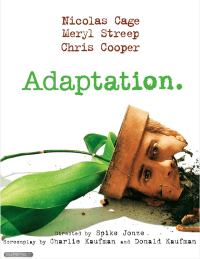 I’ve written many times here about my issues with TV and movie adaptations of existing stories. Short synopsis: I usually find them lacking. Especially the more recent attempts. Extra especially the live-action adaptations of animated stories. So many are just plain awful.
I don’t mean they fill me with awe, at least not the good kind. Sometimes I am a bit in awe that the people involved all thought it was a good thing. Emperor’s New Clothes, perhaps? No one wanted (or dared) to say anything?
Recently, I got to thinking about the worst adaptations I’ve seen…
Continue reading
14 Comments | tags: adaptations, Agatha Christie, Cowboy Bebop, Preacher (TV series), Sandman, storytelling, The Andromeda Strain, Tony Hillerman | posted in Books, Movies, TV
 I’m not posting about the 1997 sci-fi-ish action thriller John Woo movie with John Travolta and Nicolas Cage (which was titled Face/Off). As much as I like John Woo films, parts of that movie really bother me, so I have mixed feelings.
No, today’s post is about an obscure Vietnamese comedy-action series of movies (up to six now, as far as I can tell). It’s so obscure that Wikipedia has never heard of the films or the director. Even IMDb doesn’t have much detail on these.
Which is a shame, because they’re delightful fun, and of the three I’ve seen so far, they’ve gotten better each time. The third one was really touching and memorable.
Continue reading
7 Comments | tags: A Chinese Odyssey, comedy, Ly Hai, Netflix, The Great Magician, Tony Leung, Vietnamese Movies | posted in Movies






 Logos con carne